Wednesday, August 24, 2022

Trip to Portugal Day 3: Berlengas


Well, we made it to Berlingas.
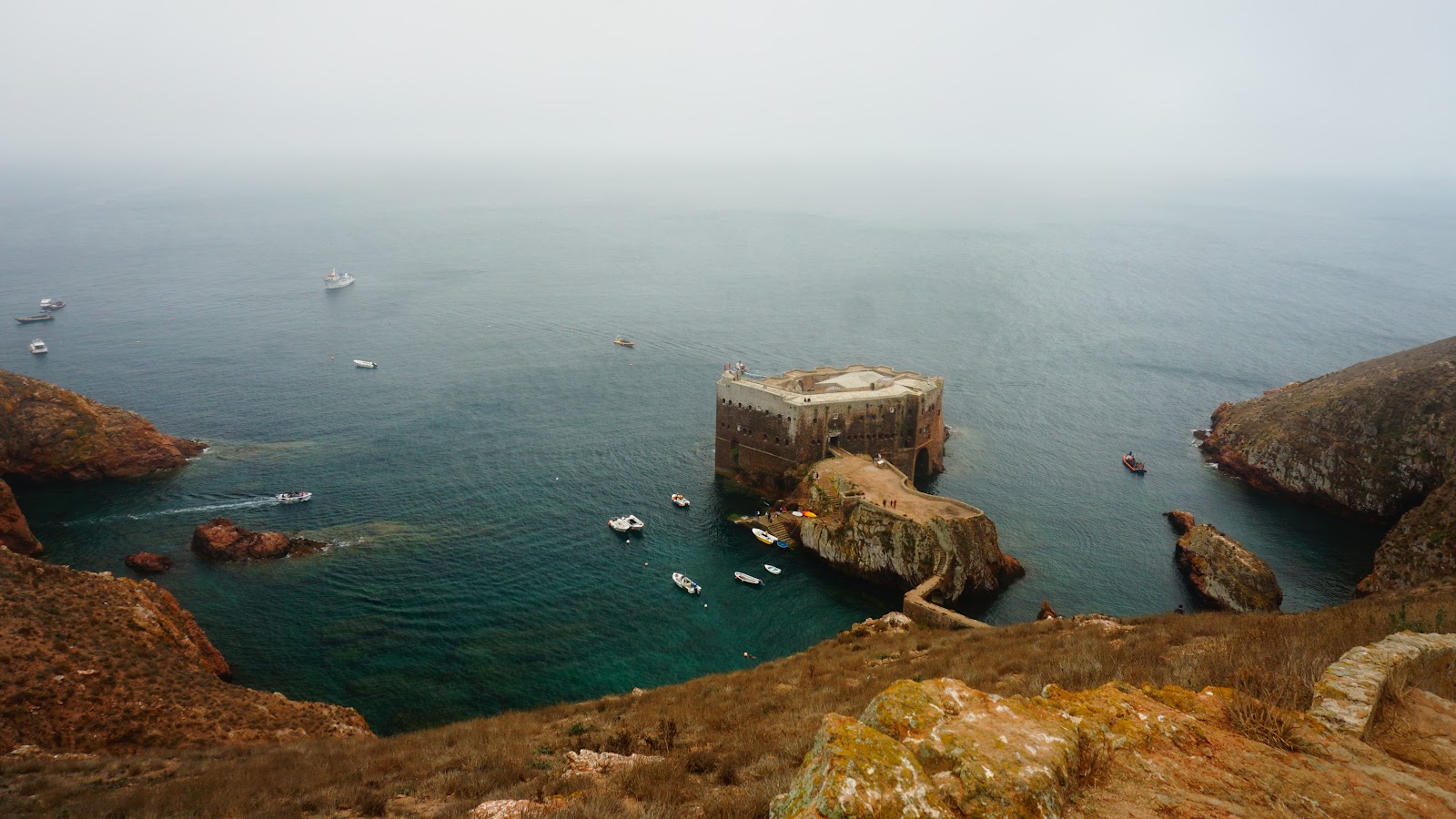
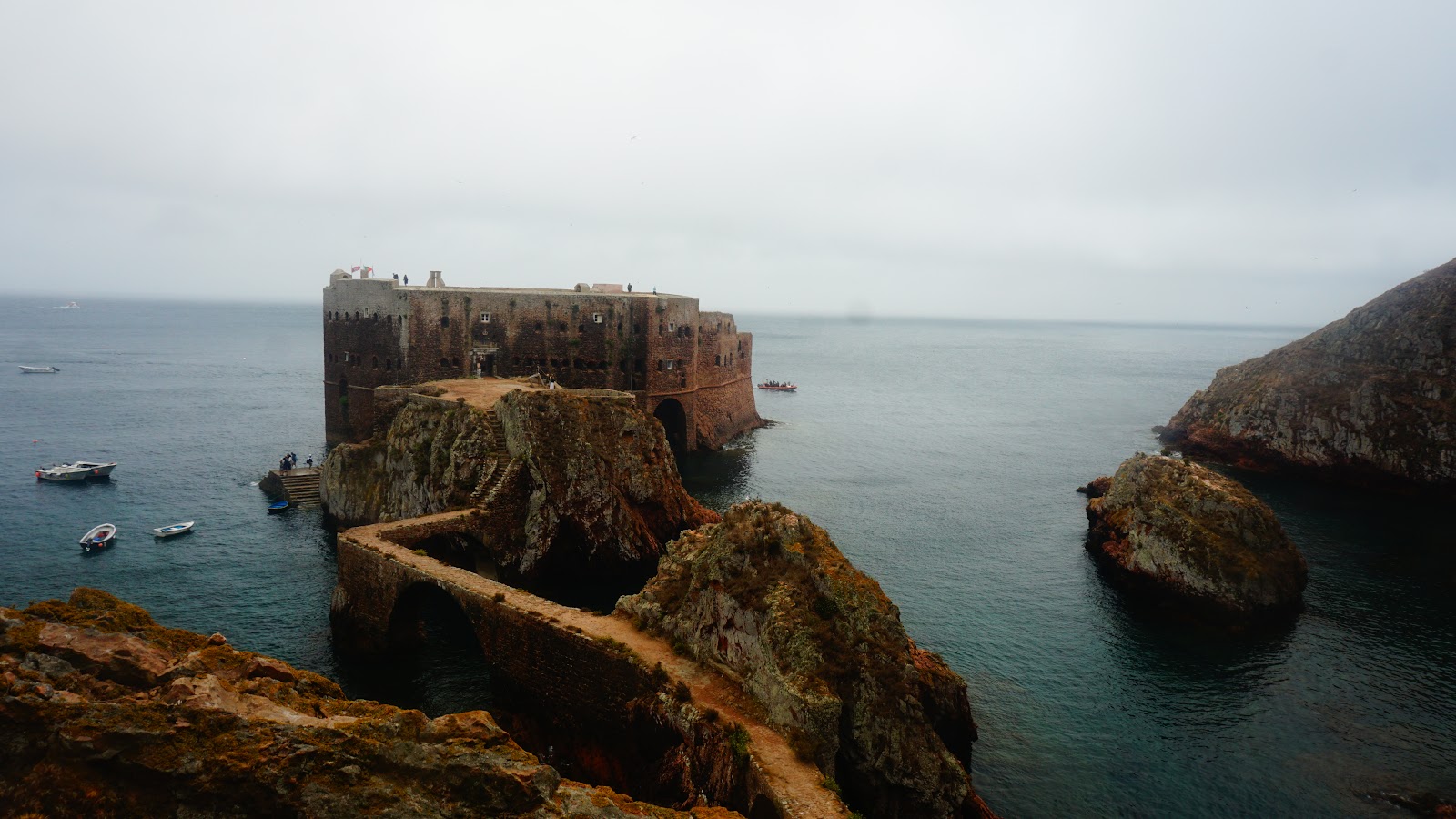
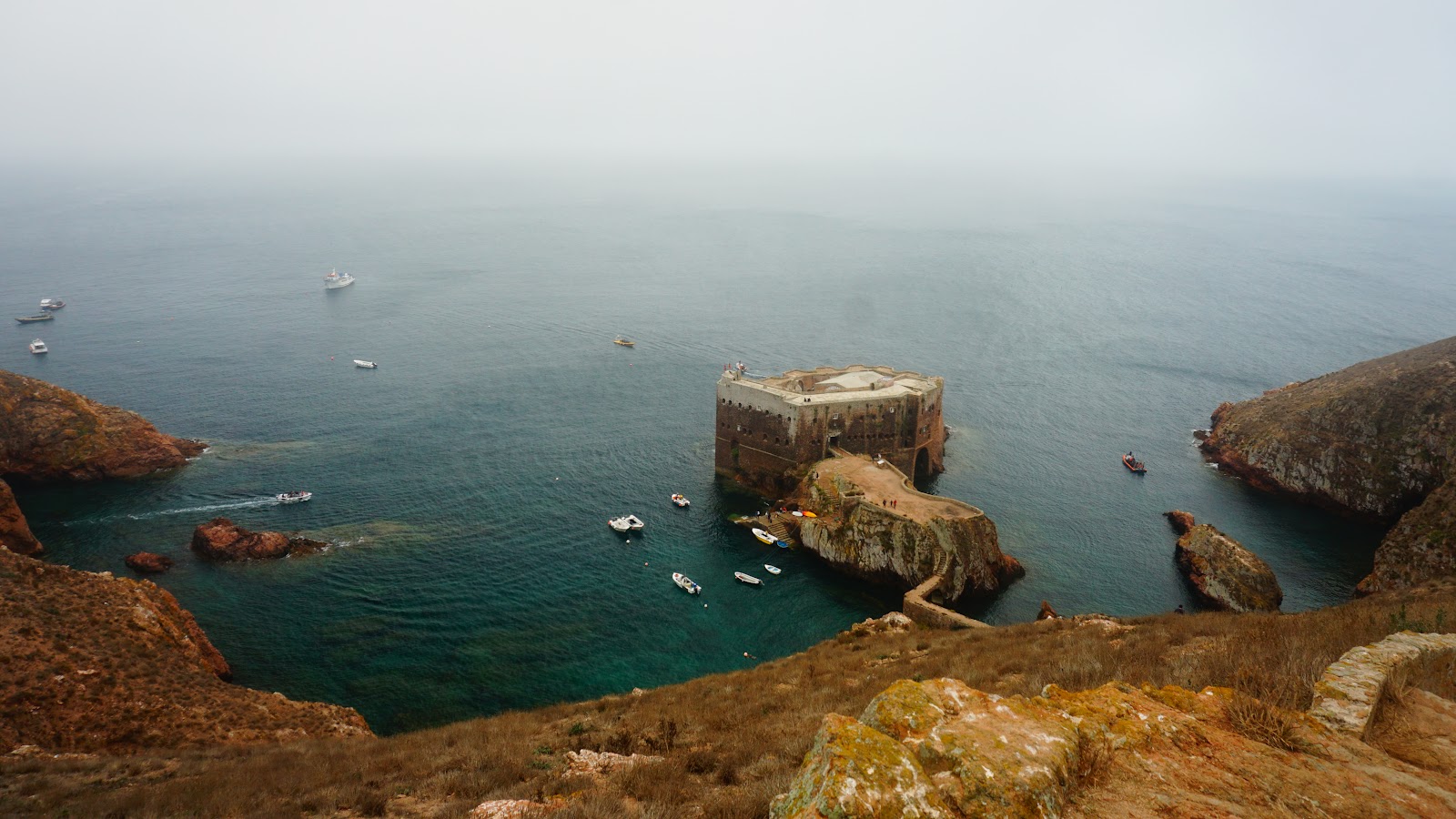
Fort Joao Batiste from above


So, we took the  whole "Get permit to step a foot on the island or ELSE!" thing very seriously, primarily because during tourism, even the low-probability risk associated with a high penalty is highly undesirable.   At the same time both of us had our suspicions that the "PERMIT!!!" was actually not going to be checked (see our experience with the International Driver's Permit". The basic modus operandi appears to be to declare that SOMETHING IS NEEDED, but never bother checking for it. This works in parking lots (no one really checks how much we paid for parking vs. how long we stayed on the lot), and this works with all other things. So, yeah, we paid for those permits. Even worse, we wasted about two hours on it yesterday, two hours we could have used for other things. And it did not matter at the end.   Portuguese bureaucracy can cry wolf only so many times.  I also suspect that those "Immigration Report Forms" we are receiving from Airbnb are also pretty pro forma as well.

But we digress. Woke up in the morning to a somewhat wet day. Not really raining, but very saturated air, that on occasions turns into drizzle. Just the time to visit an island, eh?  Drove to the Paniche Marina - a nice 30 minute drive from our place in Obidos - we chose a bigger highway over one of those "national roads" - not necessarily to get there faster, but to avoid early morning stress of driving through tiny villages on tiny streets (yesterday driving around Caldos da Rainhia to the parking lot was an interesting experience).

Peniche met us with similar weather. No sun, a slight wind, and a bit of a drizzle. We talked to the person at the ticket booth about the entire "Berlingas Permit" thing ("You may need it if they decide to check at the Berlingas port. But they don't check"), buying the boat excursion on the island ("There is a guy in yellow shirt on the boat, give him some money"), and got our paper tickets ("What's your name?" - I bet we could be on any boat on a given day by simply saying "Joao Silva" in response), and went to the boat, where we were second group in line to board.
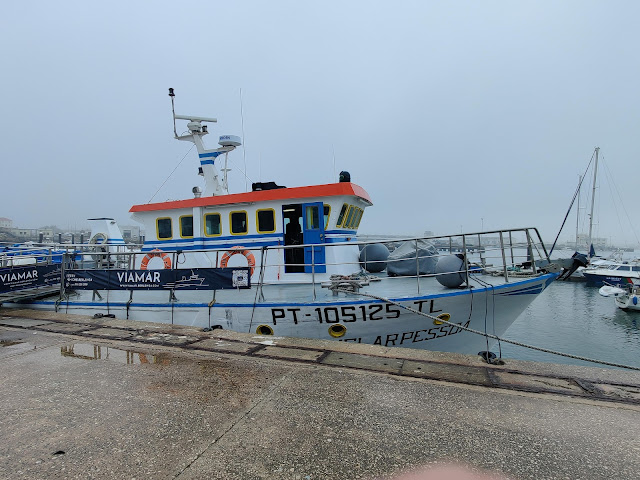
Our boat

The boat has an upper deck, open to the winds, and a lower deck, that is closed. We chose to sit at the top for the trip to the island, despite the weather.  The trip itself took about 50 minutes. The weather did not really improve much, visibility was pretty crappy through the mist, and on occasions we got bouts of storm and waves.  We bought tickets from the guy in yellow shirt,  for a ride at noon. Eventually, a land mass finally materialized from behind the mist and we approached the Berlengas Archipelago.
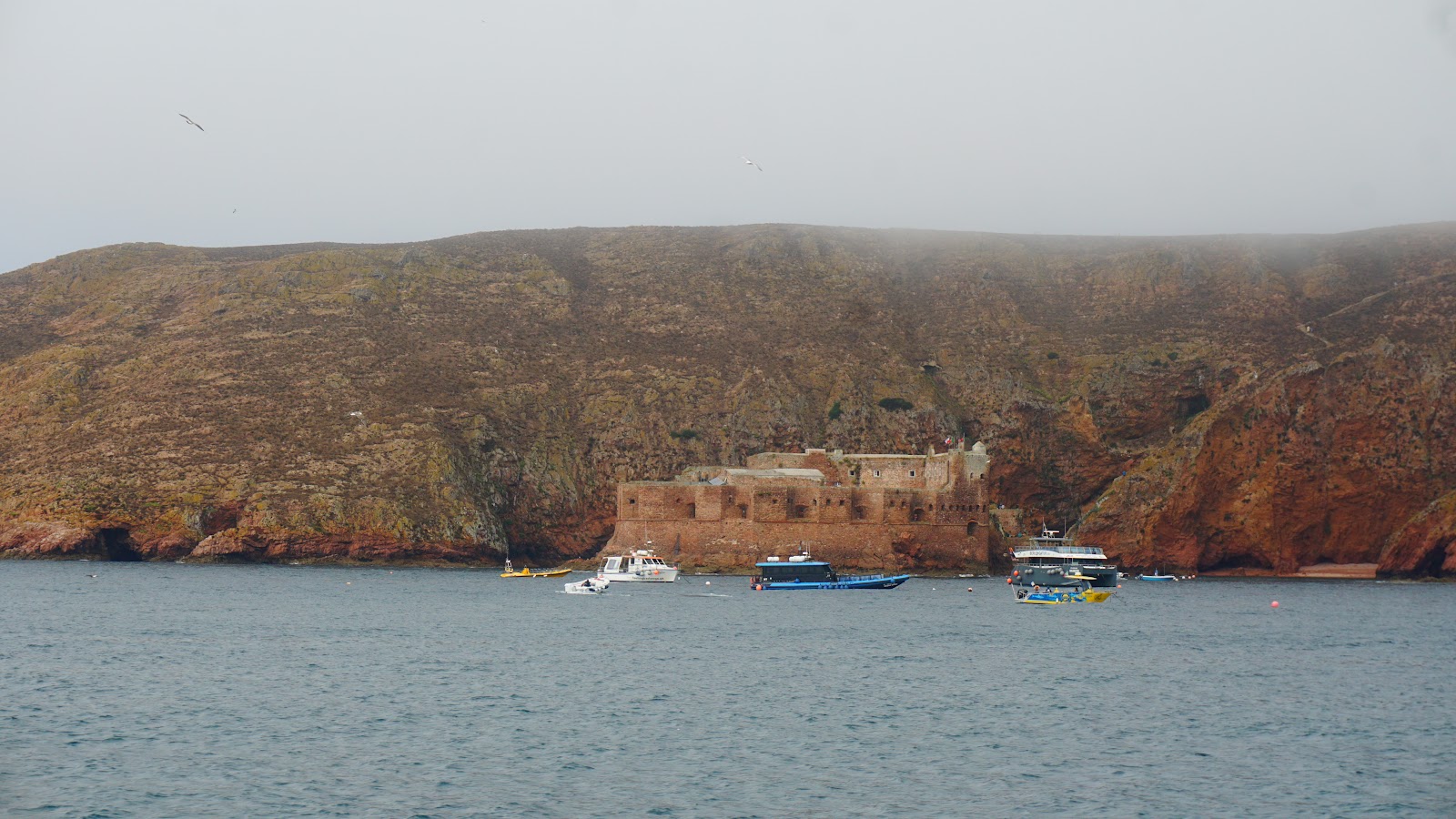

Approaching Berlengas


For the sake of simplicity, here is a map of the island, with the main points of interest that we visited either on foot or by boat marked up.


We arrived to the port around 11am, so had about an hour before our boat trip was scheduled. Berlingas is essentially a huge rock, with a pretty high elevation - according to wikipedia, Berlinga Grande, the island we were on has 88 meter elevation - does not look like much, but it is essentially straight up the hill from the port.

Right above the port is a small clump of houses called Barrio dos Pescadores - not certain if any pescadores really a left there - the houses appeared to be lodging. The village has a cafe and a restaurant.  First order of business upon disembarkation (and we got lucky to be the first ones from the boat who made  it there before the lines formed) was to get coffee at the restaurant. The lady at the counter gave us two coffees, Olga decided to take both - as she wanted to get warmer.
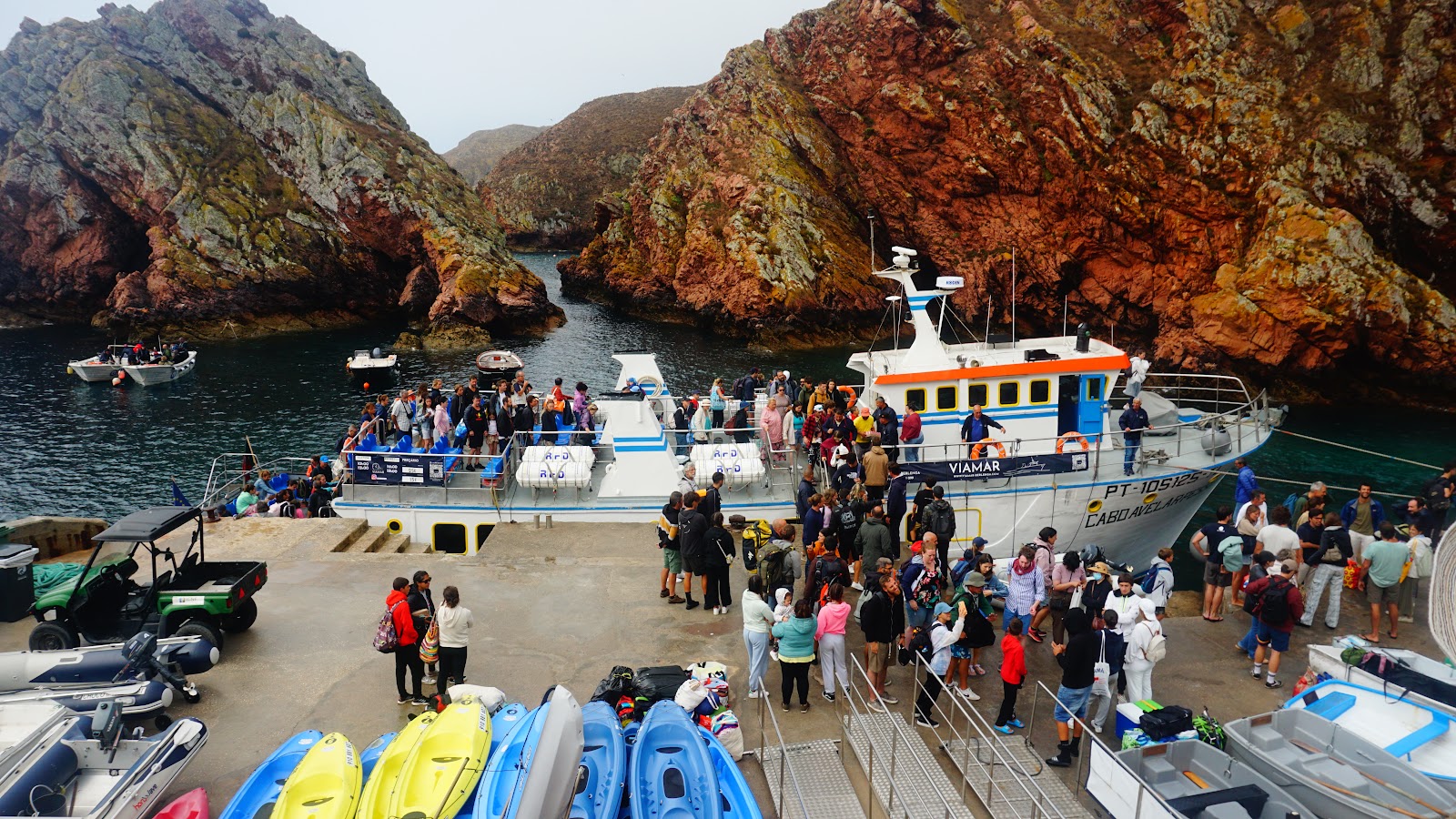

Disembarked!

Besides the village, the island has two major man-made structures: a lighthouse situated, presumably at the highest point on the island, and Fort Joao Batiso built in the 17th century to help defend the coastline of Portugal.  With about 40 minutes left of our hour wait for the boat tour, we went up the main road from the village towards the lighthouse. Despite the scary-looking heights, that road is paved and has a nice grade, so the hike itself is about 10-12 minutes.
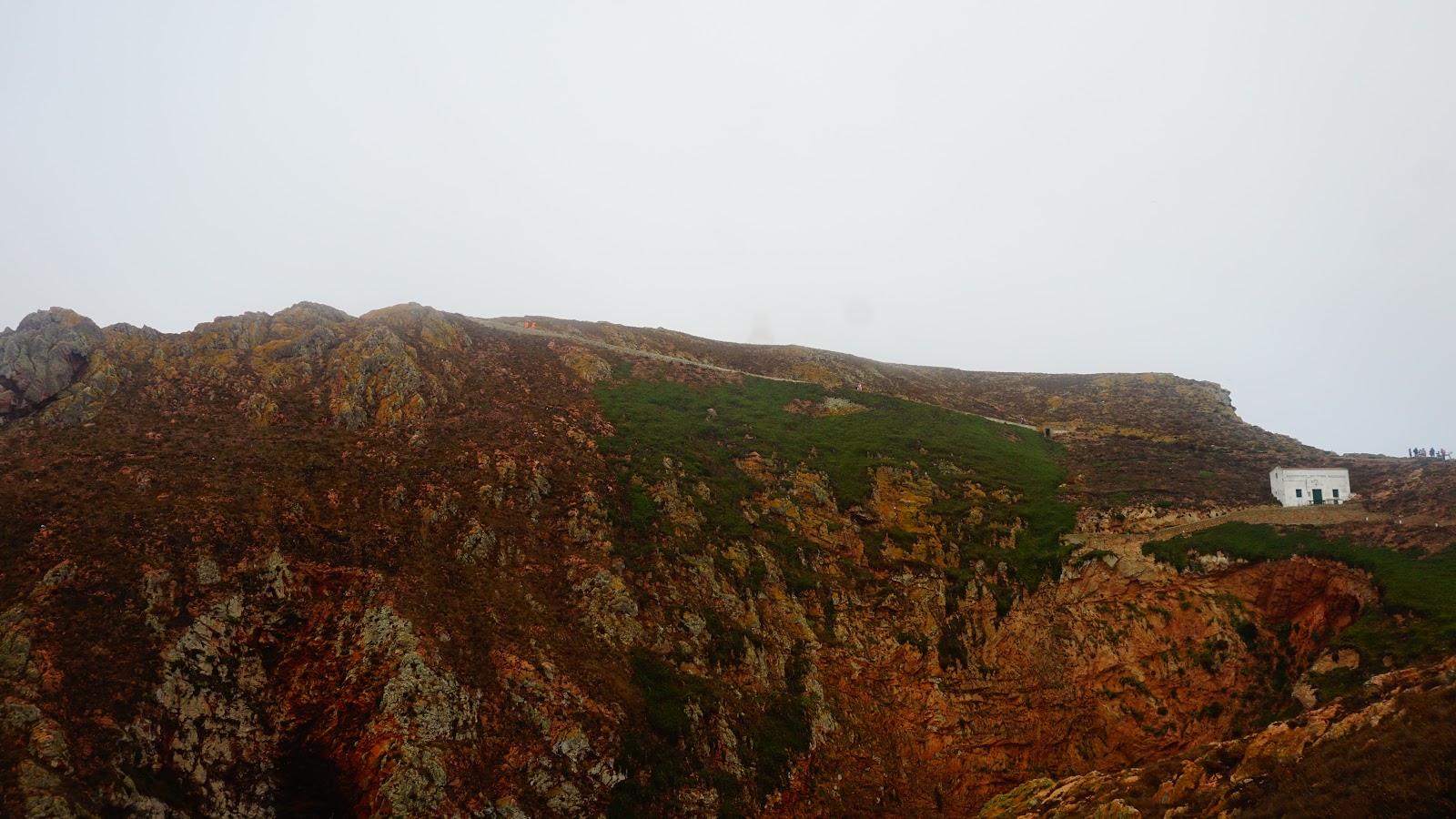
Trail up towards the lighthouse. The lighthouse is barely visible from behind the mist. Pictured is the top part of the trail.


About the midpoint of the hike to the lighthouse we came to the narrowest part of the island, where the port haven on one end is almost met by a pretty deep inlet on the other.
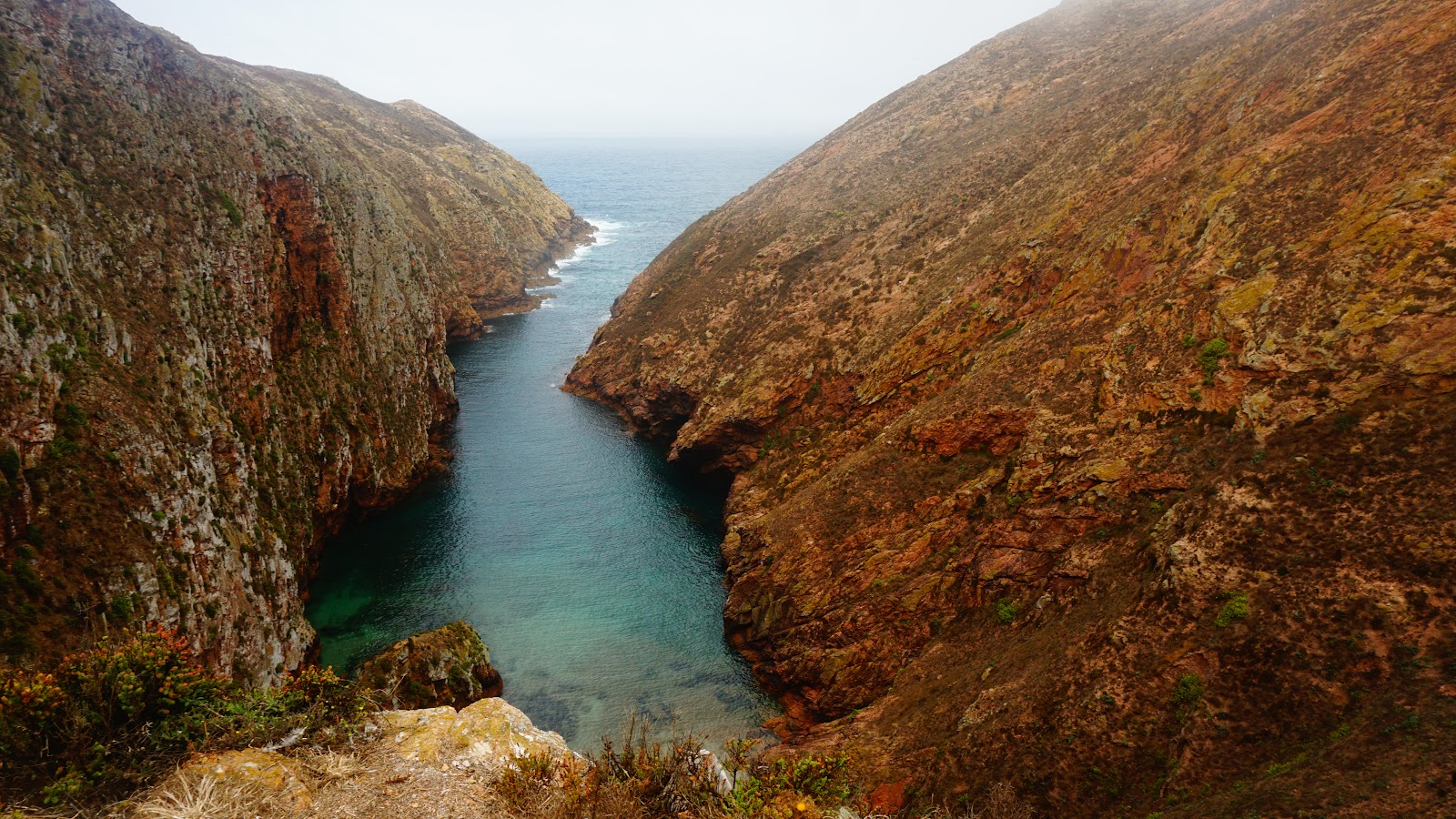

Narrowest part of the island, with the inlet, view from the top.

From there, we went up a bit more to get some picturesque (even in the somewhat inclement weather we were experiencing) views of the fishing village and the port,  before finally coming up to the lighthouse itself. Somewhat unfortunately (I did not read ahead of it, and assumed that the lighthouse was explorable), the lighthouse appears to be a working facility of the Portuguese Army, so it was closed to any visitors. We took some pictures in front of it, and went back towards the port to catch our boat excursion.
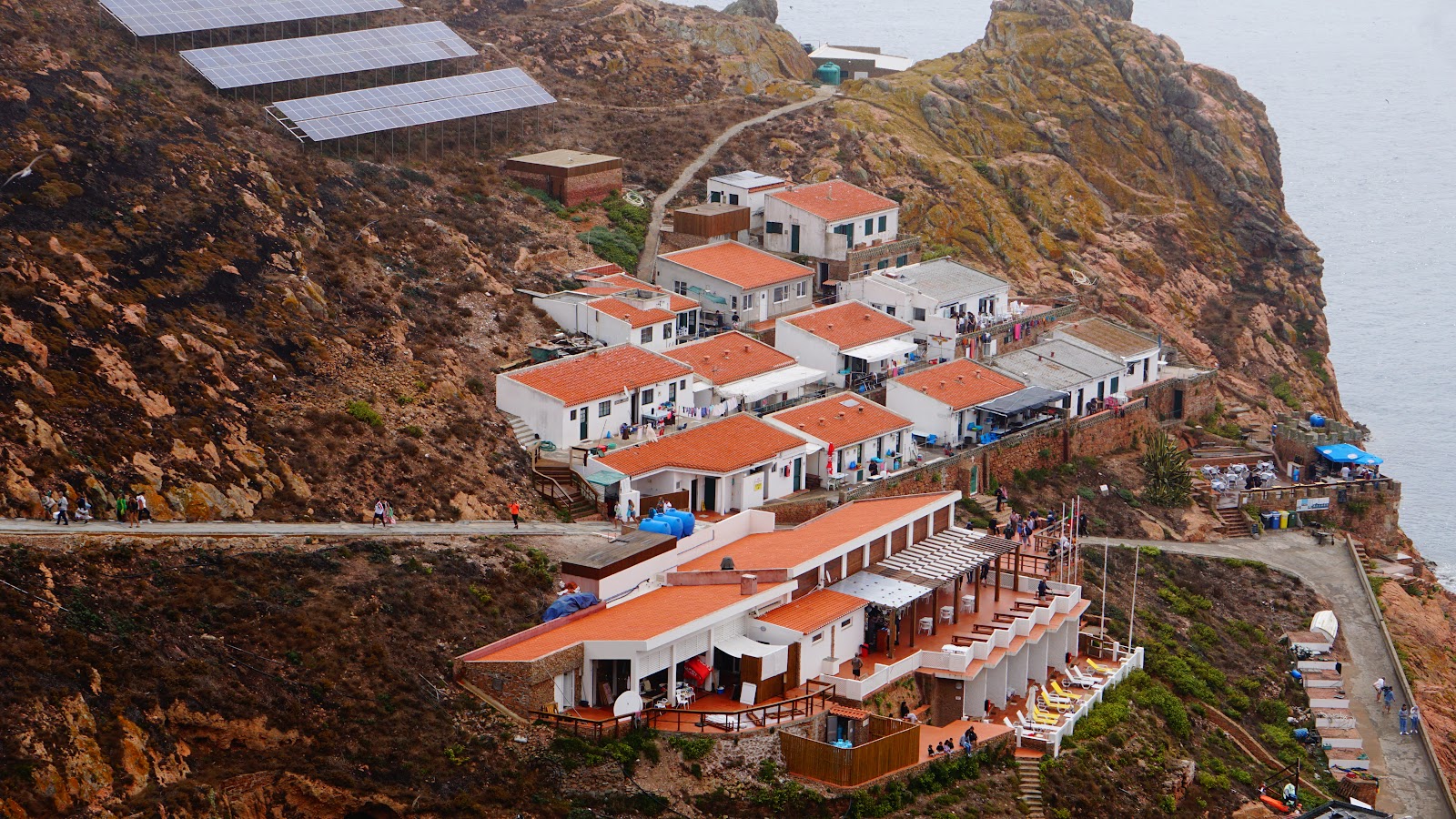
Closeup of Barrio dos Pescaderos.

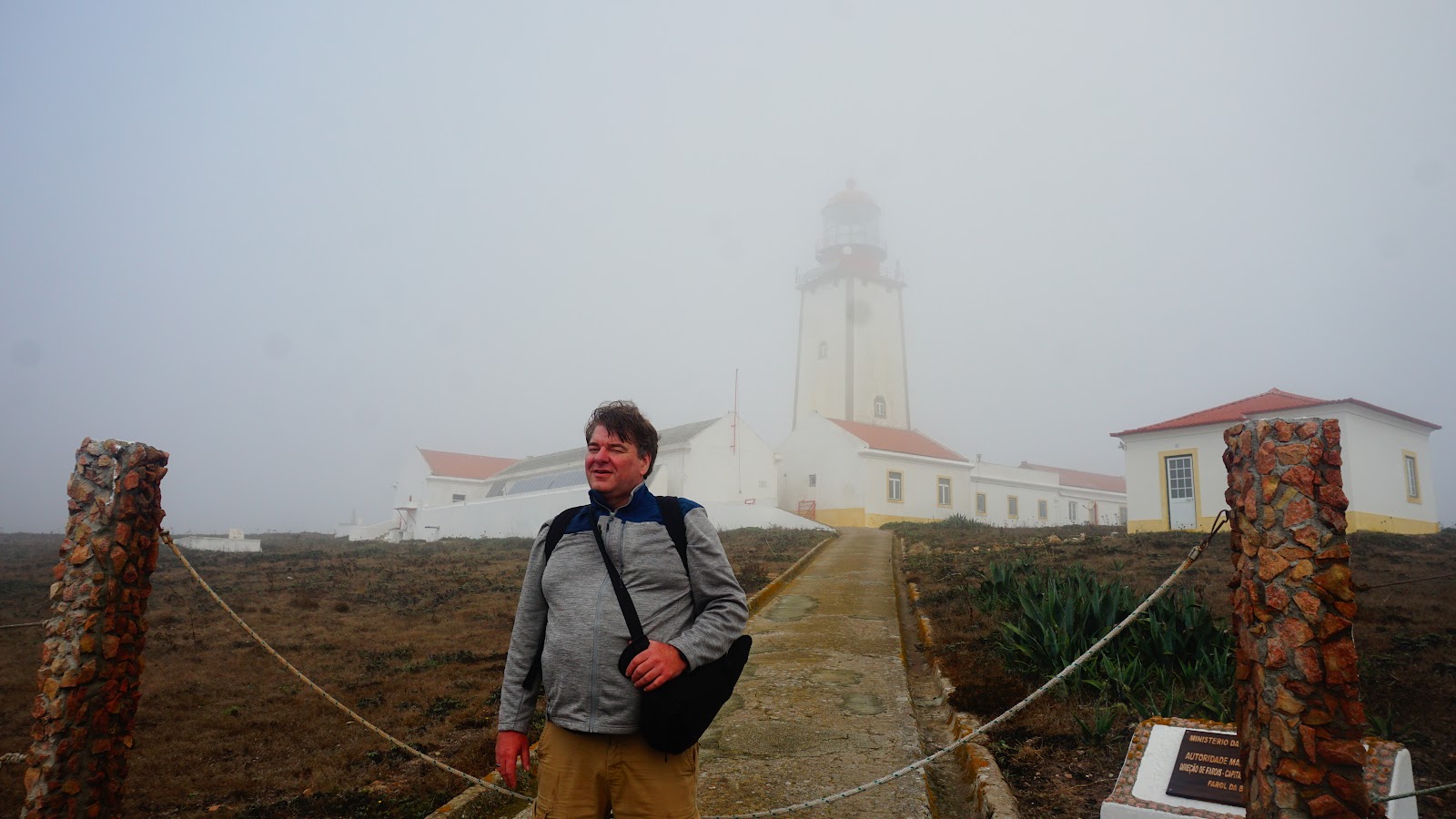
My "I was there" picture in front of the lighthouse, barely visible at the moment.

With the small bit of time we had before the boat arrived, we walked a short walkway from the pier towards a small cave separating he pier from the island's beach.  The water in the cave was transparent and I spotted several fish there. Later we saw significantly bigger schools of fish pretty much everywhere around the island - with the very clear water, they were easy to spot and track. 
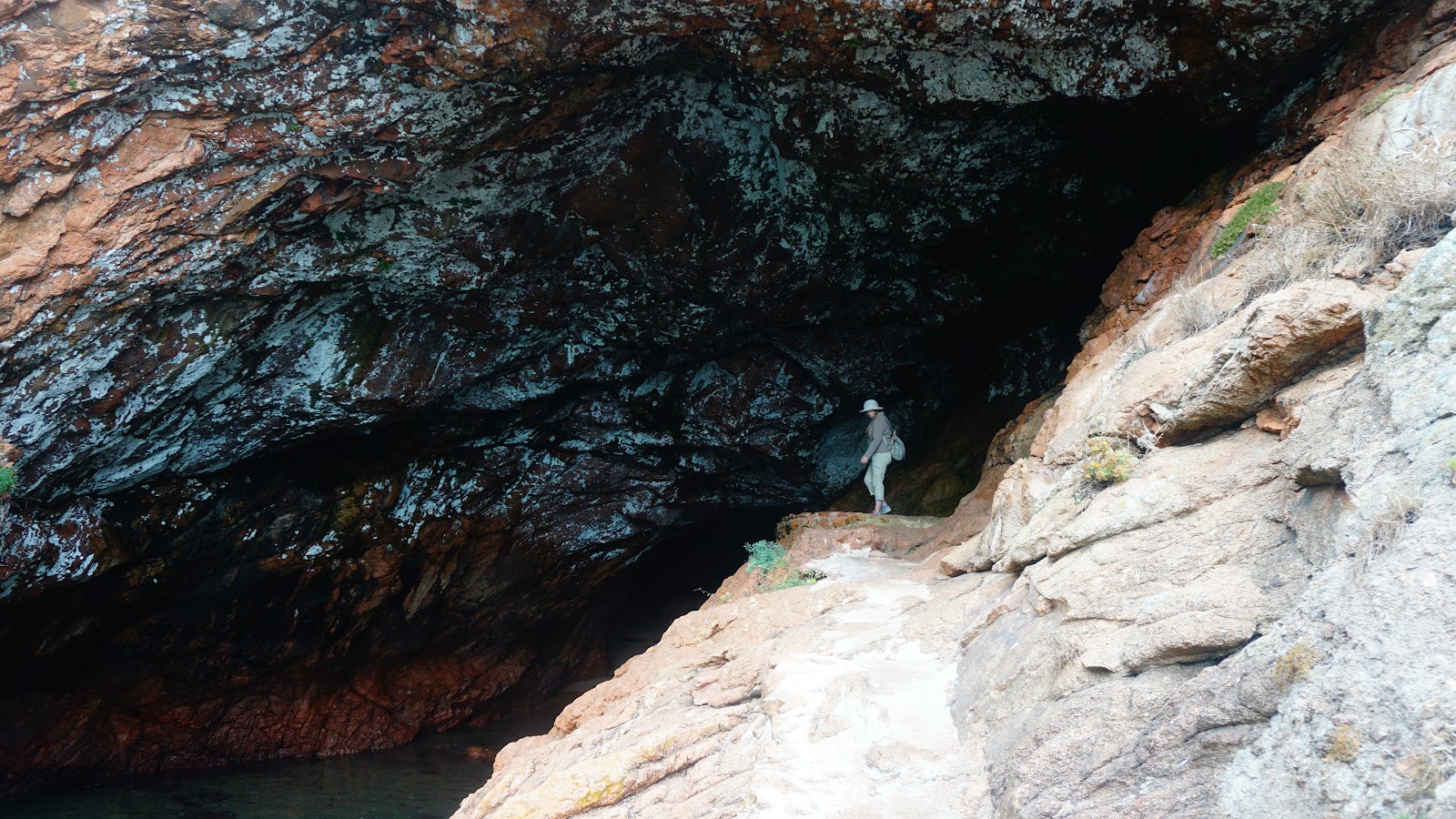
Olga exploring the cave

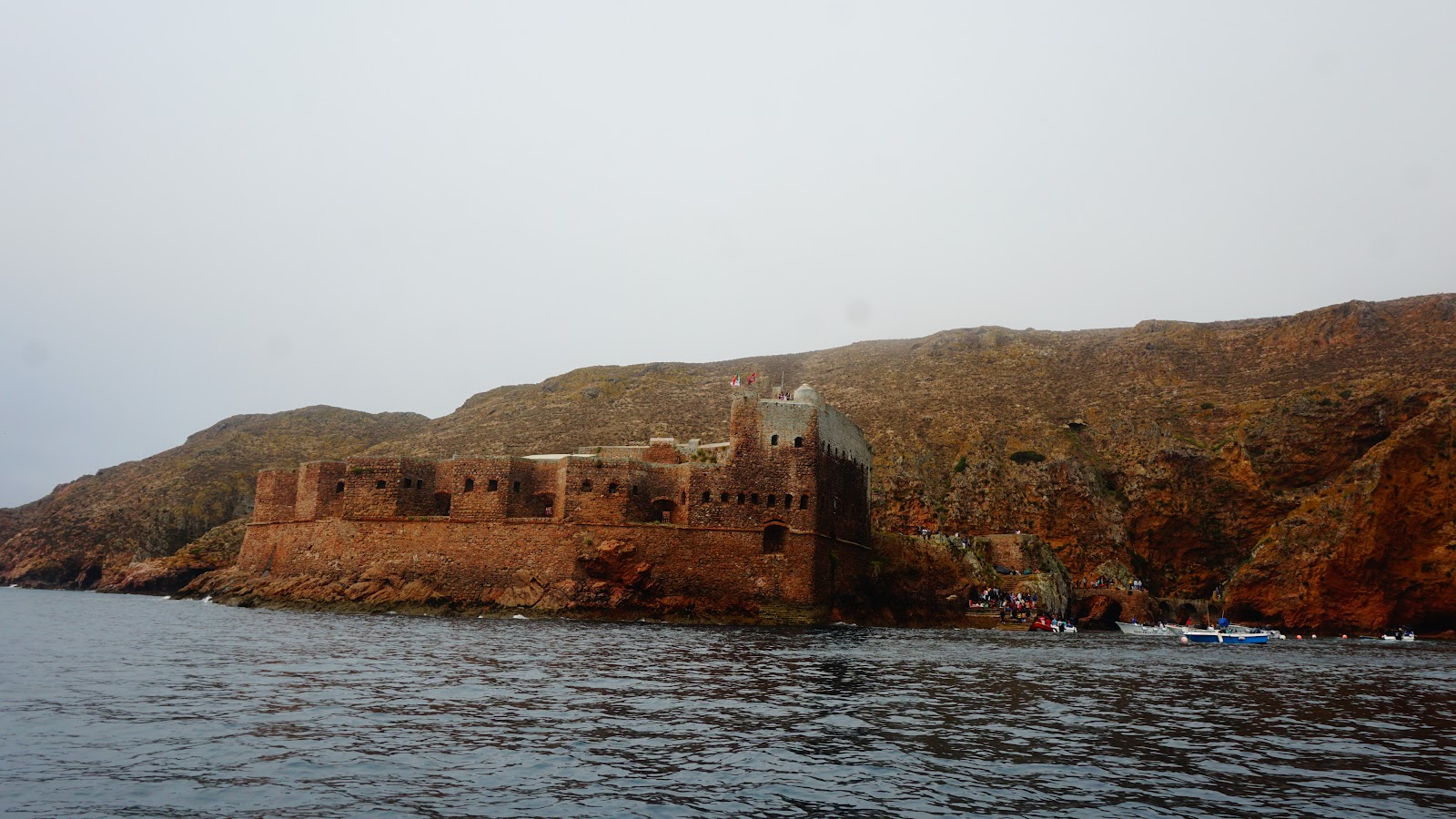
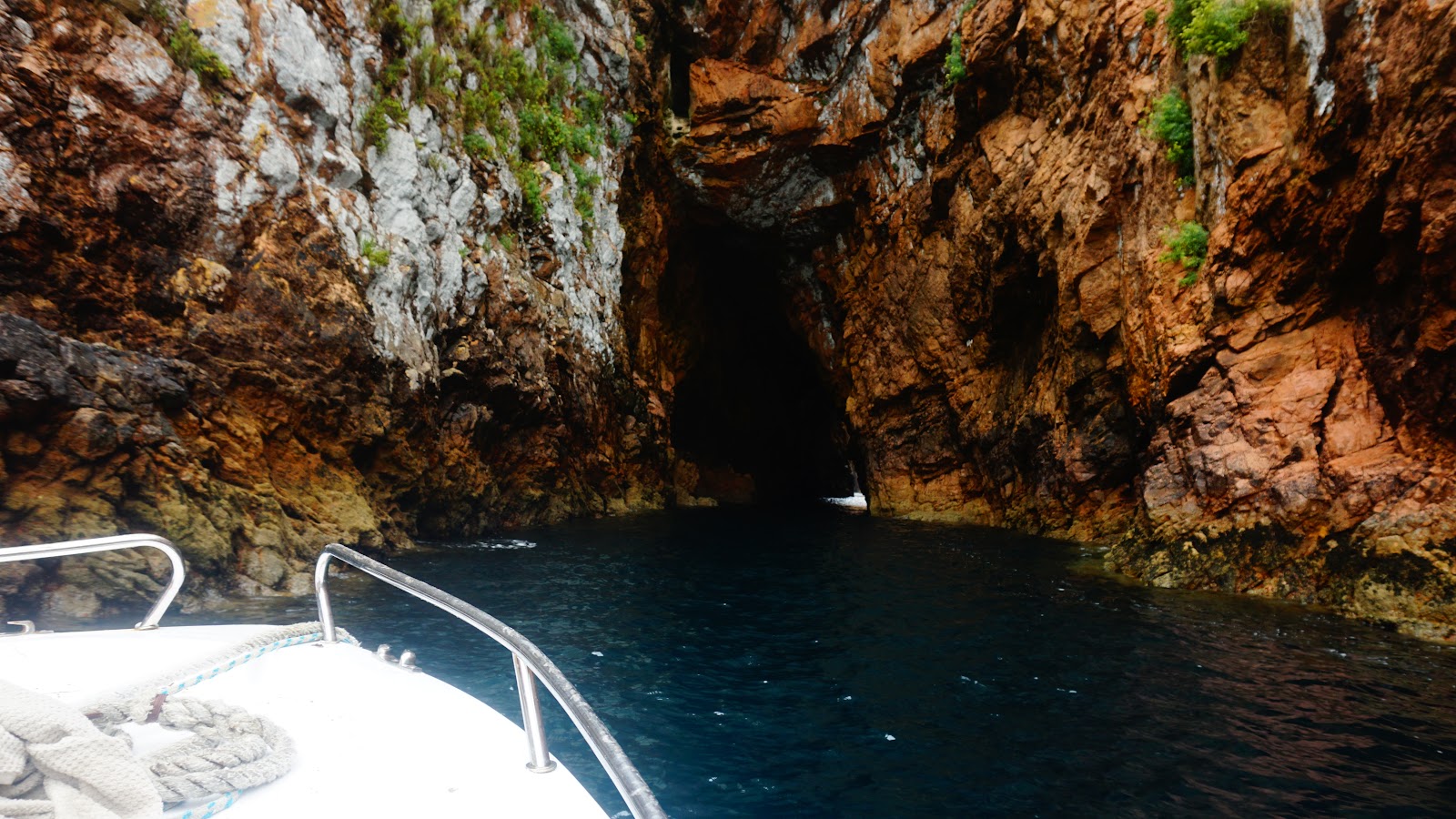
We then finally boarded a small (9 passengers) boat with a piece of glass floor and took a tour around a part of the island. We went from the pier through a narrow gap between the island and a free-standing rock towards the location of the fort, circumnavigated the fort, and went to one of the natural wonders of the island, the so called Furado Grande - a large and long tunnel under the island that lead into a small bay on the south side.  That bay had another furado (tunnel) on the other side of it, but much smaller and not navigable. 
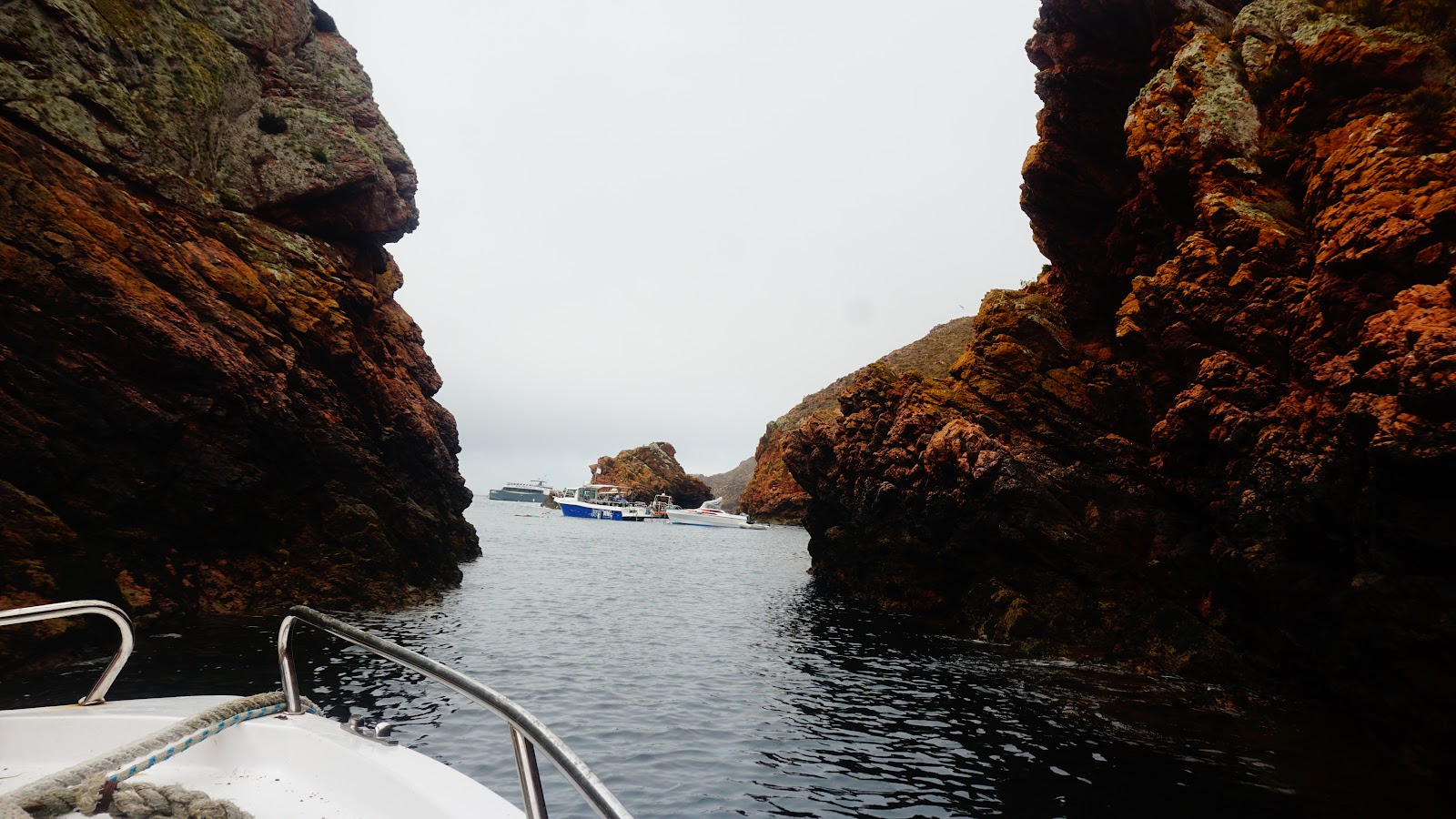
Passing between the rocks.

Fort Joao Batiste as seen from the boat.


Entering Furada Grande (I took a video of us passing through, so this is the only actual picture I have)

A small curiosity is that in addition to two water tunnels linking parts of the island together, there is also a Furada Seco, a small passage (the guide called it a "belly button") that is located right above the Furada Grande.


The south entrance to Furada Grande, and the Furada Seco right above it (the dark hole in the center of the photo).

We then sailed around the southern tip of the island, a structure very aptly named Elephant Head.
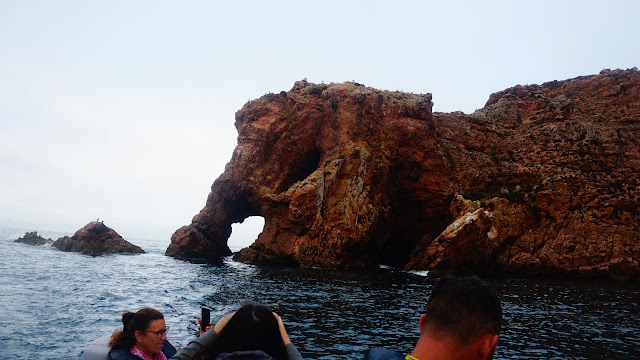

The best picture of Elephant Head - complete with an actual eye, I could get from the boat (all the people on the other side of the boat were in front of the camera).

On the way back, the boat visited a cave they called the dream cave - essentially one of the many (but somewhat bigger) indentation in the island's coastline - which, btw, is extremely eroded - with plenty of caves and grottos throughout.  After that, the boat dropped us all off at the fort, thus saving us the need to hike there from the pier.
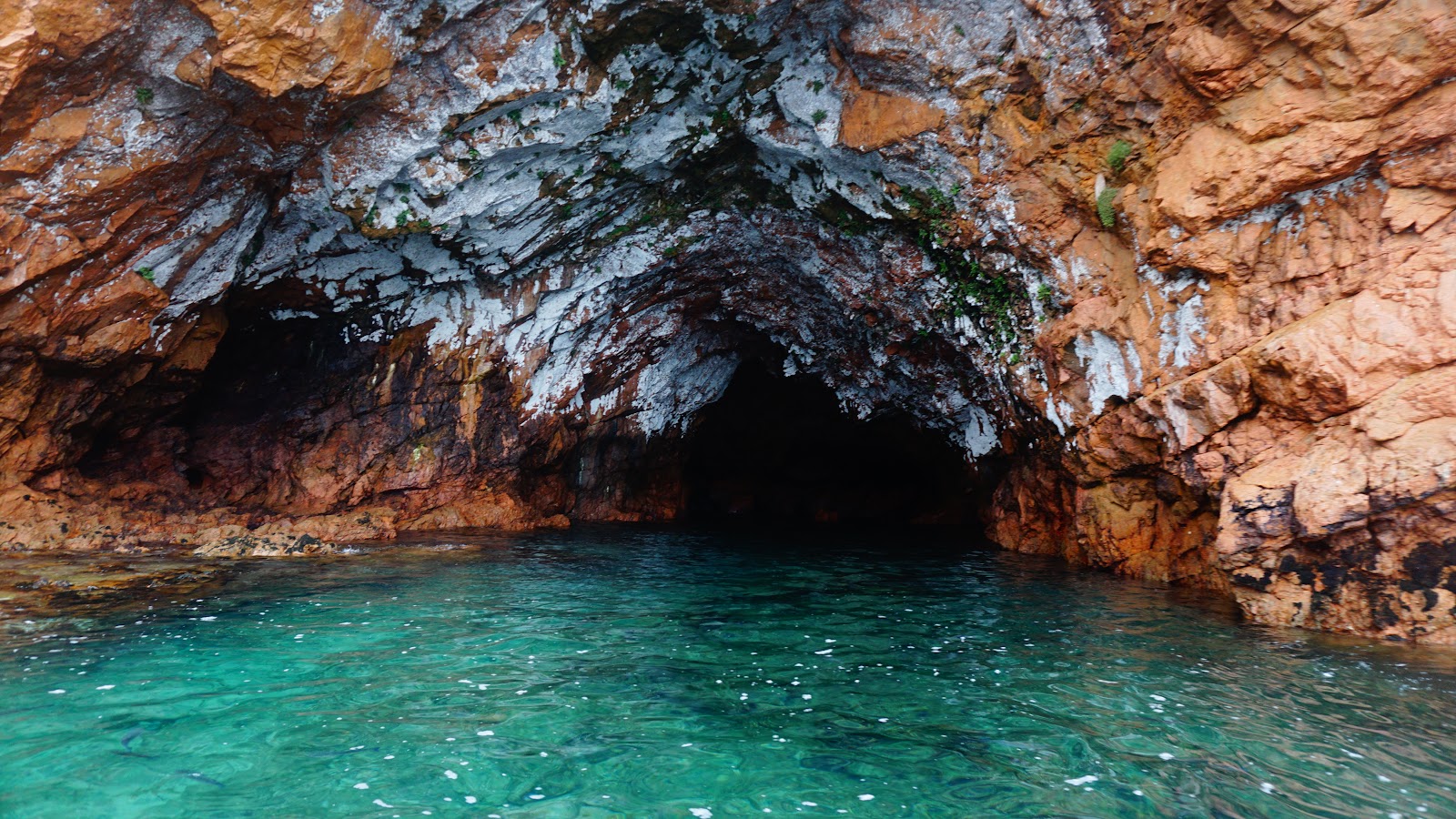

The Dream Cave.

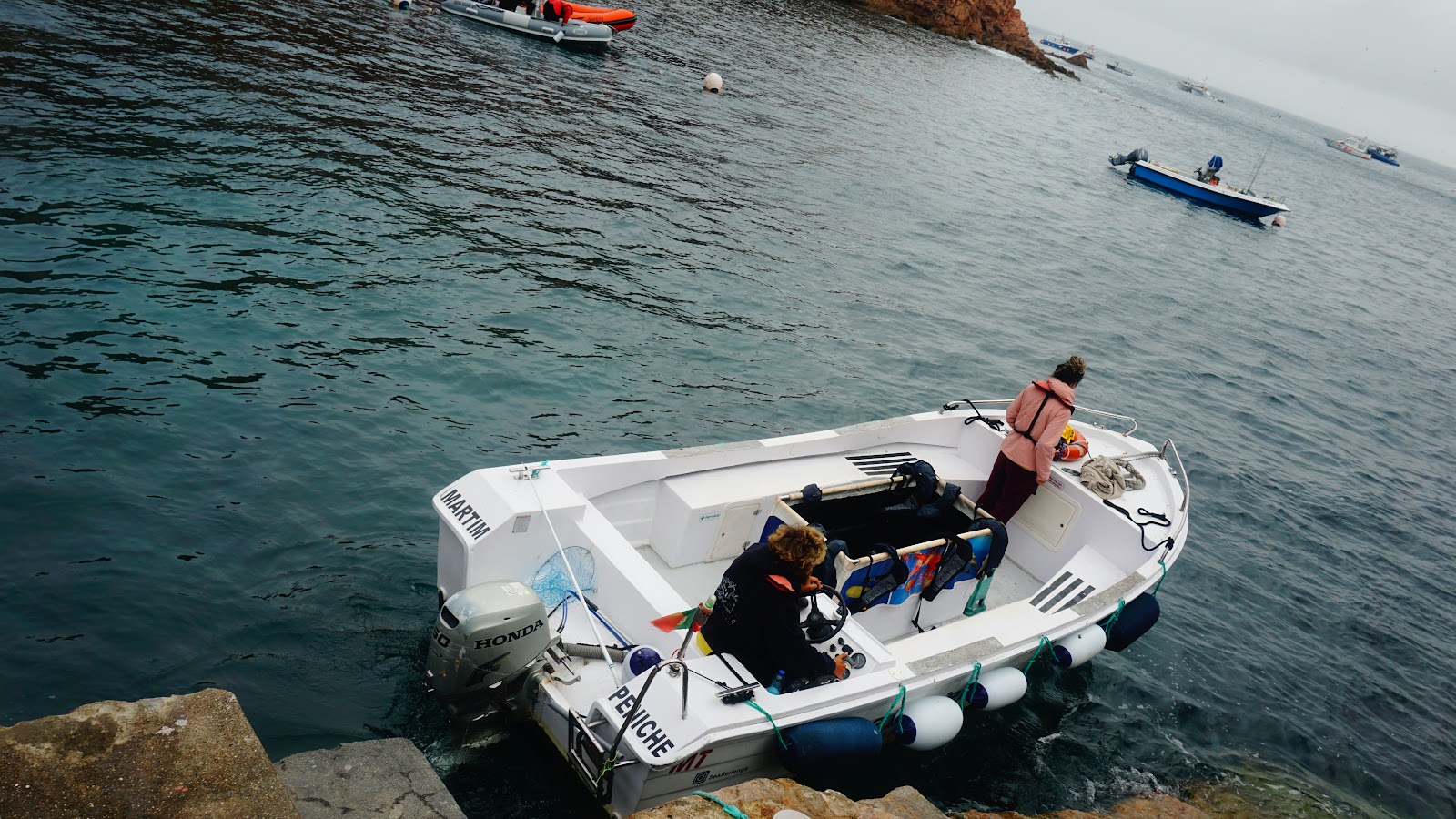
Our boat, having dropped us all at the fort, is about to leave.


The overall ride took about 20 minutes and cost us 9 Euro per person. At some point we tried to do the math (one trip each 30 mins, 9 people in the boat, 81 euro per trip, two people in the boat, at least another two, possibly three on land - selling tickets and managing the embarkation), we are looking at something like ~1300 Euro per day revenue off the boat alone (the company also rents kayaks, so their actual revenue should be higher).  Not certain what the upkeep costs and labor costs are, but it seems like a reasonably low margin affair all things considered for me to begrudge them the experience. Plus, I would gladly pay the same amount just for taxi service to the fort alone (which this boat essentially performs), without the tour part. I have a few more kind words to say about the business side of the island below.
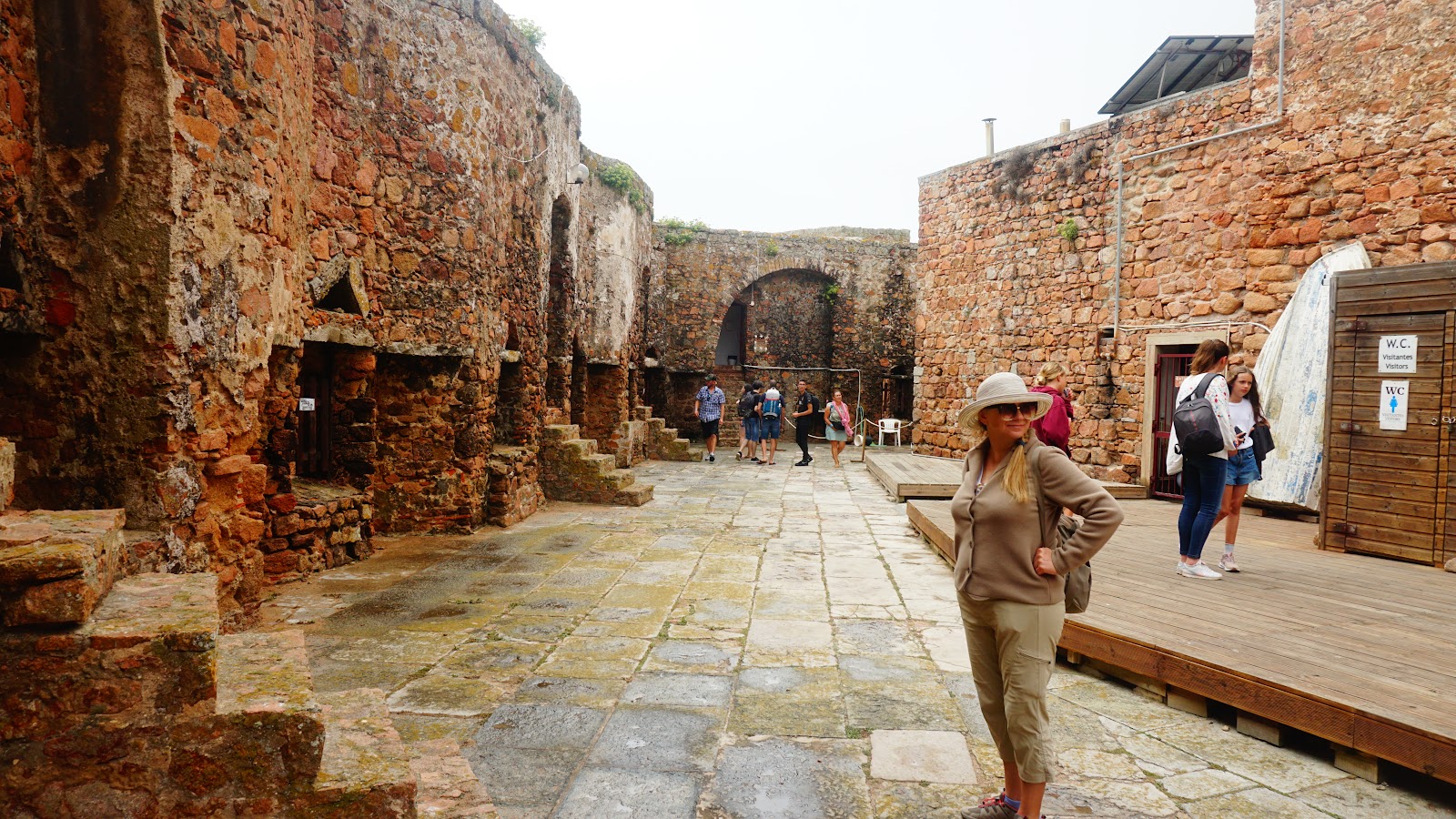
Inside the fort.


At the fort, I got the next surprise of the day. I expected old untouched ruins with wondering tourists. Instead, the fort is a fully operating facility, that charges 1 euro to enter (the big advertised attraction is not the Fort's history, but the ability to visit the bathrooms).  Olga gave the guy a five-euro bill, got back 2.50, went back to the guy who very nonchalantly returned her the missing 50 cents. The entire exchange was almost hilarious (the stories of getting wrong change are kind of the lore of Soviet Union, so this made us cackle a bit), but I kind of wonder how much per day the guy makes on his "honest mistakes" with the change.  Given the prices, probably enough for a few beers.

The fort, interestingly enough does have a history that includes battles, naval assaults, capture, civil war, pirates, and guerilla raids, which was also a bit of a surprise - often time my experience with well-preserved monuments of this kinds is "and it never saw any action". Not the case here, very much not the case.  It was decommissioned about 100 years ago, after which it changed hands a few times, was abandoned for a while, was turned into a 4-star hotel in the 1950s, went out of service in 1970s after the Revolution (because apparently this was the kind of place rich Salazar supporters would visit and only them - sorta like Mar-E-Lago these days), and then eventually went into the safekeeping of Association of Friends of Berlingas, that essentially operates as a club - you pay your annual dues, and you get to lodge and hold events in the facility. There are room embedded in the walls of the fort (you can kind of see the steps to one of them in the picture above), there are also a few more rooms in the fort building itself - by the looks of the "local" crowd inside the fort, on the day of our visit these rooms were mostly occupied by surfers and divers.  There is also an event venue in the fort courtyard that served spaghetti to the club members when we were there.  Finally, the courtyard would not be complete without a small cafe. 
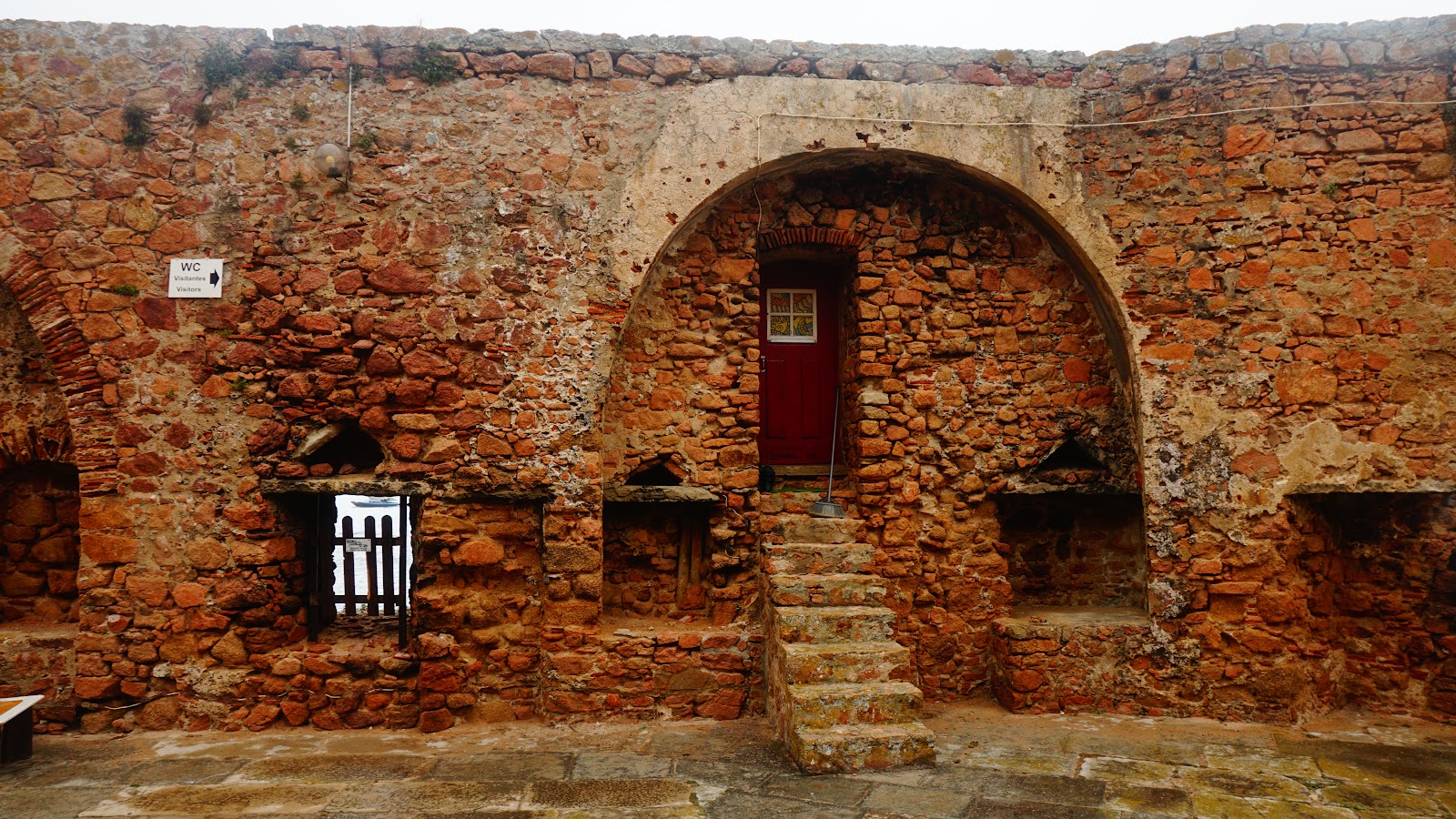
A room in the wall.

From the courtyard we went to the terrace and got some nice views of the land and see around the fort.
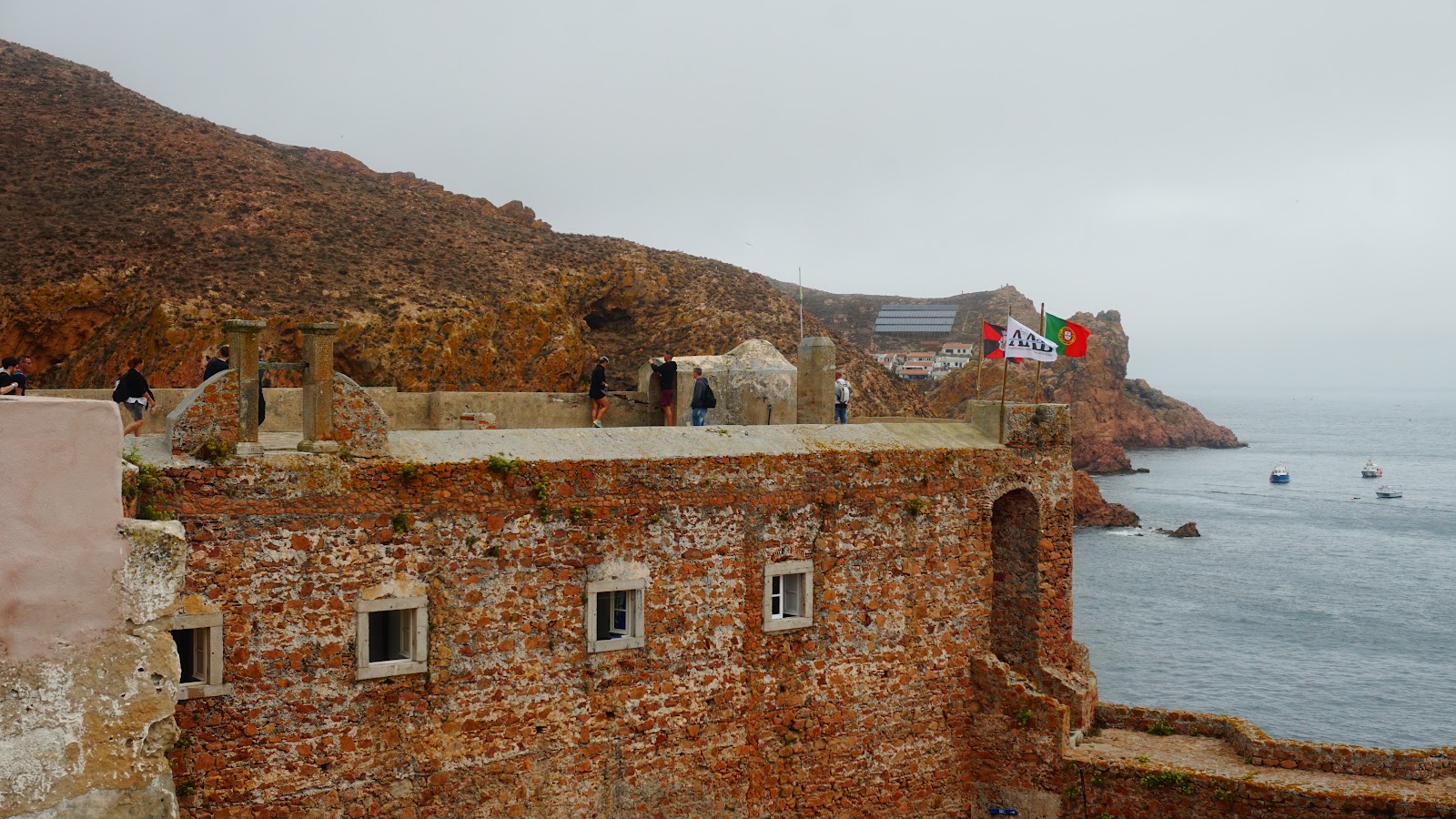

 
Fort Joao Batiste - view from the top.

After a visit to the terrace/roof, went back to the courtyard, found a table, and decided to have a small picnic. I went to the cafe and bought to glasses of sangria that cost me a total of 3 euros.  The cafe had a limited selection of food and drink (the most sophisticated dish was a hot dog, I think), but I was surprised at how low the prices were (should have taken the pic of the menu board - my bad). Basically, when we visit hard-to-access locations (e.g., tops of the mountains, islands, etc...) I expect significant markups for whatever food that is available there - it was most certainly the case in Switzerland (which, all by itself is expensive, but also marked up everything on top of Jungfraujoch, and is definitely the case in various places in the States (last time we experienced it on our funicular ride at Palm Springs). We totally expect to significantly overpay for food and drinks in such places.  Around Berlengas, a glass of sangria is 1.5 euro, a cup of coffee is 1.5 euro, and everything else was just as reasonably priced. Of course they add markup to chips etc.., but heck, a large bag of chips is 3 euro.  Now one thing I noticed about Berlengas, is that close to 80% of visitors spoke Portuguese. We heard some Spanish, French, English (mostly American) around the island, but no Russian, for example (which we heard plenty of in Obidos and Caldos da Rainha).  So, I suspect that the lack of significant markup on food and drinks on the island is at least in part because they can only do what the market would bear and the market is mostly national, not foreign tourists. Their real competition is not with other establishments on the island, but with picnic baskets that people bring with them - and almost everyone on a day trip  brought food with them.  So, perhaps that's the answer. Either way, a really nice feature of Portugal - not only food is inexpensive, but even in the situations where there is plenty of opportunity for markups of food, goods and services, they are not taken quite the same way they would be elsewhere (I am looking at you, Switzerland, and you: USA and Canada).

Anyway, the sangrias were great and refreshing and went well with our own picnic of bread, sausage, cheese and bacon.
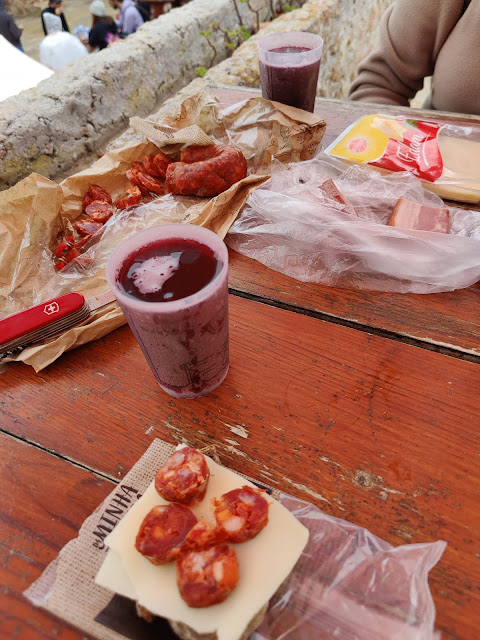
Humble but tasty lunch at a historic fort.


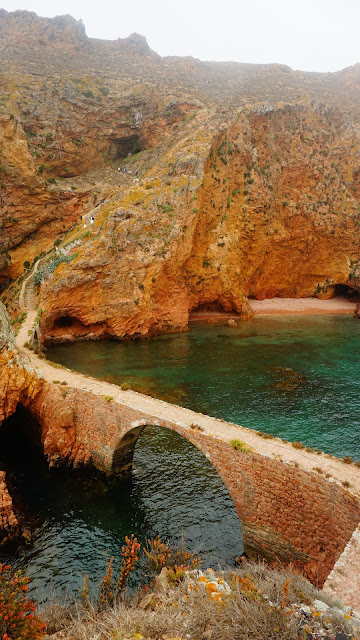
After lunch, it was time to head back towards the village. This, first and foremost, required crossing over from the islet on which the fort was built, to the main island walking over a pretty narrow (and in the fine tradition of Portugal - without any sign of rails) bridge, and then taking a steep climb up those 88 meters of height.
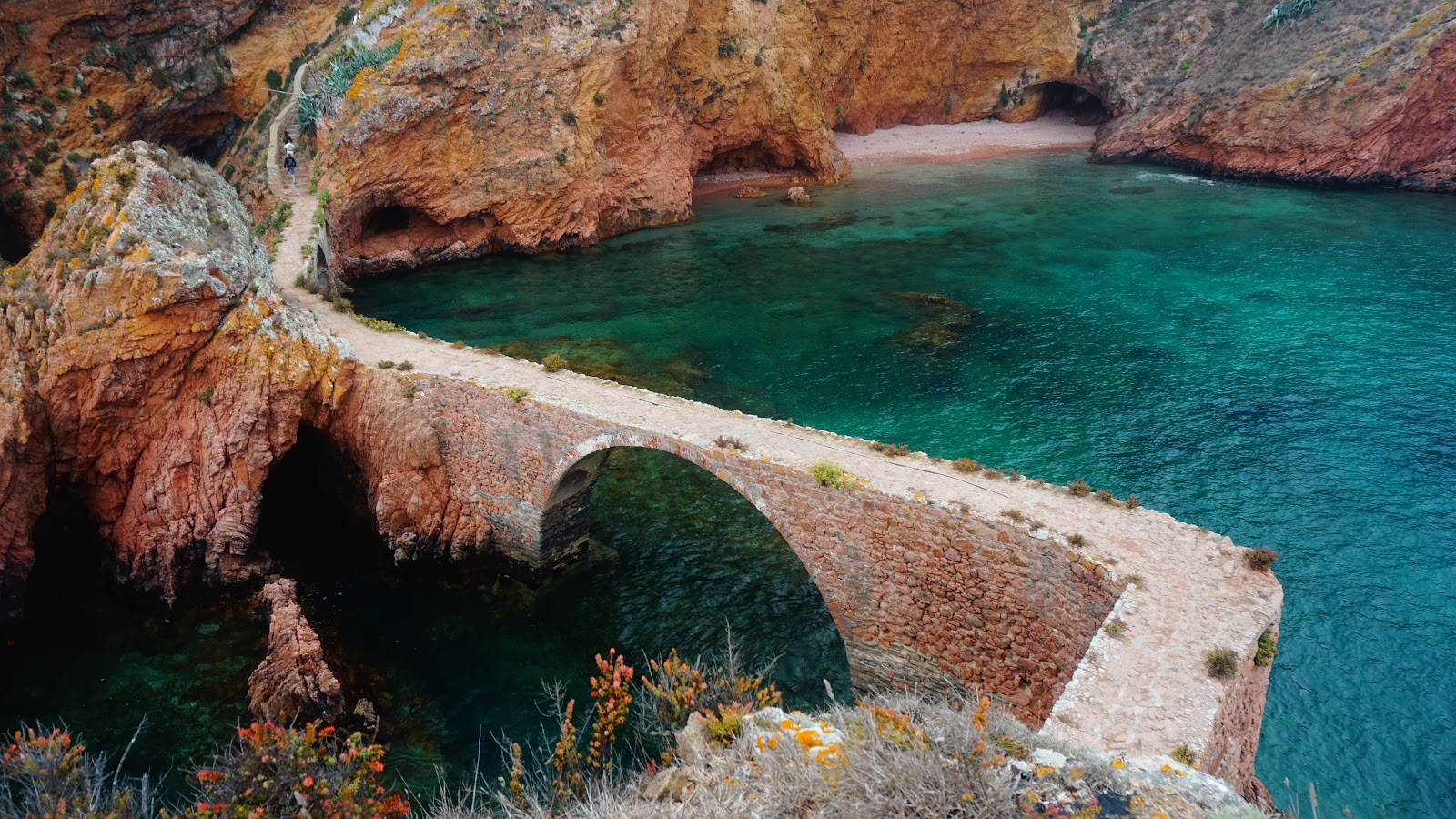
The bridge to cross.


And the hill to climb.


Crossing the bridge, again saw plenty of fish.
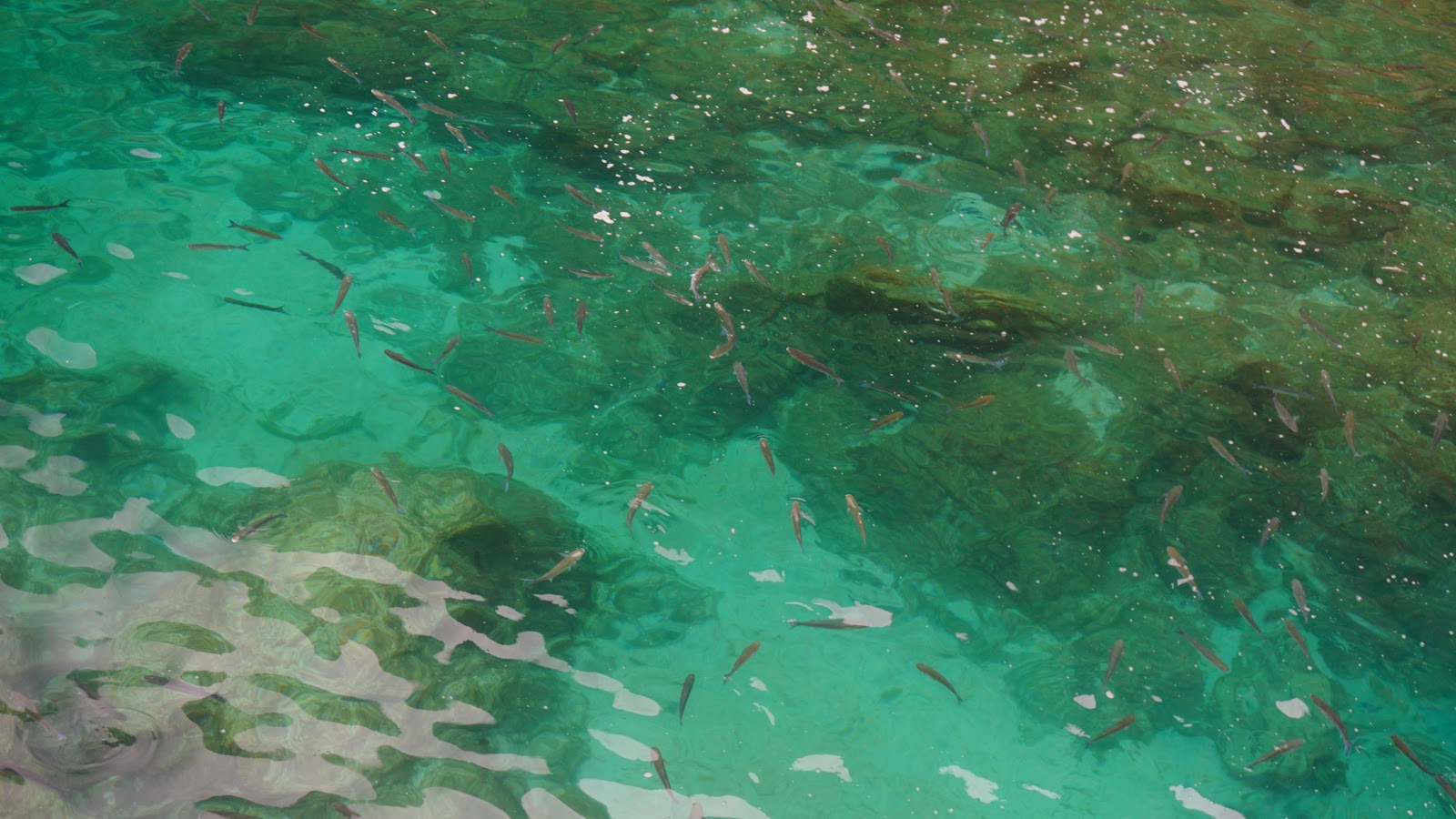
These are bigger than sardines, but we are not 100% what they are.


Climbing up, got to take in some really breathtaking views, and took a lot of pictures. This also helped with giving me a pause to catch breath (a mistake I made during a climb in Iceland, that I will not repeat again).
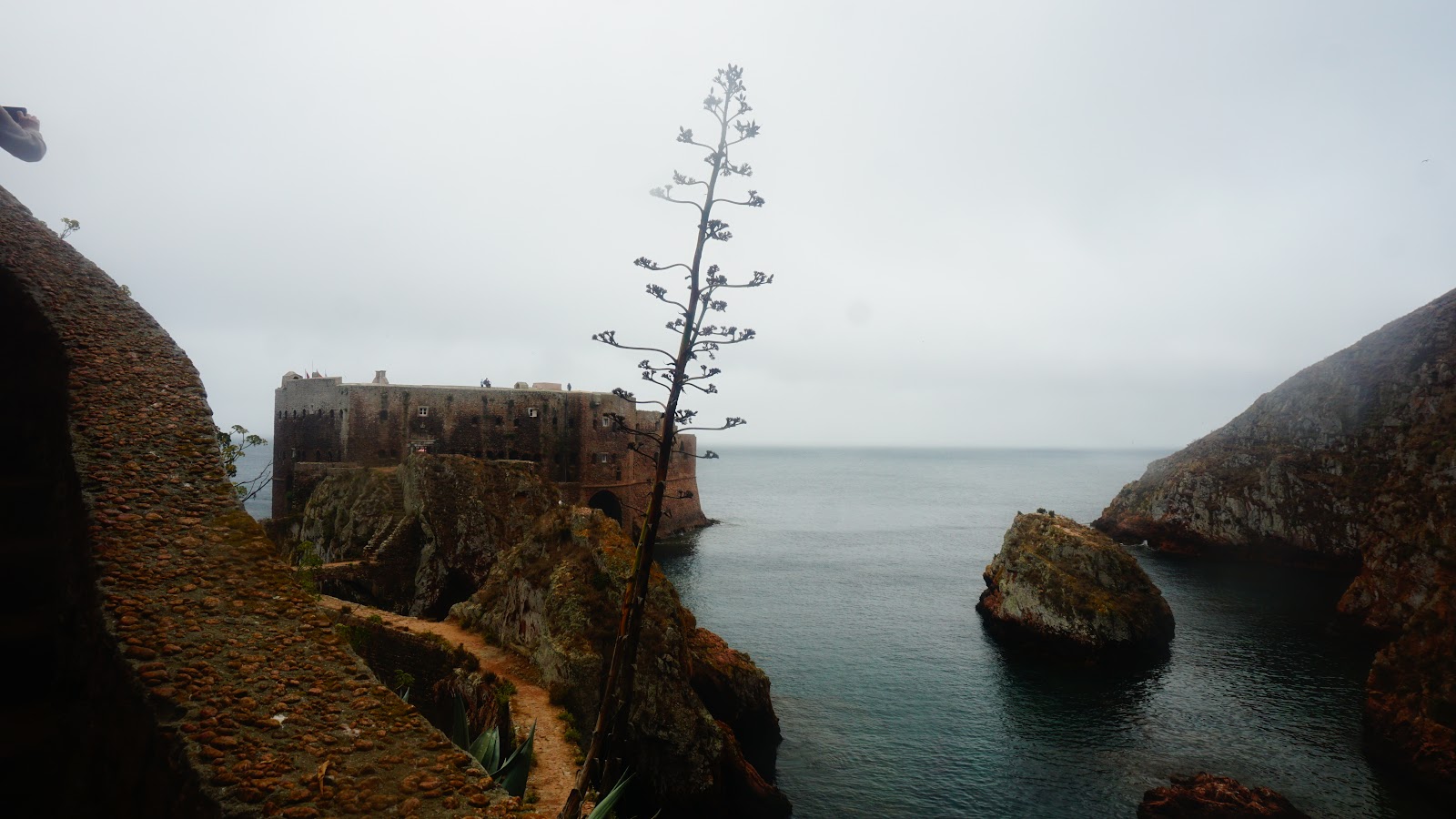
One of my favorite pictures of the fort. Unfortunately, features Olga's elbow, which needs to be cut in postproduction.


More fort, higher elevation.


For all the steepness of the path - and the unevenness of the steps-  some steps had their own steps to help climb them - it was actually really well constructed and maintained, and made he climb not as hard an exercise as I feared. Now, climbing down this path is probably a bit more of a challenge, fortunately, we avoided it (so those 9 euros per person paid off at the end).
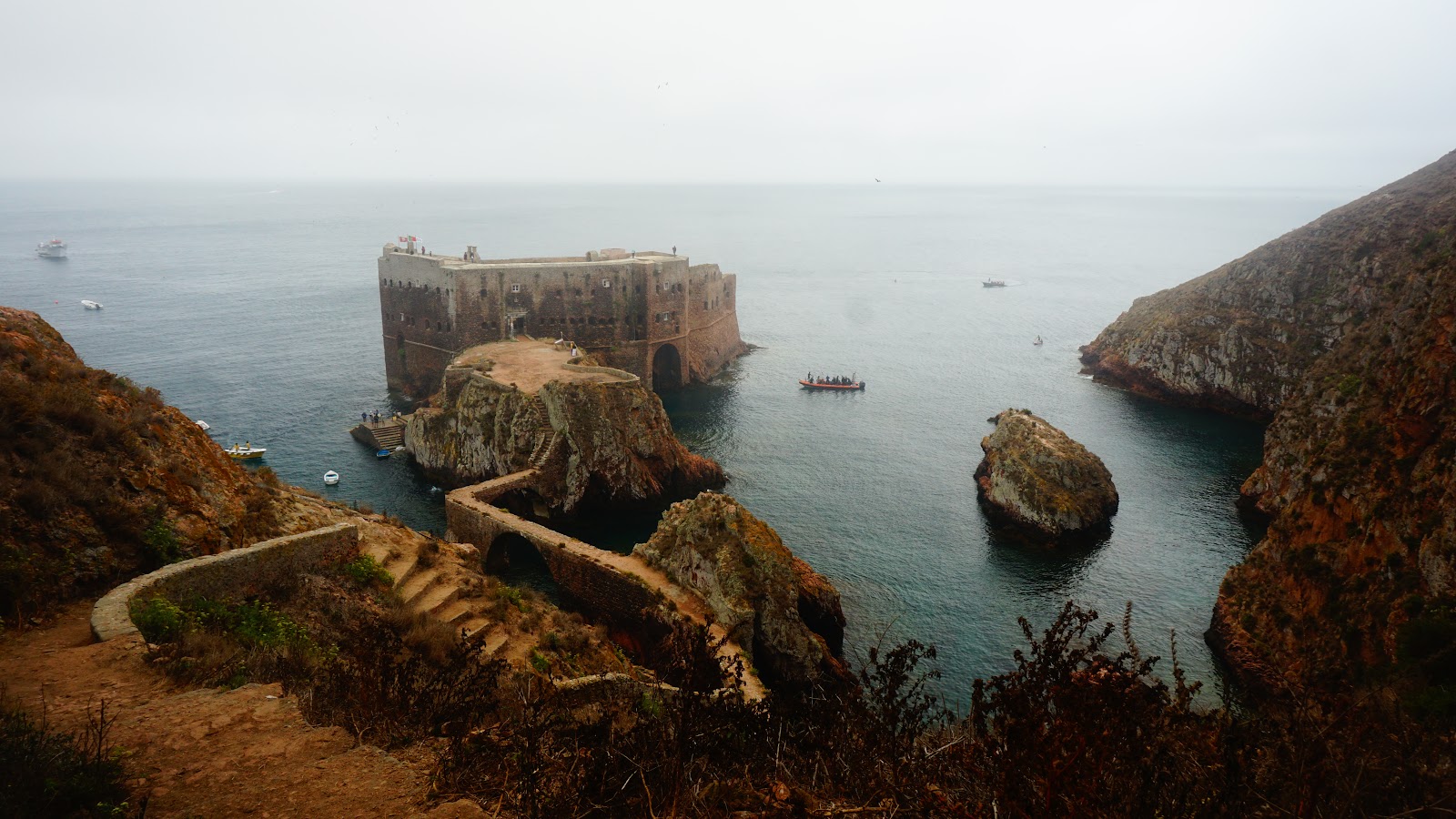

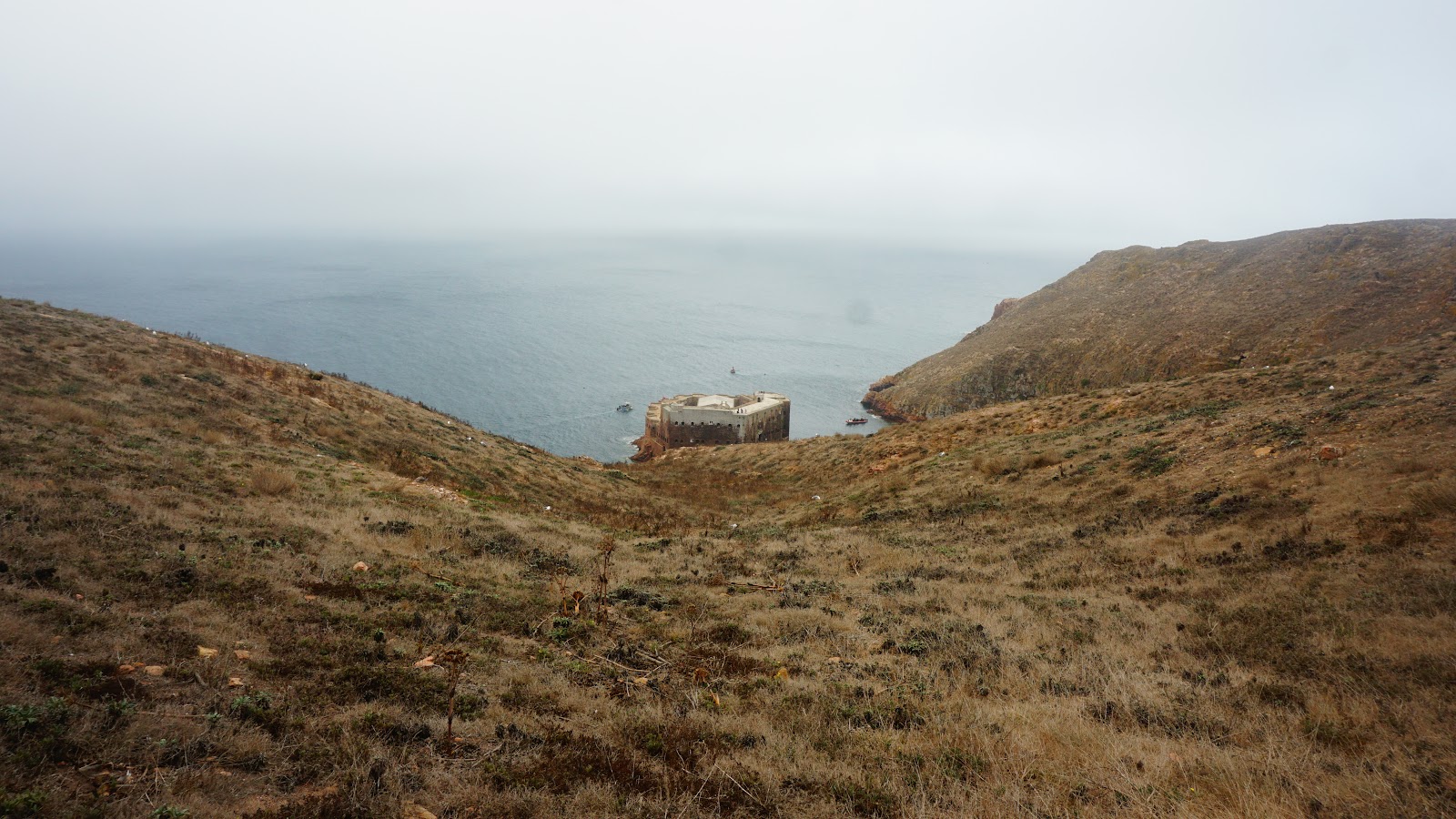
Even higher elevation.


Getting close to the top of the climb.


At the top, there is a trail running from the village to the southern end of the island. Somethat unfortunately, perhaps, we decided not the venture south (at the end it turned out that we would have had plenty of time), instead, choosing to go back. The scenery at the top of the island is pretty much dominated by the lighthouse. With a bit more visibility at the top, you can really see it.
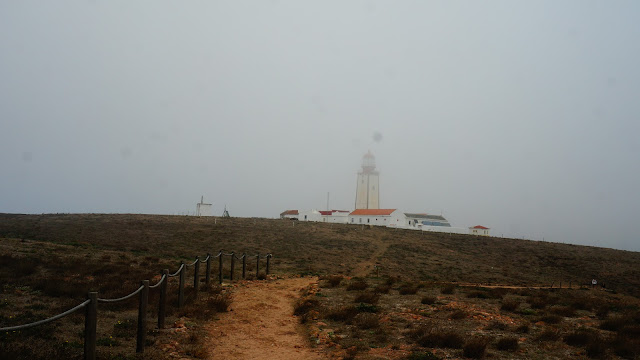
Approaching the lighthouse from the south.


One last look at the fort.

There was no one at the lighthouse we were comfortable asking to take a picture of the both of us (a few groups were in the middle of their picnics, we did not want to interrupt them), so we opted for selfies instead.


Selfie with the lighthouse.

From there we repeated our earlier descent into the village, but right before entering it, detoured to a trail to two locations called Merleu and Buzinas - essentially two really nice vista points with east, and north-east views.
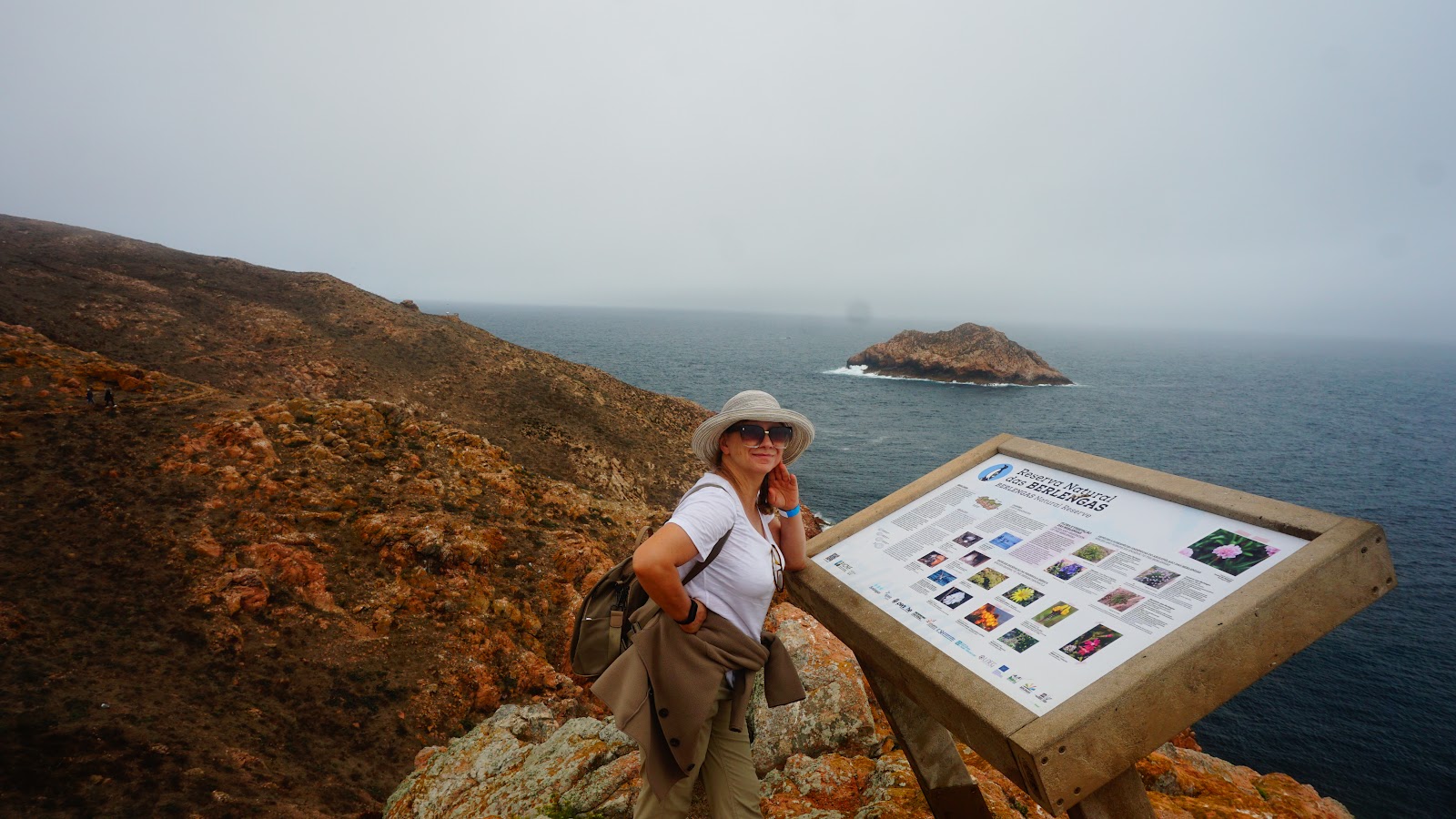

Merleu.

The hike itself is a circle that took us about 35 minutes at a leisurely pace with stops.
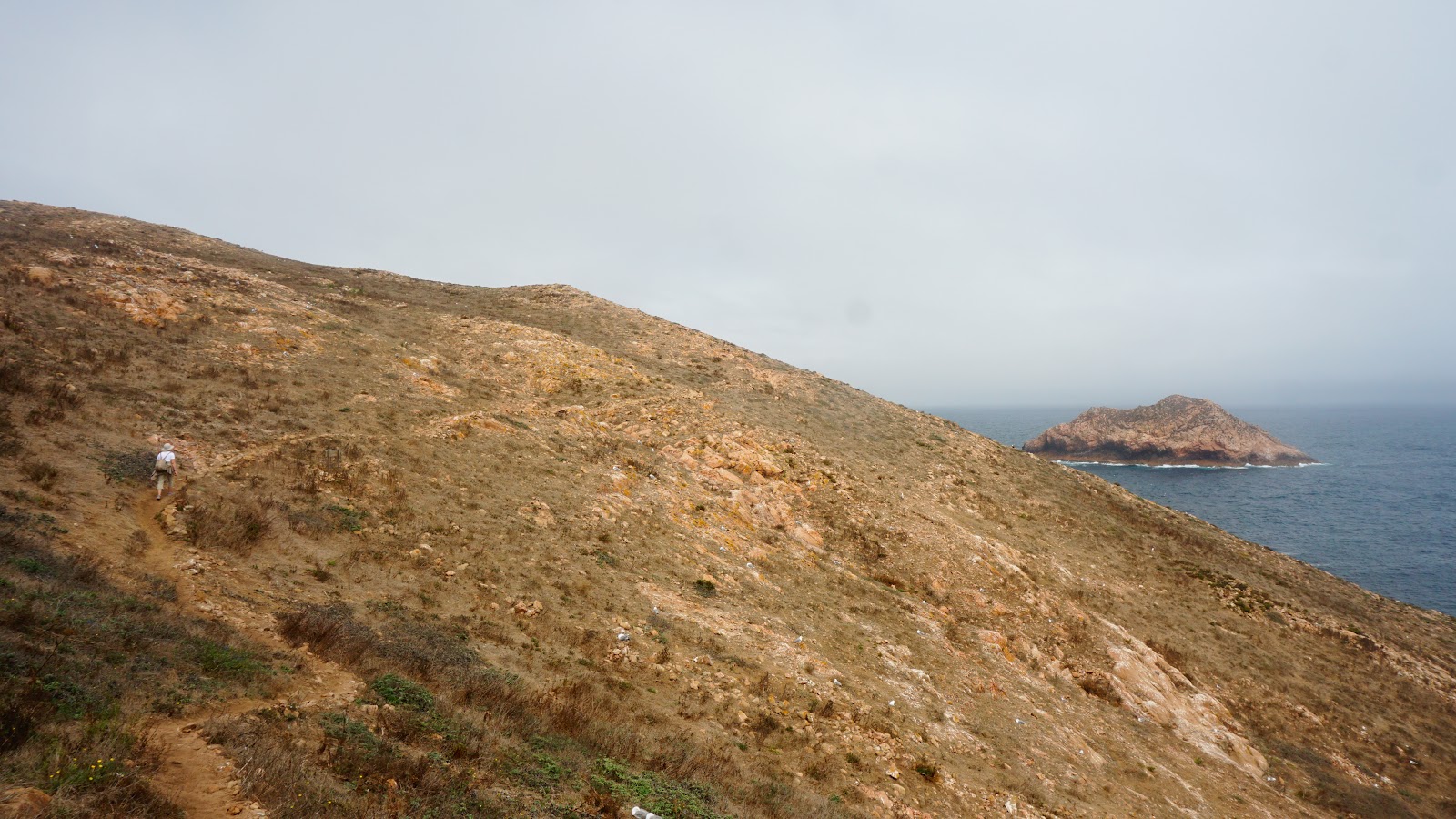
Hiking from Merleu to Buzinas.


Our main companions along the way were seagulls. They are - if not nesting, then defiintely, inhabiting the cliffside. 
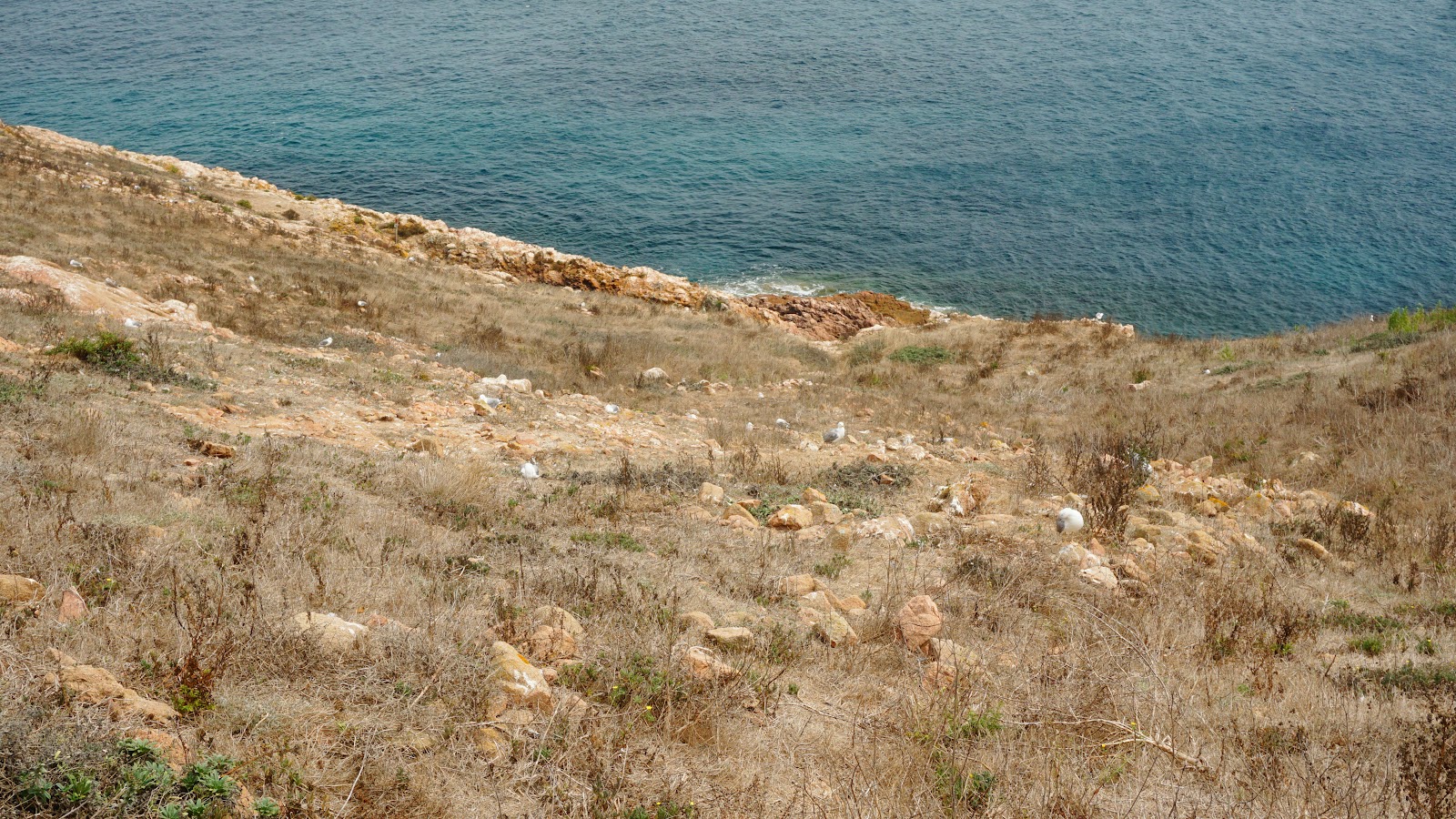
Seagulls.

This is the more quiet deserted part of the island - very few people take this trail (comparing to the hundreds of people on the trail between the village and the fort). As we approached the northern end of the trail and the island, we got hit by the northern wind which brought with it a lot of ocean mist, threatening to actually soak us for real this time. 
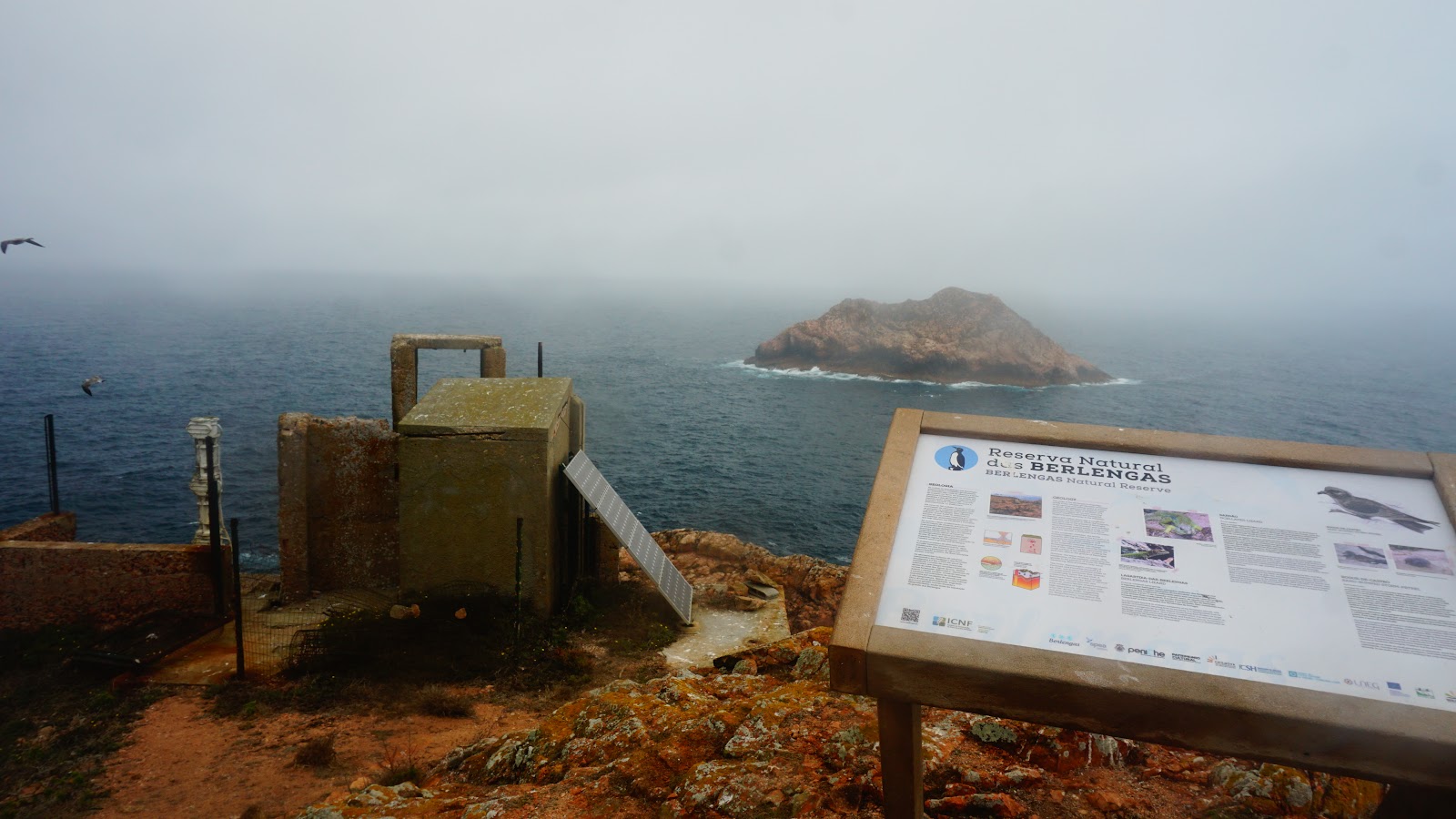
The Buzinas visa point is not the most hospitable.

After the Buzinas vista point, the trail went up towards the top of he island, and curved back south. Even more seagulls in the area. Olga broke out our binoculars (we tend to take them on our trips, but rarely use, this time, they did see action), and did some birdwatching, eventually spotting a bird she claimed was a gagara.
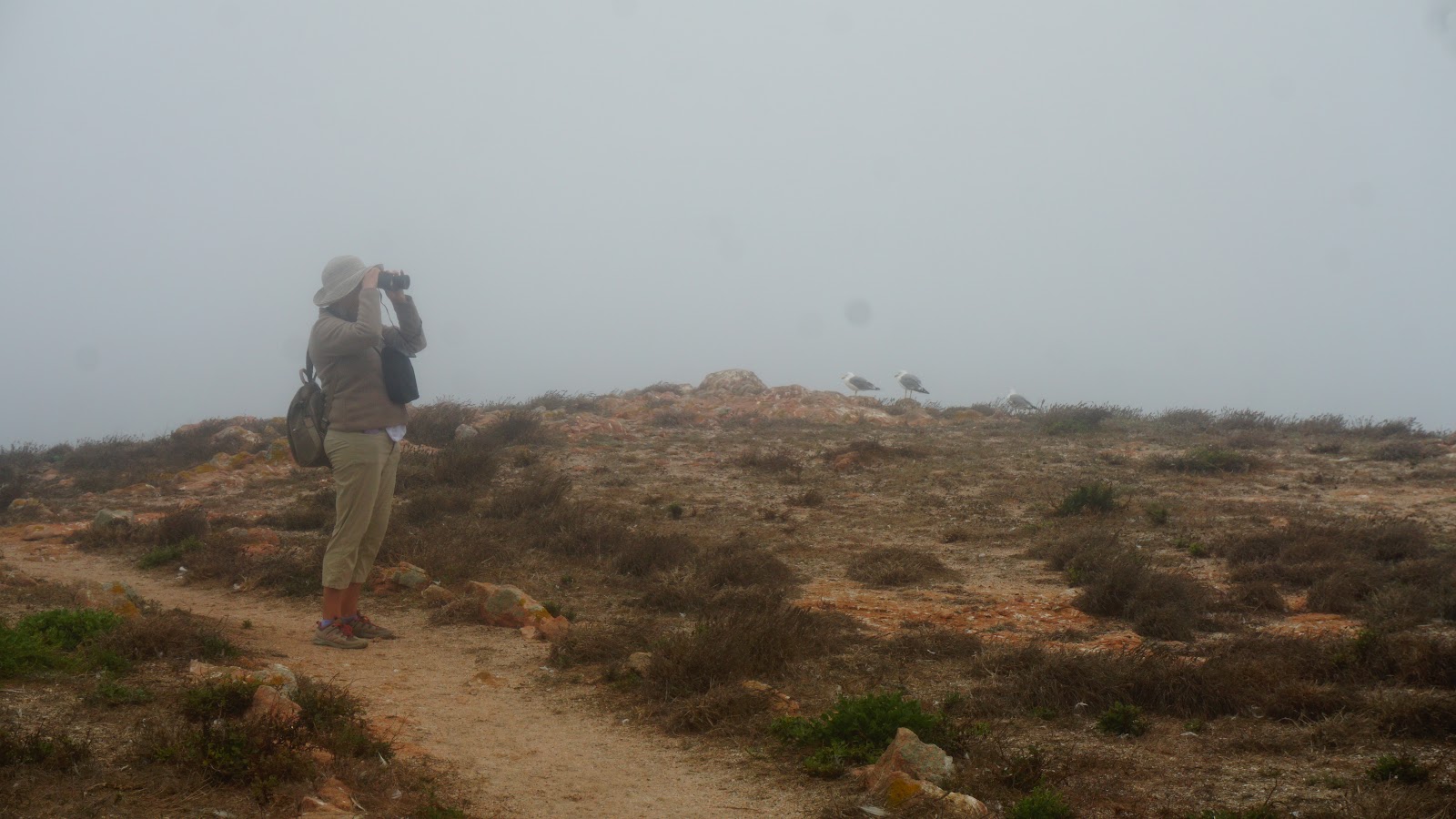
Birds watching Olga while Olga birdwatches.


On the bright side (pun somewhat intended), the northern wind that first brought the mist to fall on us, also seemed to have totally cleared the air around the lighthouse, so when we got up to the top of the plateau, we got treated, finally, to an unobstructed view.
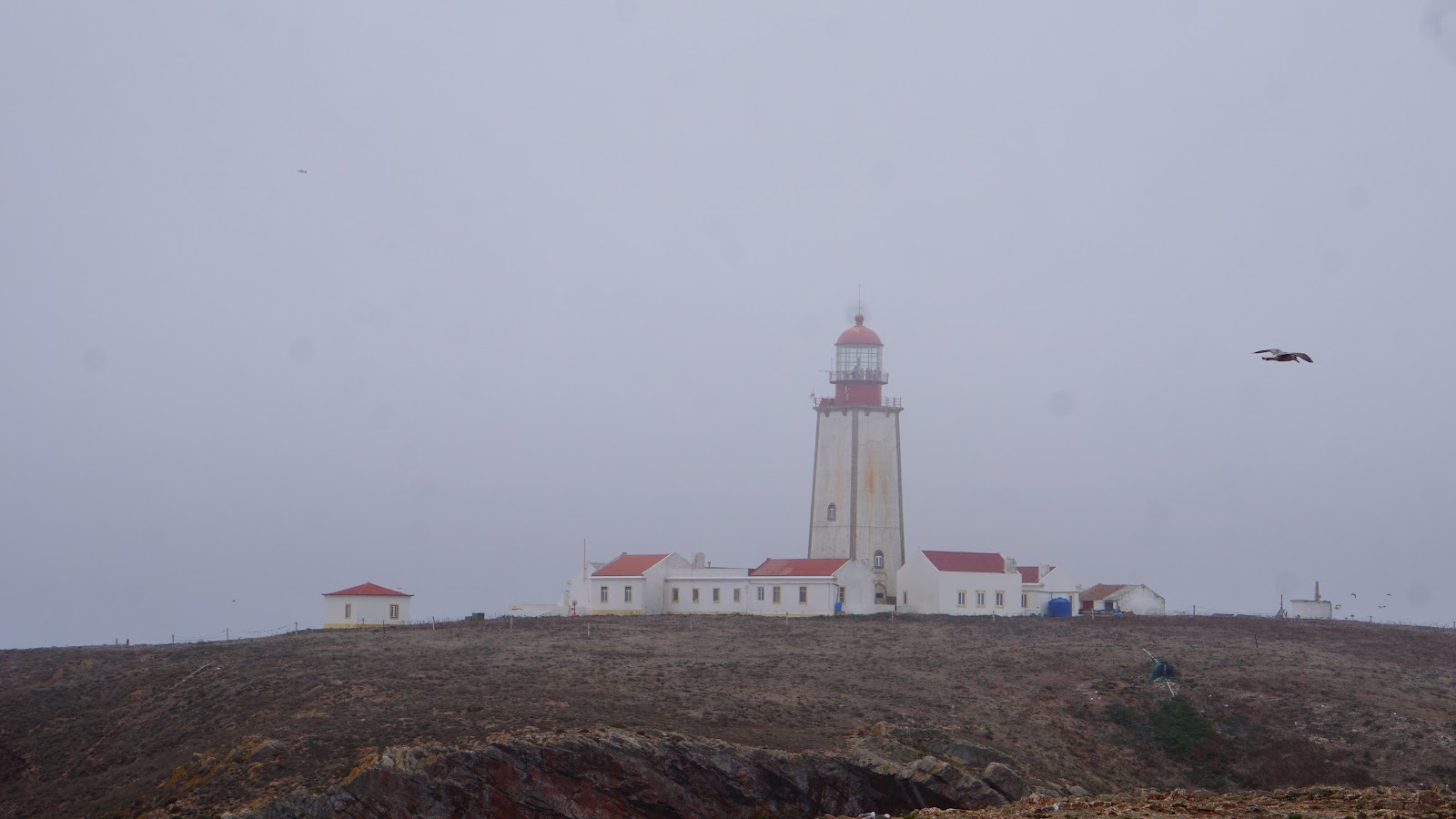


These two pictures were taken from the same spot only a few minutes apart.


I changed the lens on the camera and got some closeups of the top of the lighthouse.
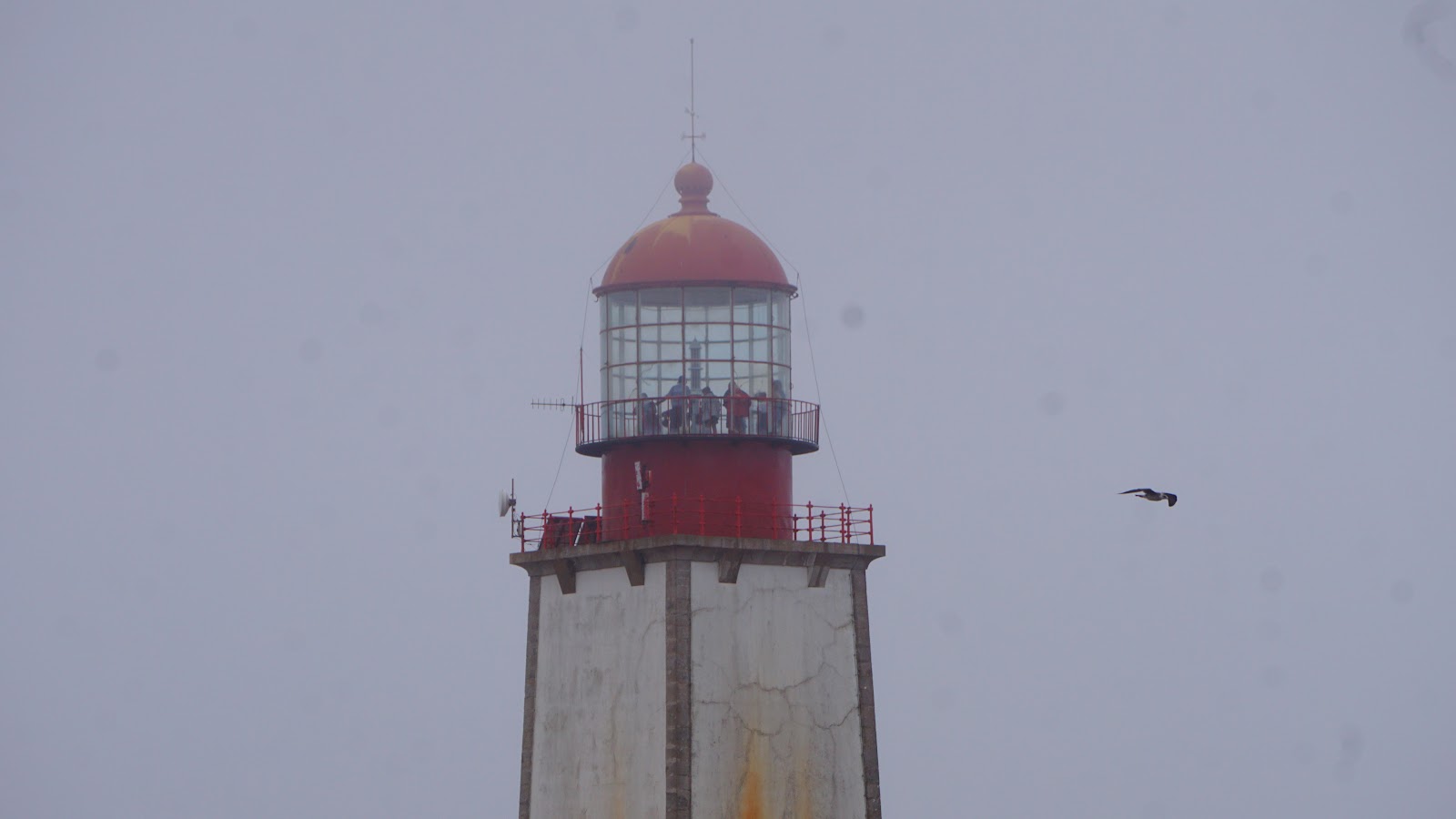

There are some people there!


Interestingly enough we caught some people there! Olga used her binoculars - which have an even better magnification factor and at some point counted seven people, but they were gone after a short while.
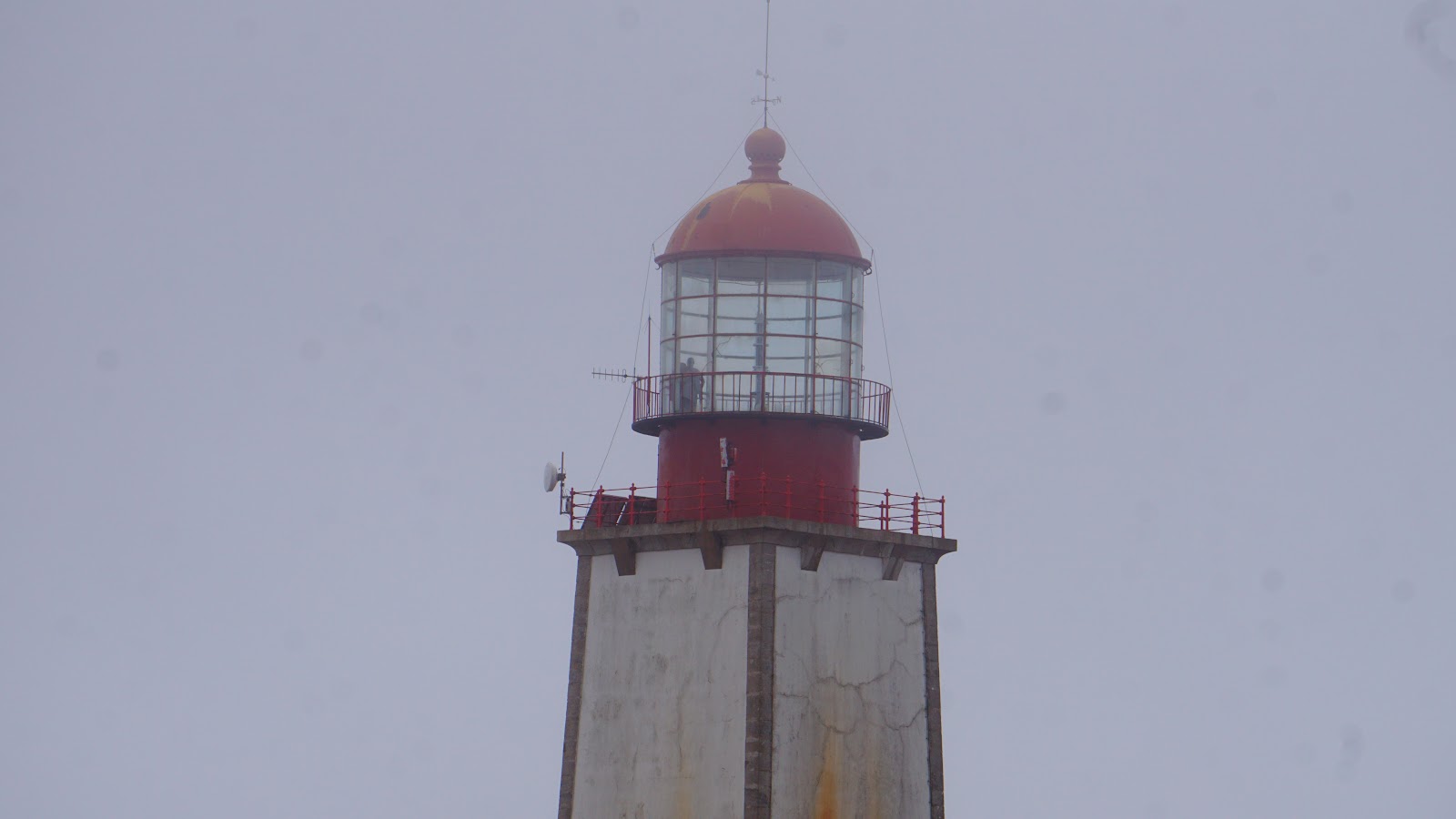

...and now, they are (almost) gone!


We don't know whether this was a public tour, or some private thing, or whether these are the facility staff - we were pretty tired by the time we finished the trail, and decided not to investigate. So the mystery remains, but we have the pictures!
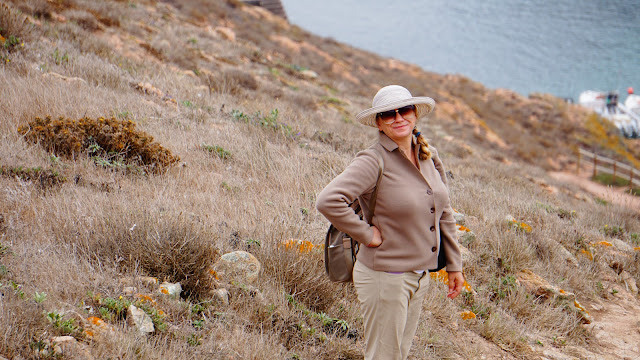
Finishing the trail.

The descent from the trail was pretty steep (my personal advice - take the trail counter-clockwise, like we did anyway - as you get much better views in front of you throughout the trail. But please be aware that the very last part of the loop is a bit of work to descend.)

Went down to the village, and with about an hour before the boat back, somewhat tired, found a table at the restaurant and got a coffee and a sangria. 
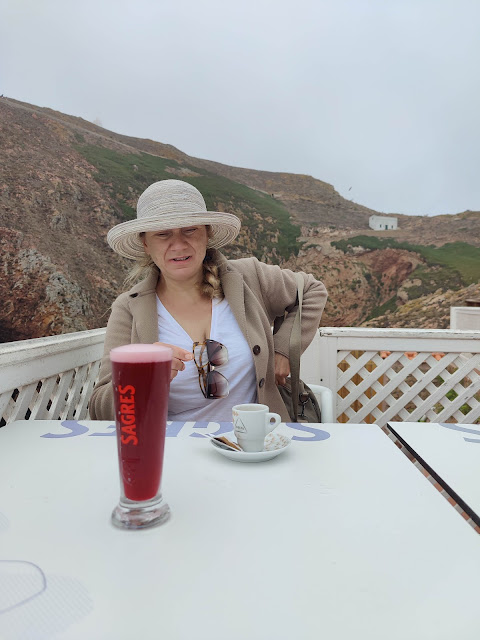
Berlingas Island rest be like this.

Spent some time recouping, then went down to the pier level and took a walkway to the beach, where we spent a few minutes trying the get our hands wet (and getting my feet almost wet instead) and watching the fishes.  There were a few people swimming in the water, but overall, it looked cold.
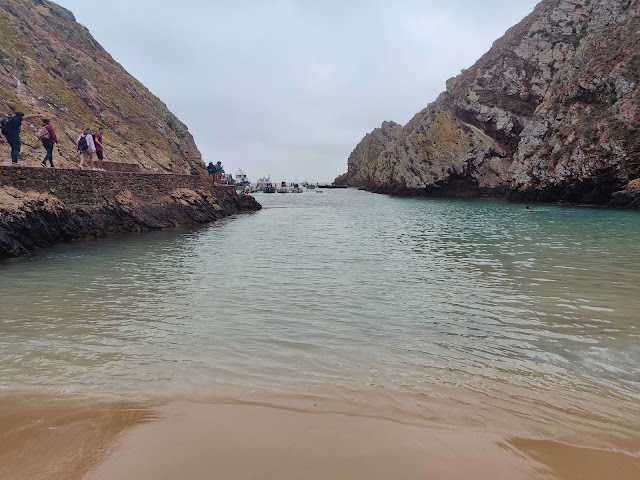
View from the beach.

Finally, went back to the pier where  a line of people returning on our boat already has formed. The boat came soon enough, we boarded, went downstairs (both because we wanted to, and because all the seats on the top deck were taken by the time we got on-board), and pretty much collapsed on the whole boat ride to Peniche.

Back in Peniche, we decided to take a walk around town. Took some time looking for a restaurant. At 5pm - they already have their menus out, but many are not seating customers (and many are just empty). As a result, instead of waiting for a seafood place to open, we opted for a Turkish doner place and had some nice kebab. (Trying to remember here if we had kebab last time we were in Portugal - this is certainly our main food in Germany and Switzerland, and we've had it in other European countries as well).  Same deal - our dishes were like 5 Euro each, comlete with  two 1-euro glasses of sangria (this one, unlike the previous two was flat) cost us 12 euros for two people, whereas in Switzerland, a trip to McDonalds was at least 20 (for two, for four it was more like 45).
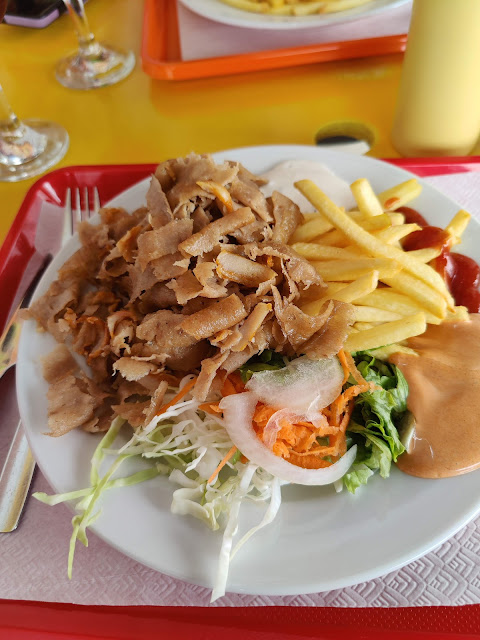
Kebab plate. Beware of the orange sauce. It is hot.

After the meal, we spent about an hour walking the central streets of Peniche. Stopped by a bakery and bought some deserts, which turned out to be really good (for anyone keeping score: 1 tea, 1 coffee, two slices of really tasty cake, and one Pasteis de Peniche - with a nut-based filling, I think - cost us 8.75. Bless, you, Portugal, a similar order in Mountain View, California is easily $20, and can be as high as 35-40 if one is really unlucky with their choice of a bakery).


Pastries. A walnut caramel mousse cake (top), a walnut honey cake (right) and wrapped pastel de Peniche.

The bakery was located on what looked like a central square - which also served as a home to at least four other bakeries/ice cream shops (they all do both).
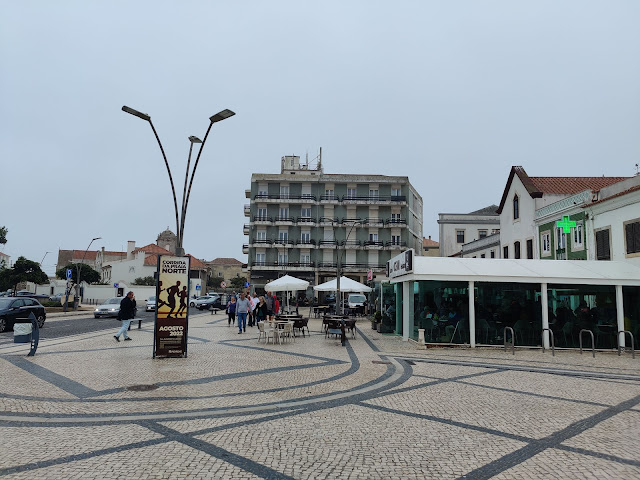
Peniche's most happening square. "Our" pastry shop is at the ground floor of the tall building at the back.

From the pastry shop, where we set outside, we glimpsed a nice side street, and went up there.
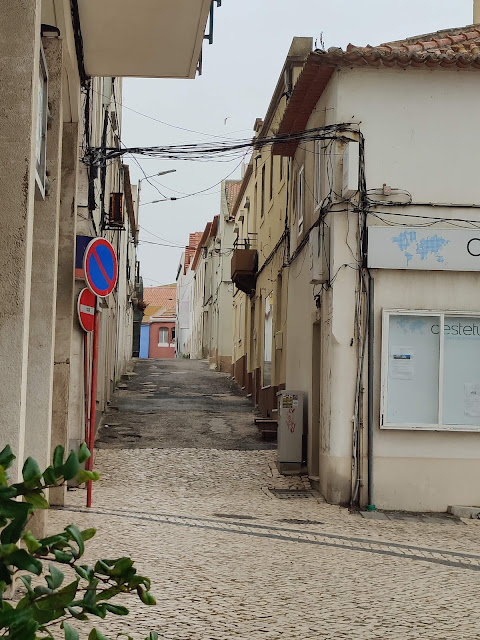
A cute side street.

Walked the streets a bit, circled around, went back towards the port.  On our way, passed the historic part of town, with what seemed like the biggest church in town (Olga went in, but they had an active service going, so we did not go inside to look at the church itself.)
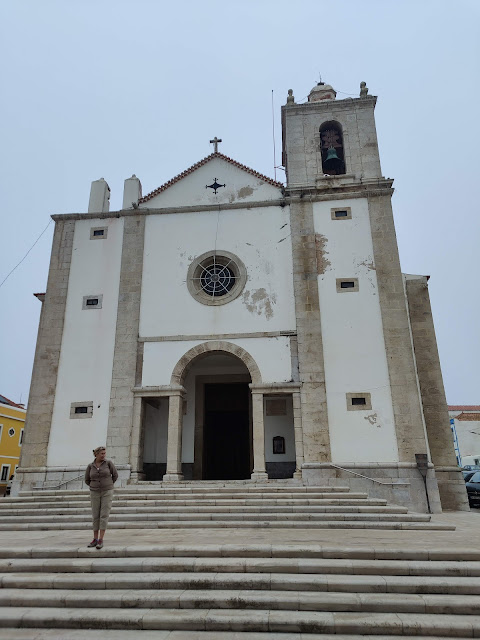
Based on google maps, this is Igresia de Sao Pedro (Church of St. Peter).

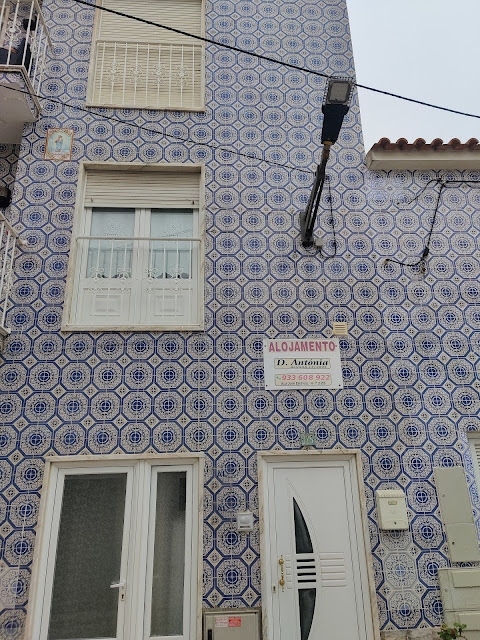
A house covered in azulejos.

Portside, we passed by the Peneche fort, which, based on google maps again is the museum of Resistance. Would have been a great place to visit, but unfortunately, we had no way of making it there, and we are unlikely to return to Peniche on this trip.
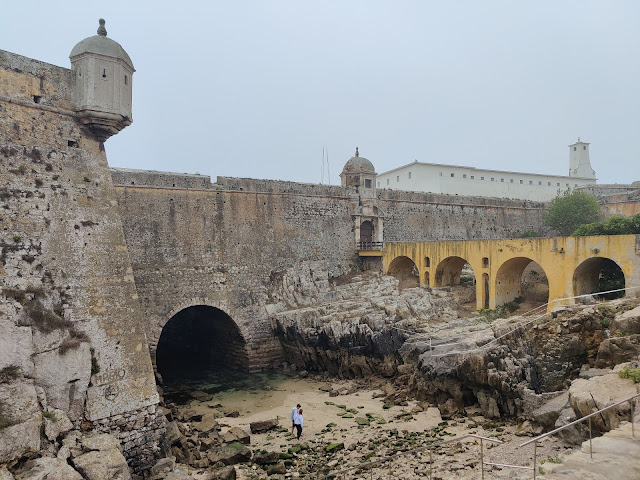
Museum of Resistance.


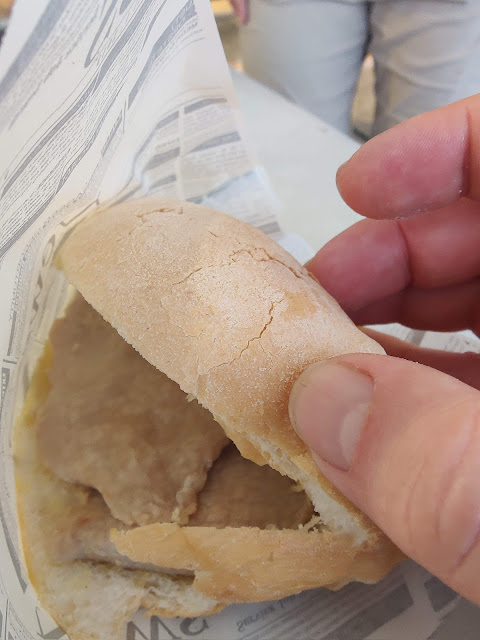
Got to our car, and started going home, but noticed an open-air market (open past 7pm no less), and took one last stop.  At the back of the market, a man was making bifanas. I ordered one. It was good.
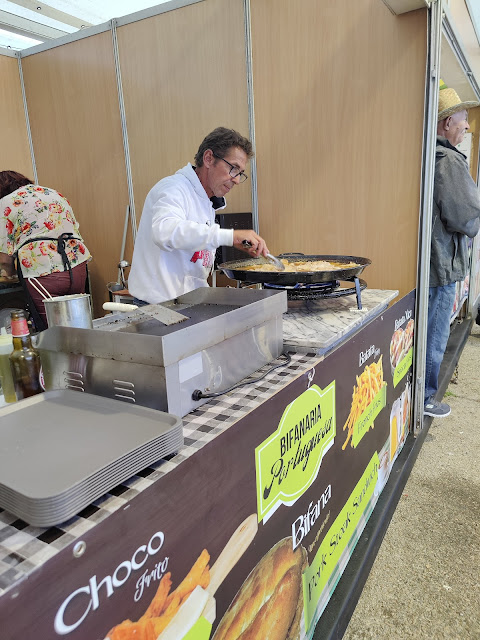


The art of bifana making.


The resulting bifana.

After this, went home and called it a day around 8:30pm.  We both were really tired, took some naps before heading out to bed for good. 

Alcohol. We did not open any new bottles at home, so I'll just talk about the sangrias a bit. Portuguese sangria are served differently than the Spanish ones (not that we have been to Spain). In Portugal, 90% of the time, the sangrias are served fizzy - from our previous visit - mostly fizzed by 7up (I am not a big fan of 7up, so when we make this style of sangrias back home, I add (diet) ginger ale for a very similar effect).  Today, we had three sangrias - two were fizzy, the one at the kebab place was flat. Yesterday, we had one sangria at the pastry shop in Obidos - that one was fizzy, contained some ginja in it, and also had fresh fruit - if not made from scratch, then at least assembled at the pastry shop itself.  In all cases, the sangrias were extremely affordable (essentially the same price as a cup of coffee, or less), and despite the wide range of presumed quality (from something carefully made at a relatively fancy coffe-shop, to something poured out directly from a store-bought bottle), all tasted good and were very refreshing. It is hard to destroy a sangria.  All four were red. I like white sangrias a bit more, but in general, I am very much pro-any-sangria.

Steps.  Google fit and my watch are having an argument. Watch (which was at 0 in the morning) shows 15,967 steps: less than yesterday, but then today significantly more of those steps were actual steps up or down.  Fit has already reset, and shows 18,005 steps for Wednesday, and 0 steps as of now. Either way, not bad for the day.

Tomorrow.  Planning to visit Batalha Monastery, Leiria (the castle and the town), and, if have time - stop by Fatima in the afternoon. Need to be home by 8pm, sharp, and are likely to leave a bit later, but we'll see how the day goes.


Tuesday, August 23, 2022

Trip to Portugal Day 2: Obidos and Caldas da Reinha


A rather hectic day, with a lot of things happening.

Our place in the morning.


Woke up around 9am local time, took about an hour to collect our wits and get ready to head out of the house. Overnight I received an email about our tomorrow's (Aug 24) planned trip to Berlingas Island. Apparently, in addition to tickets for the ferry, we also need permit to come to the islands (these seem to work as the main means of limiting access to the island, which is quite small). The permits are issued by some institute for conservation, they cost 3 Euro per permit, and the only way to pay is some sort of a bank transfer the likes of which I am unable to perform from my US accounts - at least not with on-line tools.  So, our day started with a walk to Obidos, not to visit the old town and the castle, but to head to the bank hoping that I can give them those 6 Euro and they can transfer. After waiting for 30 minutes in the bank teller line, we were told that no, this indeed is not possible, we have to do it ourselves. ATM machines were no help either. We then sat down under the walls of the castle and went through all possible ways of doing so - ending up - after about 20 minutes of attempted downloads, over crappy free wi-fi, with using Xoom which apparently is the bank transfer service owned by PayPal. We had to improvise there, but the bank credentials were valid, and eventually Xoom told me that it succeeded in transferring the money.  
Obidos, under the walls: spent over an hour here figuring out bank transfer details.
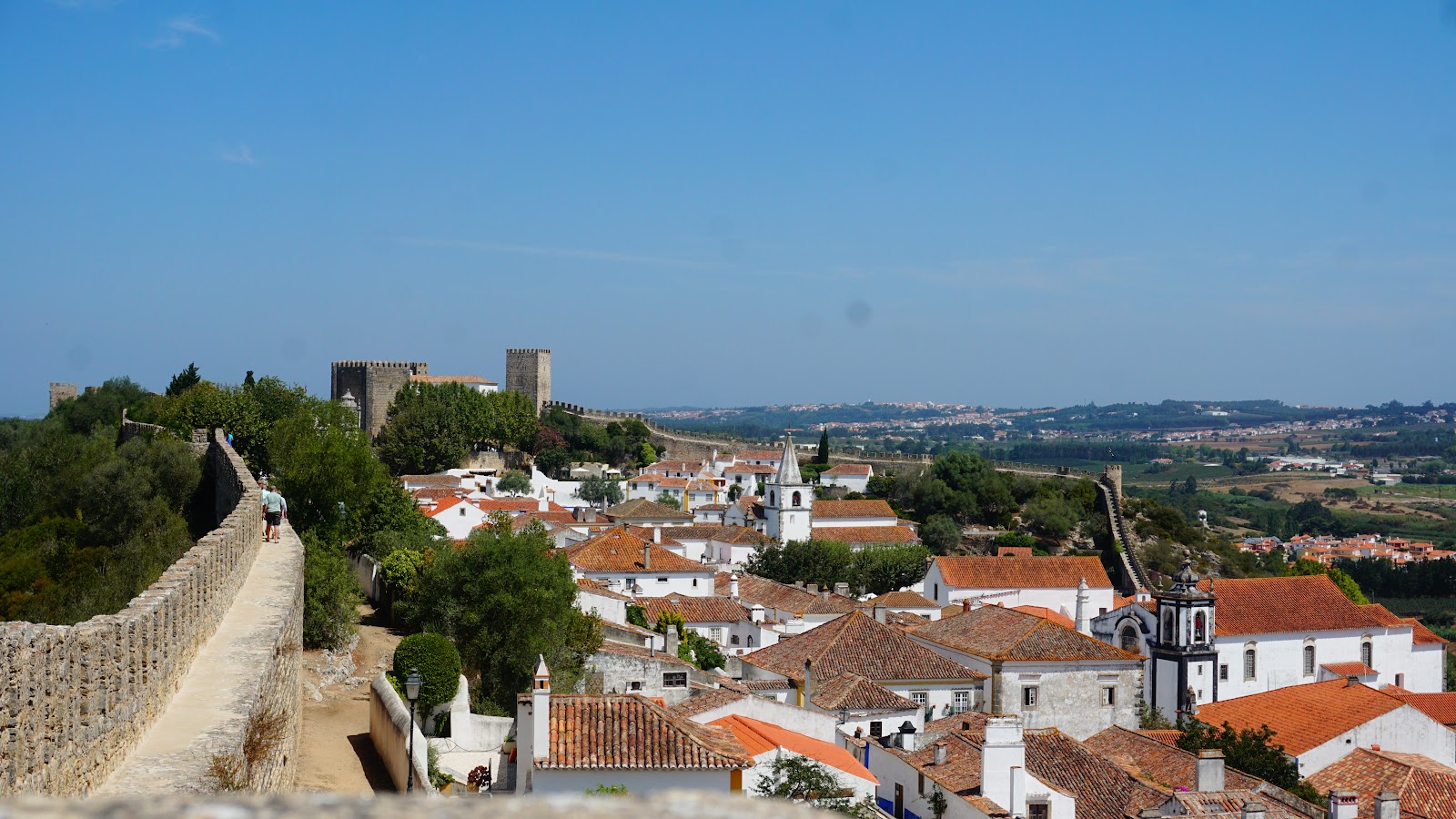
Around noon we finally made it inside the city walls, and decided that we first will climb the walls and circumnavigate them.  We chose to walk counterclockwise - by chance, but the right decision - as the walls have any sort of barrier on the inside only in a few places, and the entire walkway is otherwise not protected at all. It is also quite narrow, and there are a lot of people navigating this path in both directions. Moving counter-clockwise lets one squeeze to the wall when people are passing you (everyone's instincts are to follow the direction of vehicular traffic).
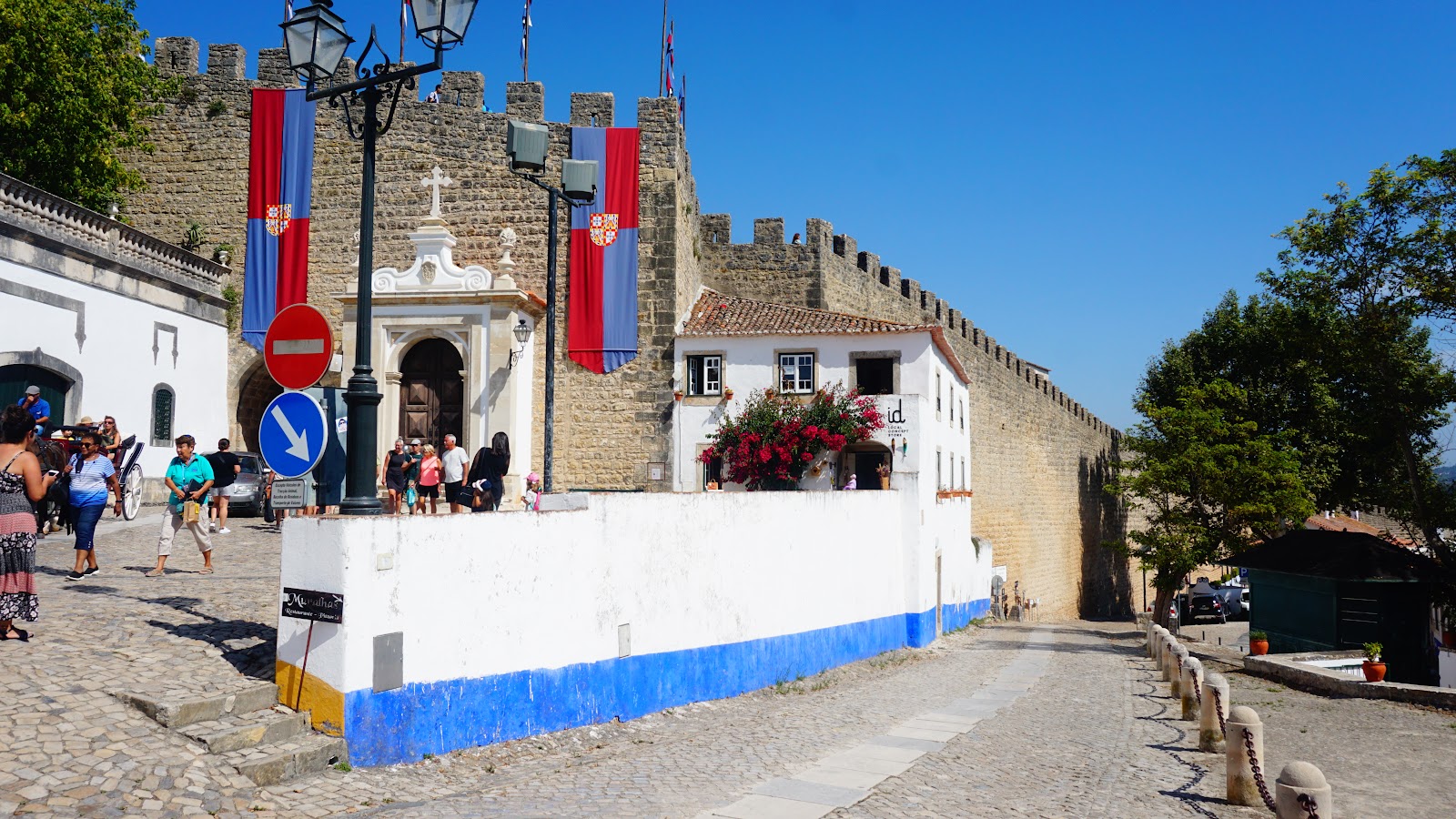
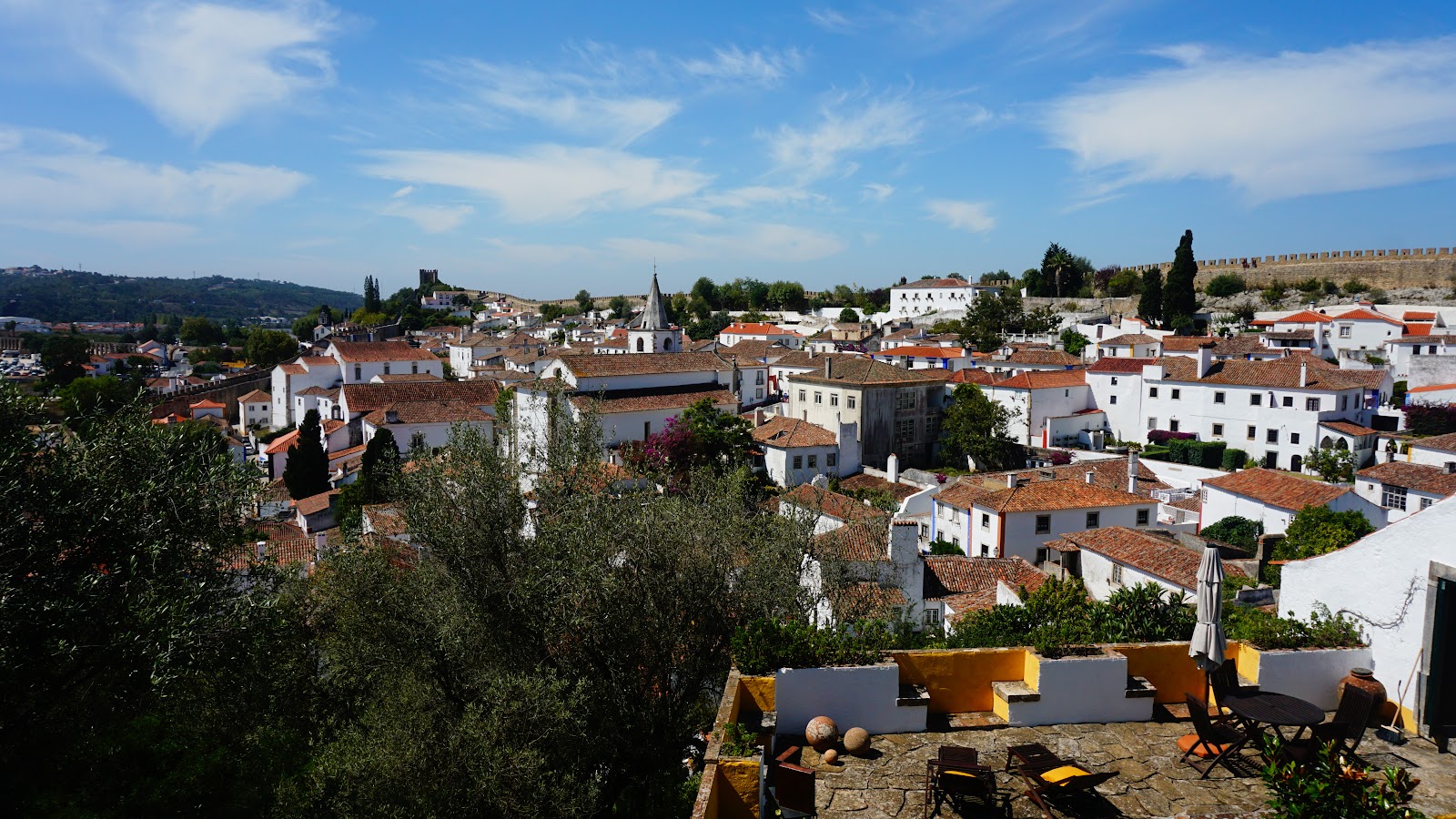
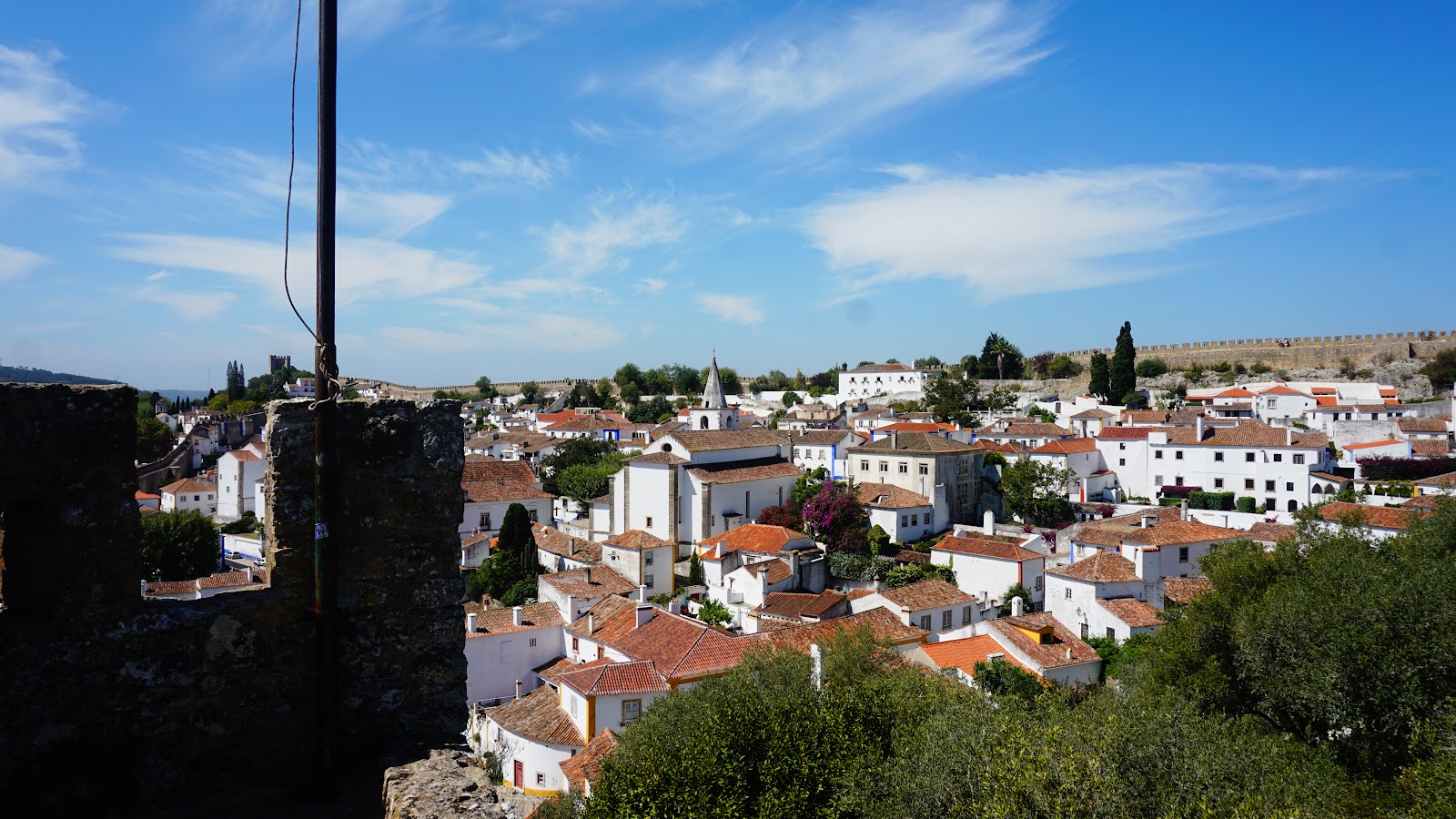
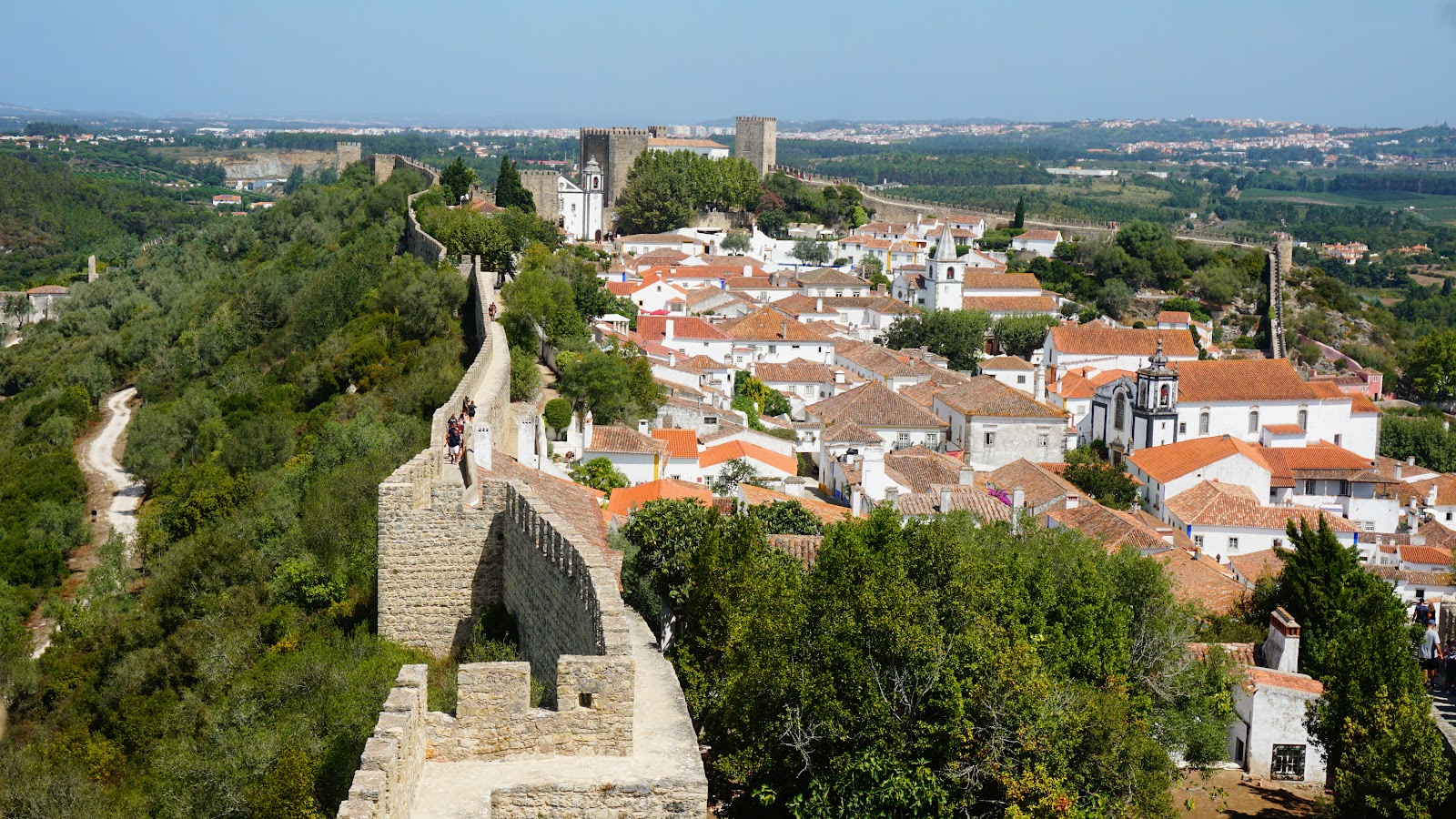
Obidios city wall, and some of the town itself.


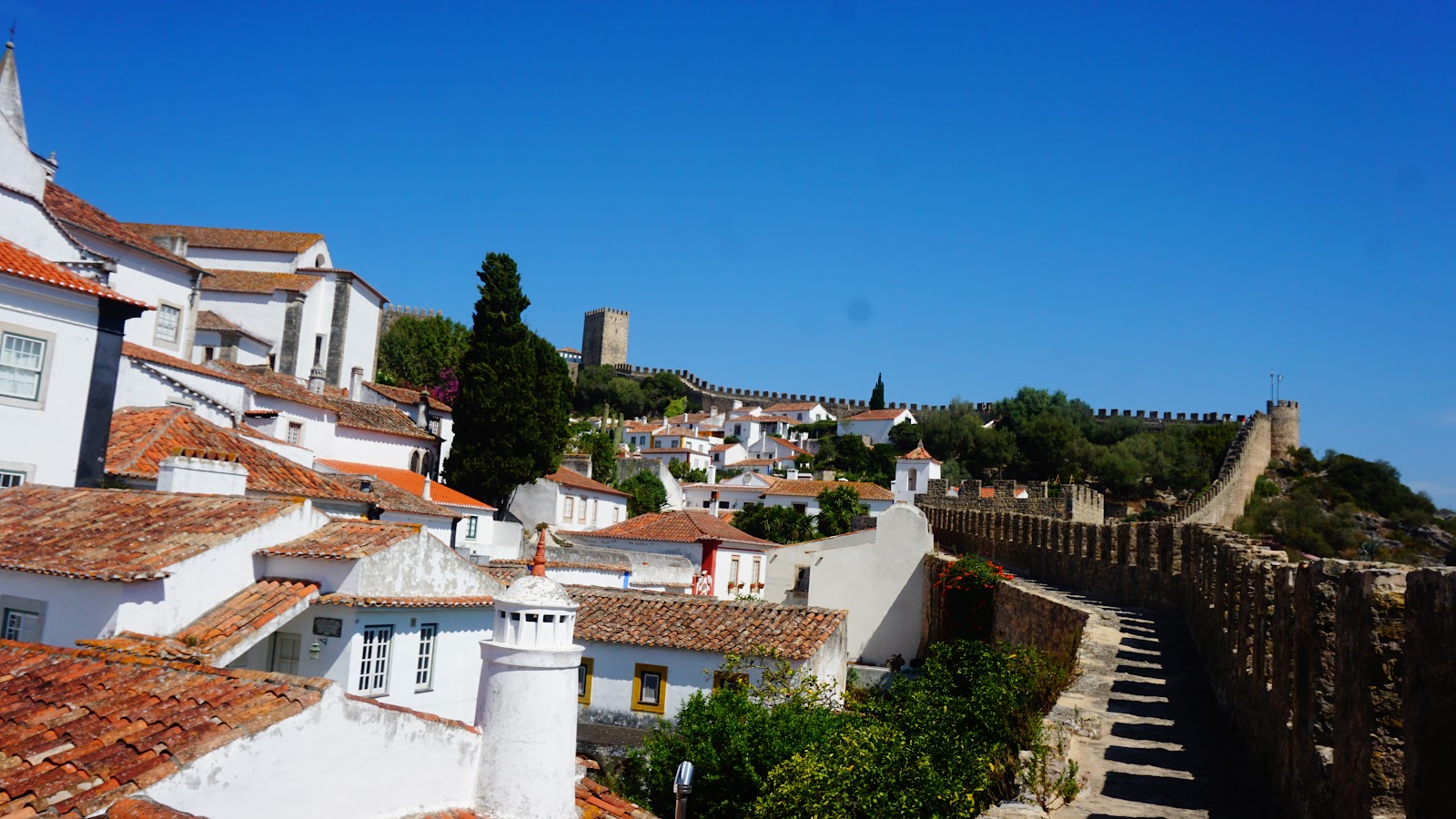
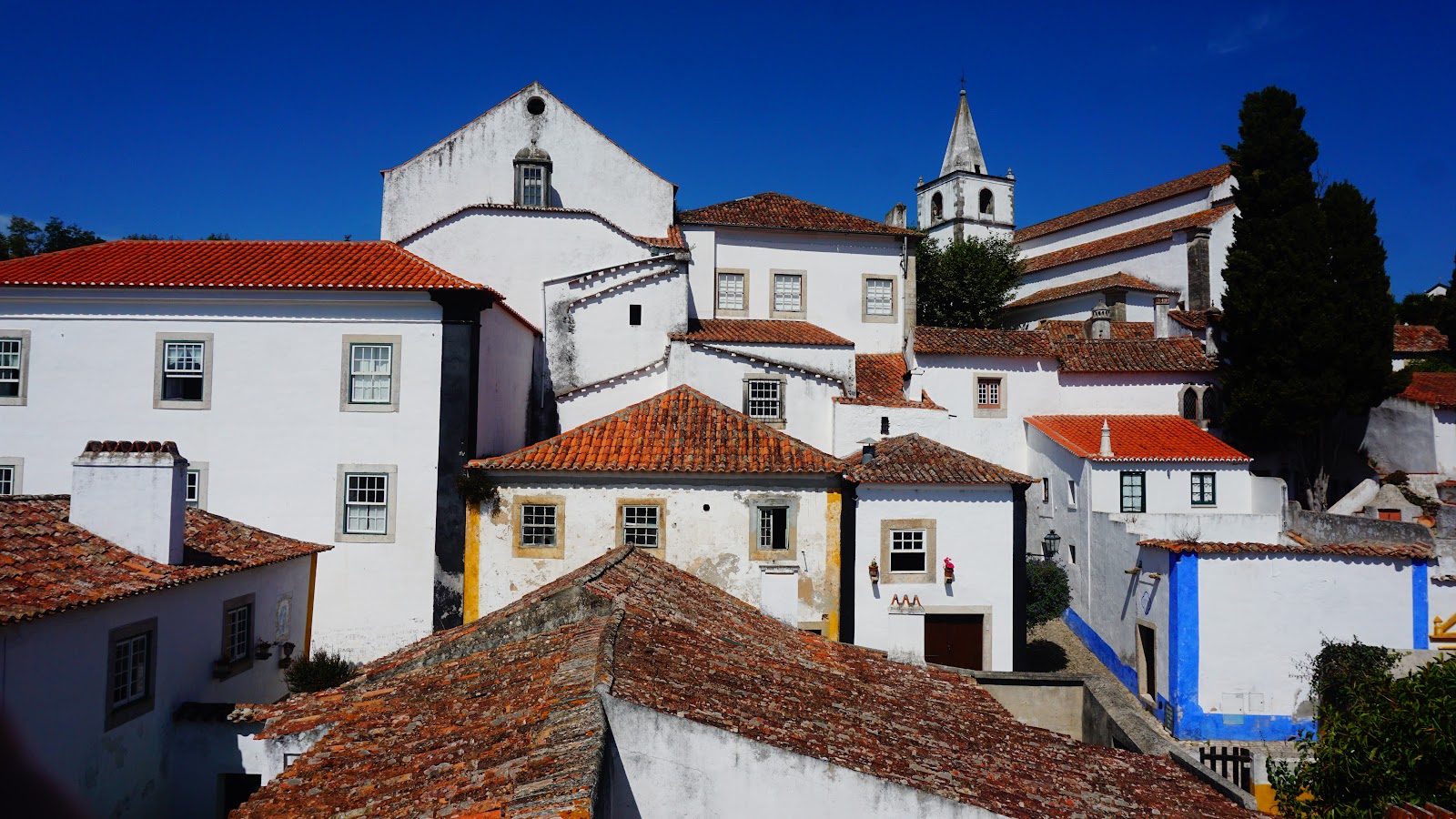
The historic part of Obidos is not very large. The town hugs a relatively steep hill, and extends for about a kilometer (maybe a bit more if we count the two points on the wall farthest away from each other) in roughly South-North direction, while probably being only 250-300 meters wide for most of this length. Inside are white washed buildings painted blue at the ground level. As the South-North streets are all one above the next, this creates for really picturesque textures, and by far most of my almost 500 photos from the day are of those townscapes.

Looking south from the eastern wall of Obidos. 

Some closeups of Obidos houses climbing up the hill.


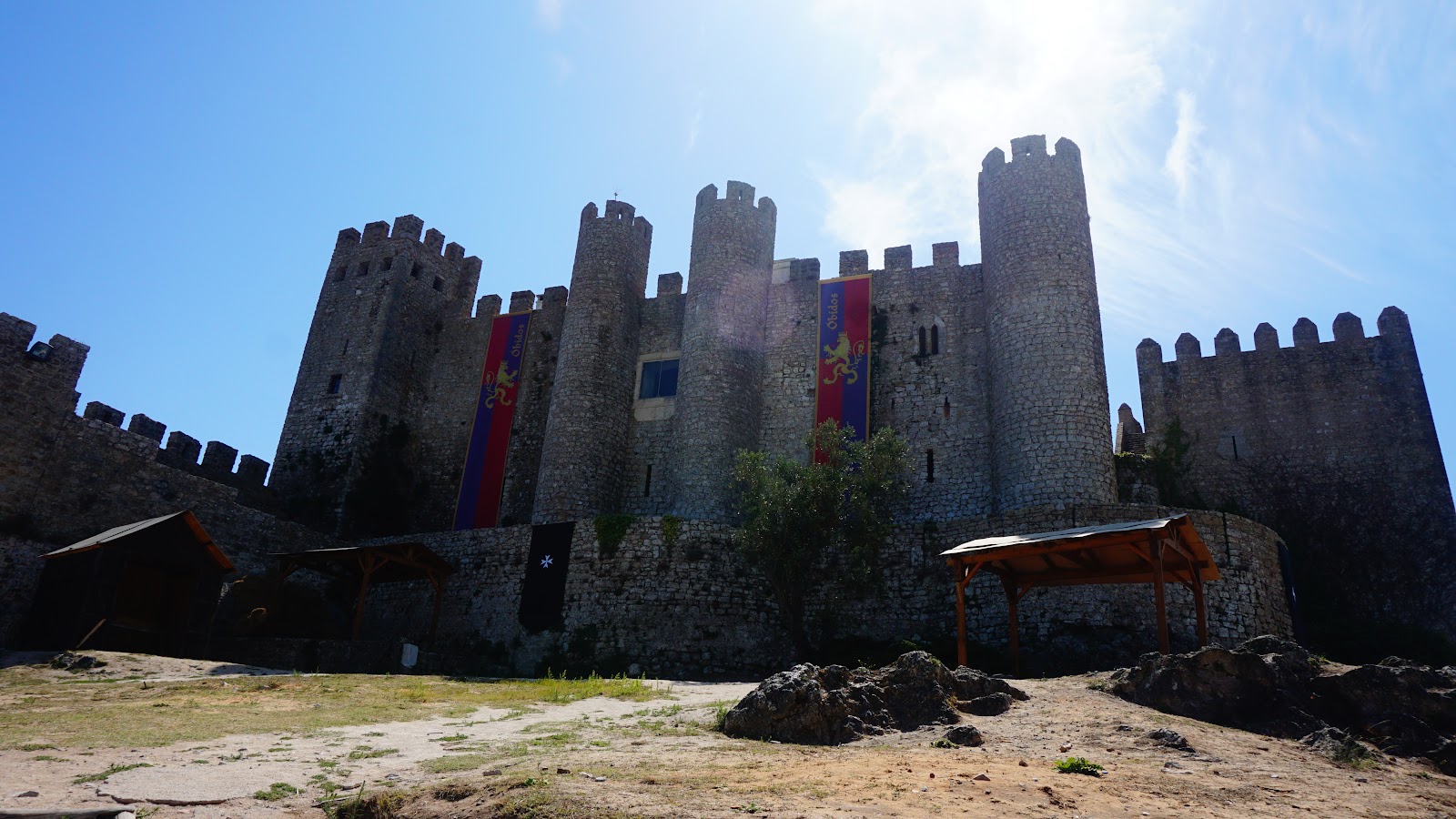
On the northern end of the city, at the highest point the the actual castle, which at the moment consists of an enclosed courtyard and walls that house a restaurant and a hotel.

Obidos Castle, view from the northern tip of the town, where the fairgrounds are located.

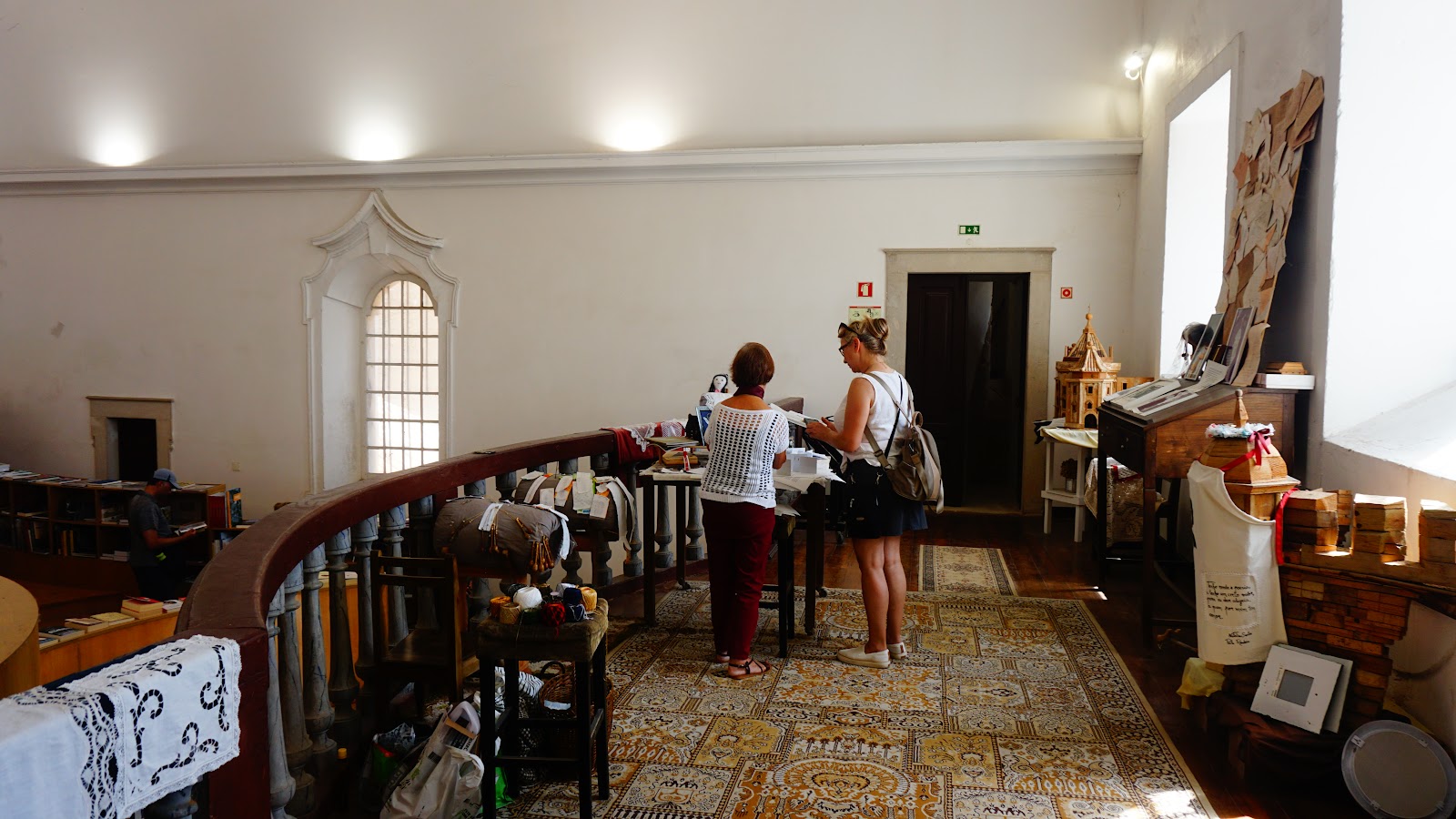
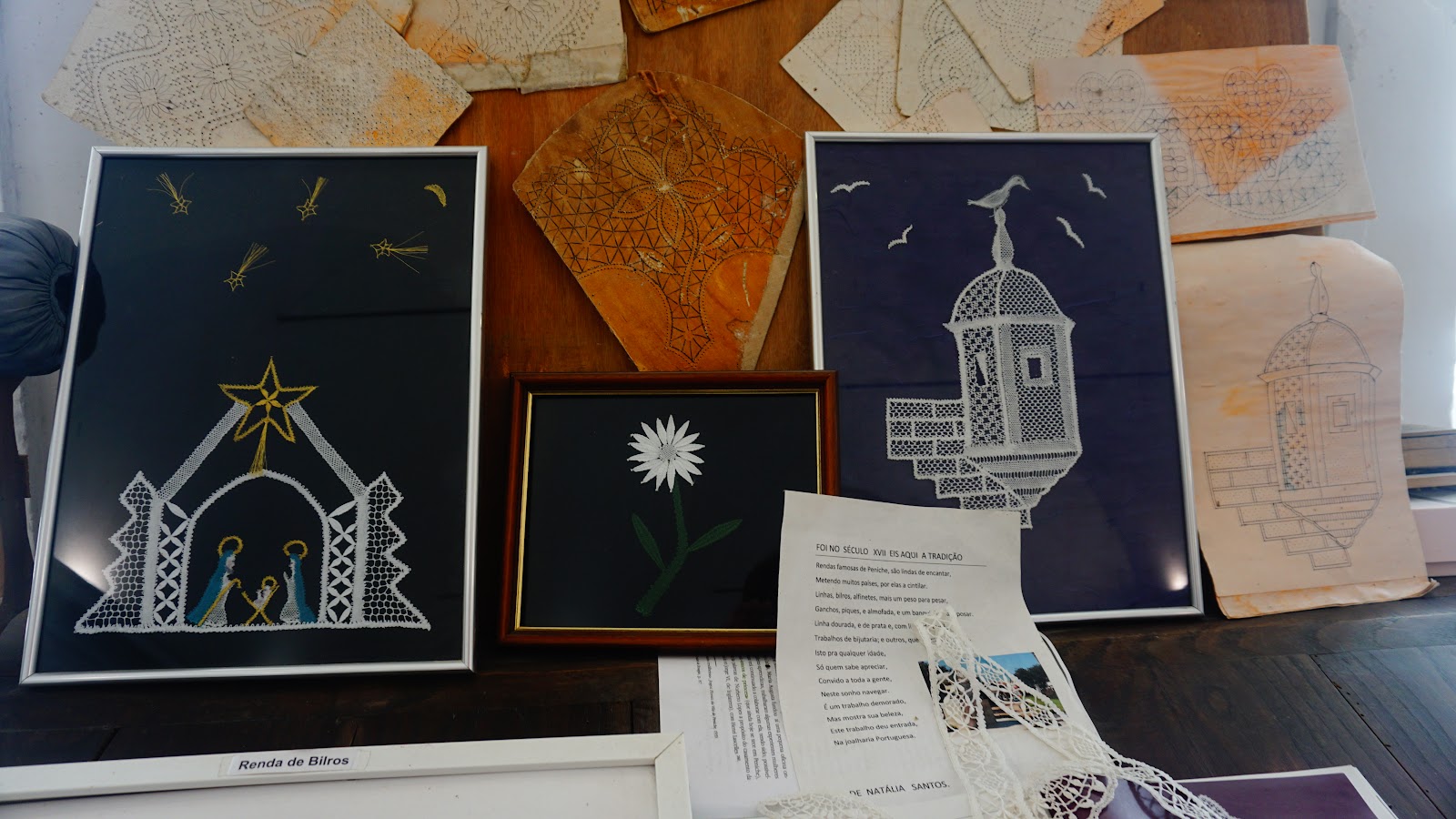
We walked the wall all the way to the castle, dropped back to the street level, visited the insides of the castle, which - again, is just a courtyard with a lot of "Staff only" doors, and then visited a bookstore located in the building of one the many Obidos's churches, where Olga spent some time with a local lace-working master who showed her some of her work (she works on the second floor of the bookshop and has her own small setup here.) Some really nice work.

Checking the laces.


Some of the more intricate lace work.


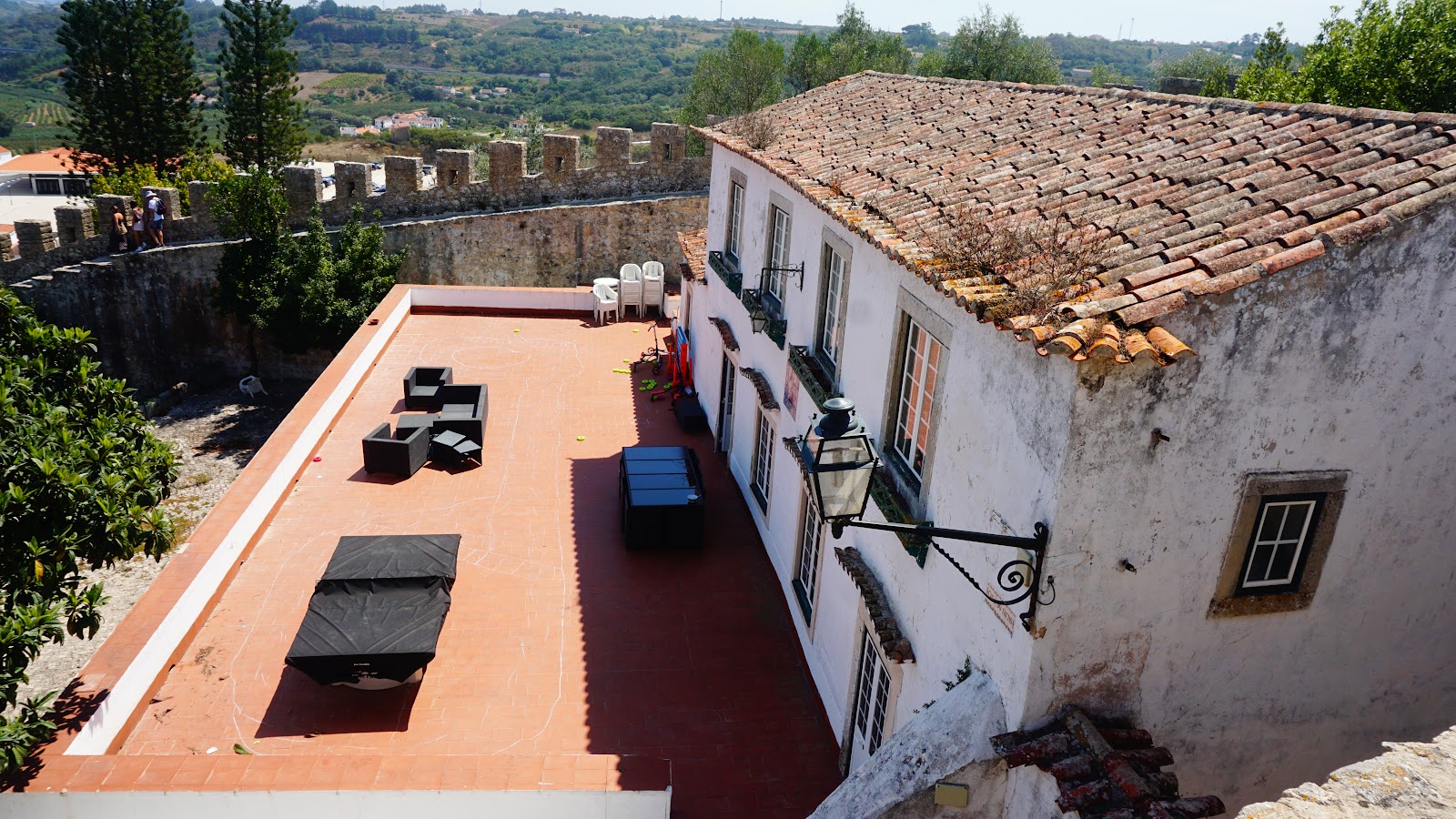
We then went to the northernmost part of the town, just past the castle, where there is a field full of empty booths - essentially a small fairgrounds. There we found the way to go up the western wall of Obidos, and we took this wall back to the southern end of town. The western wall is higher up the hill, offers some really nice views out, but also allows for an almost bird's eye view of the town itself. We pathway on along the wall though is quite narrow. I kept on thinking that if this was the US, there'd be wooden rails everywhere or else no walking the walls. I sort of wonder how many people may slip up (the stones paving the pathway should get really slippery when wet). In most places along the wall, you slip and you are done. Only in a few places, where a private garden backs up to the wall, or where for some other reason the street level is soil rather than cobblestone, would one escape with a fracture instead. But I digress. Caution is definitely advised. But the views are fantastic.

Church of St. Mary in the middle of the town


View from the western wall towards the north end of Obidos.


Eventually we got to the southern tip of the wall, a place where the western wall and the eastern wall connect via a tall tower.  At street level there is this one house that spreads from the eastern wall to the western wall, blocking the final pieces of both walls, end essentially enjoying a couple of acres of land on the southern tip of the town all to itself. 

The southernmost house in Obidos - extending from one city wall to the other.


From the southernmost tip of the walls, one can get a nice view of the next hill over, where our house is situated.

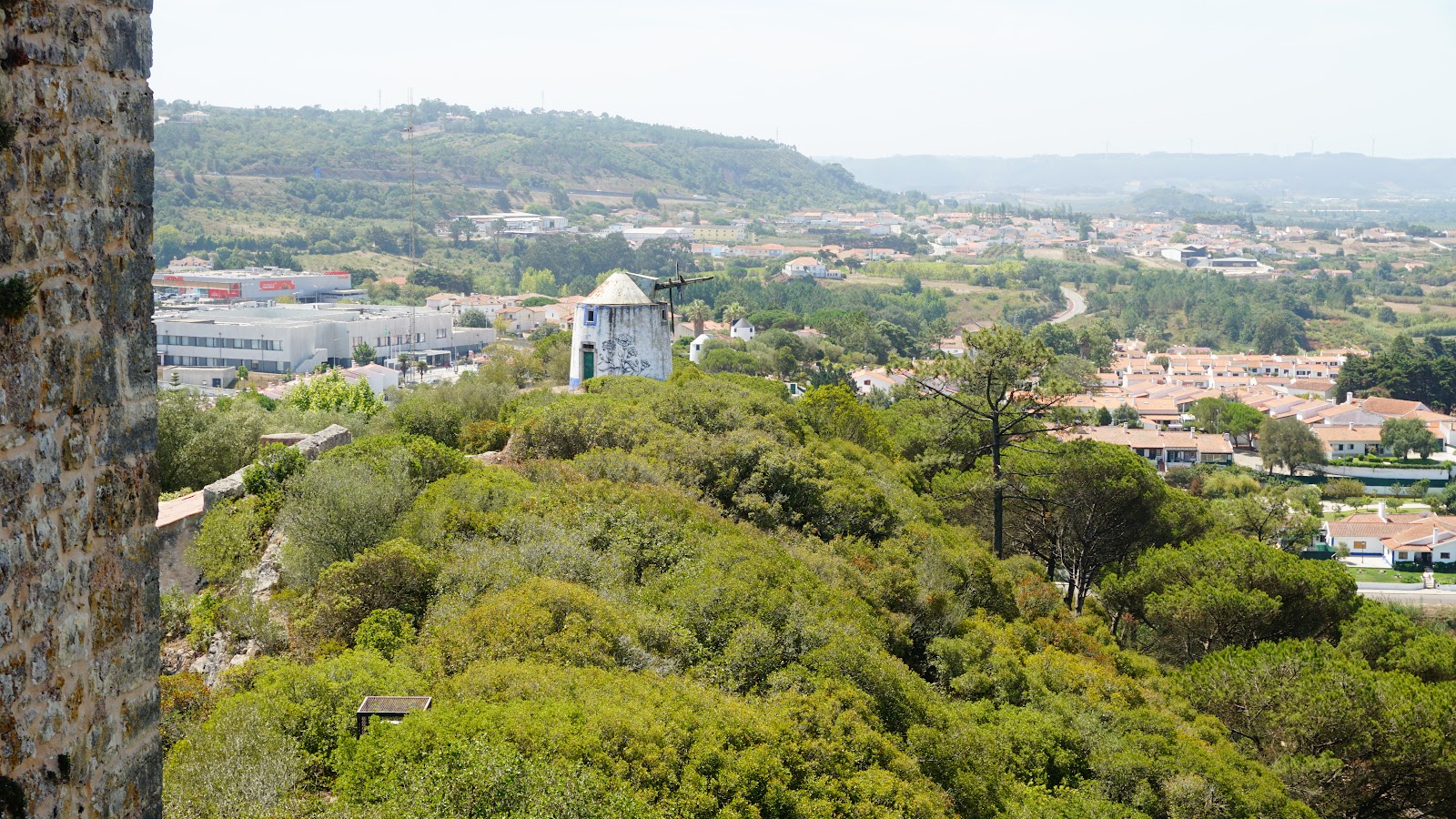
View from the Obidos city wall towards the house we are staying at. The house itself is not too visible, but the two houses on both sides of it (the round tower-like structures further away in the photo) are visible.


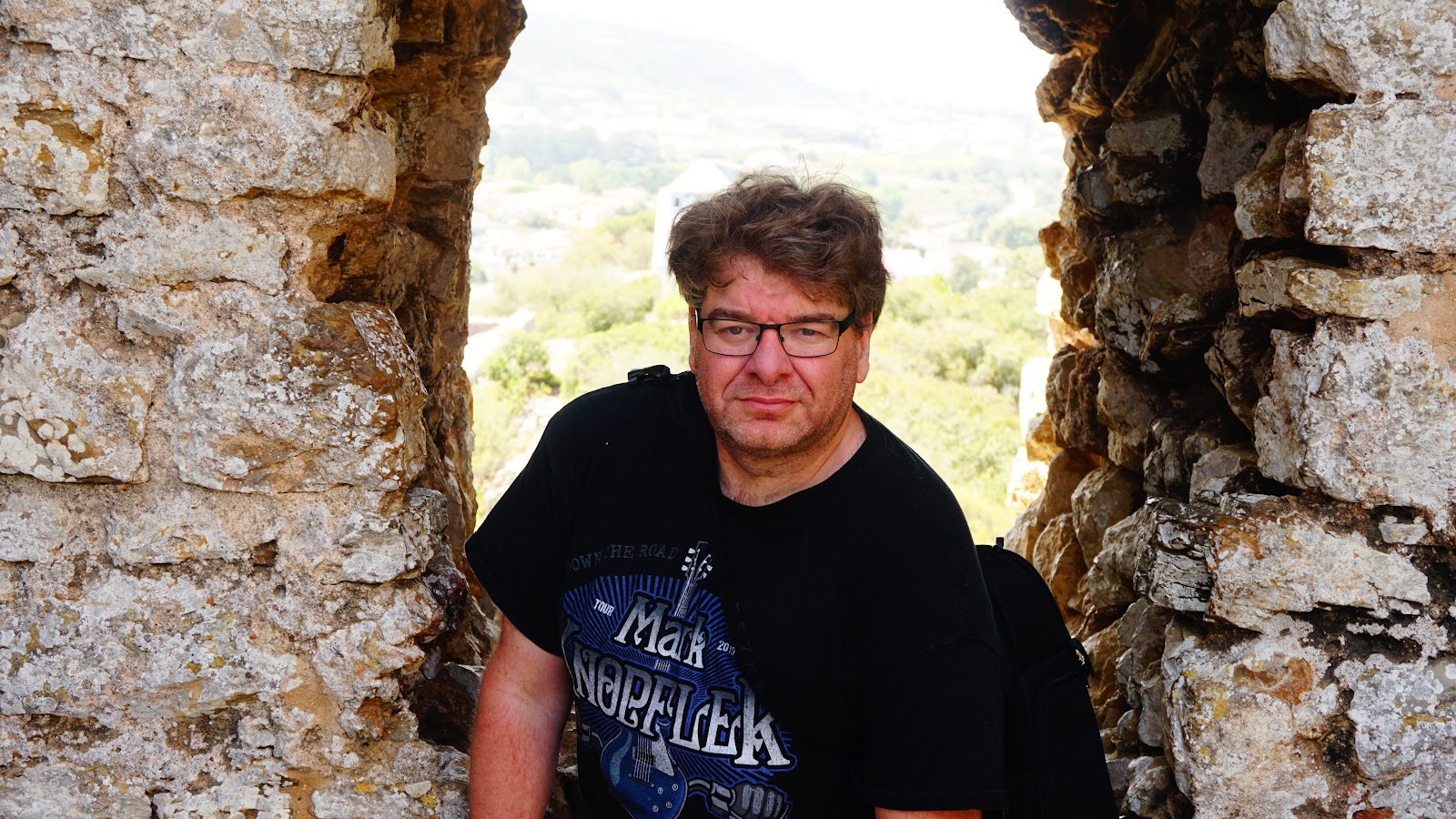
We climbed the south tower, and took some pictures from there - it is fairly high up, nice views. At the bottom of the tower (city wall path level), there is a hole in the wall, which makes for nice pictures - we took a couple with me as proof that I indeed was there.

Alex was here. Unfortunately, it was either get your face lit up, or have visible background.

Obidos from above (taken from the southernmost tip of the city wall).

After that, it was a short walk back to where we started the climb. We got to the street level, and went along the main drag to see the souvenir shops and check out the cafes.  Our souvenir shopping for the day was minimal, we bought a few postcards and a couple of Obidos prints. We did get some pasteis de nata at a nice little coffeeshop closer to the end of the street, which Olga chased with an espresso, and I - with ginja-infused sangria, which was excellent.

Our midday snack.

We then went around the somewhat less travelled lower streets of the town, until we wound up back at the church of St. Mary.


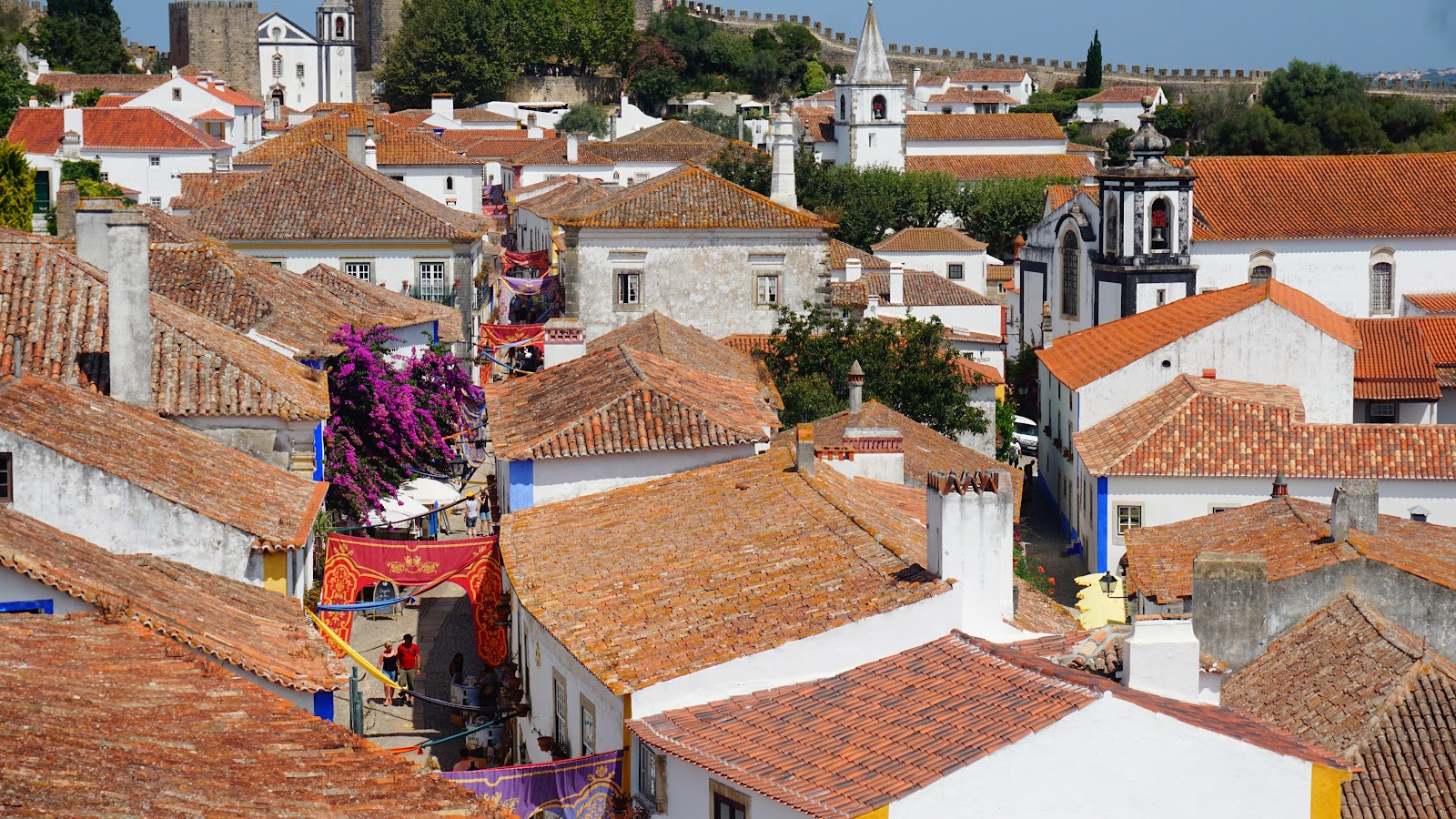
Obidos. Main drag (Rua Direita - very appropriately named), view from above.


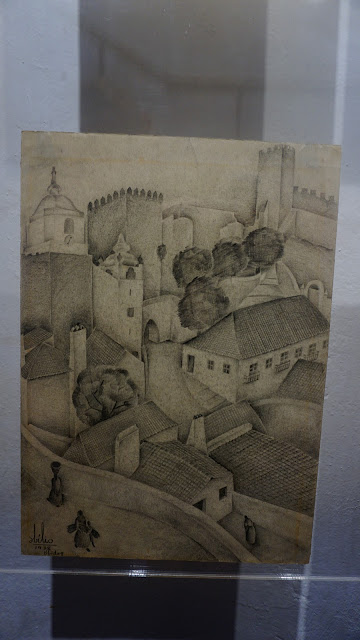
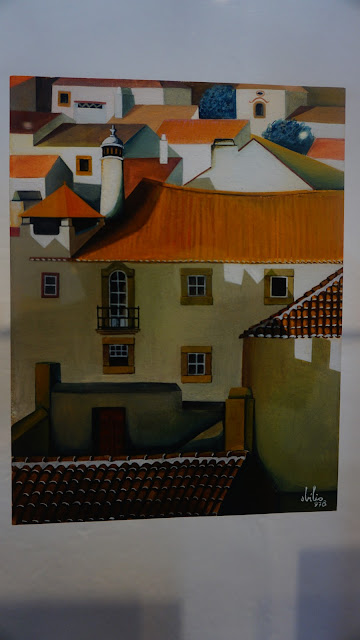
We went inside for a look, then walked through some side streets a bit more until we came to a small museum which displayed the work of Obidos native, Abilio Leal de Mattos e Silva, who spent most of his time drawing sketches of paintings of Obidos.  His work reminds me of the work of an Armenian artist we knew a long time ago whose specialized on panting miniatures of different townscapes in a style quite similar to Sliva's.

A b/w sketch of Obidos by Abilio Silva.


And here is an example of a colored painting of his.


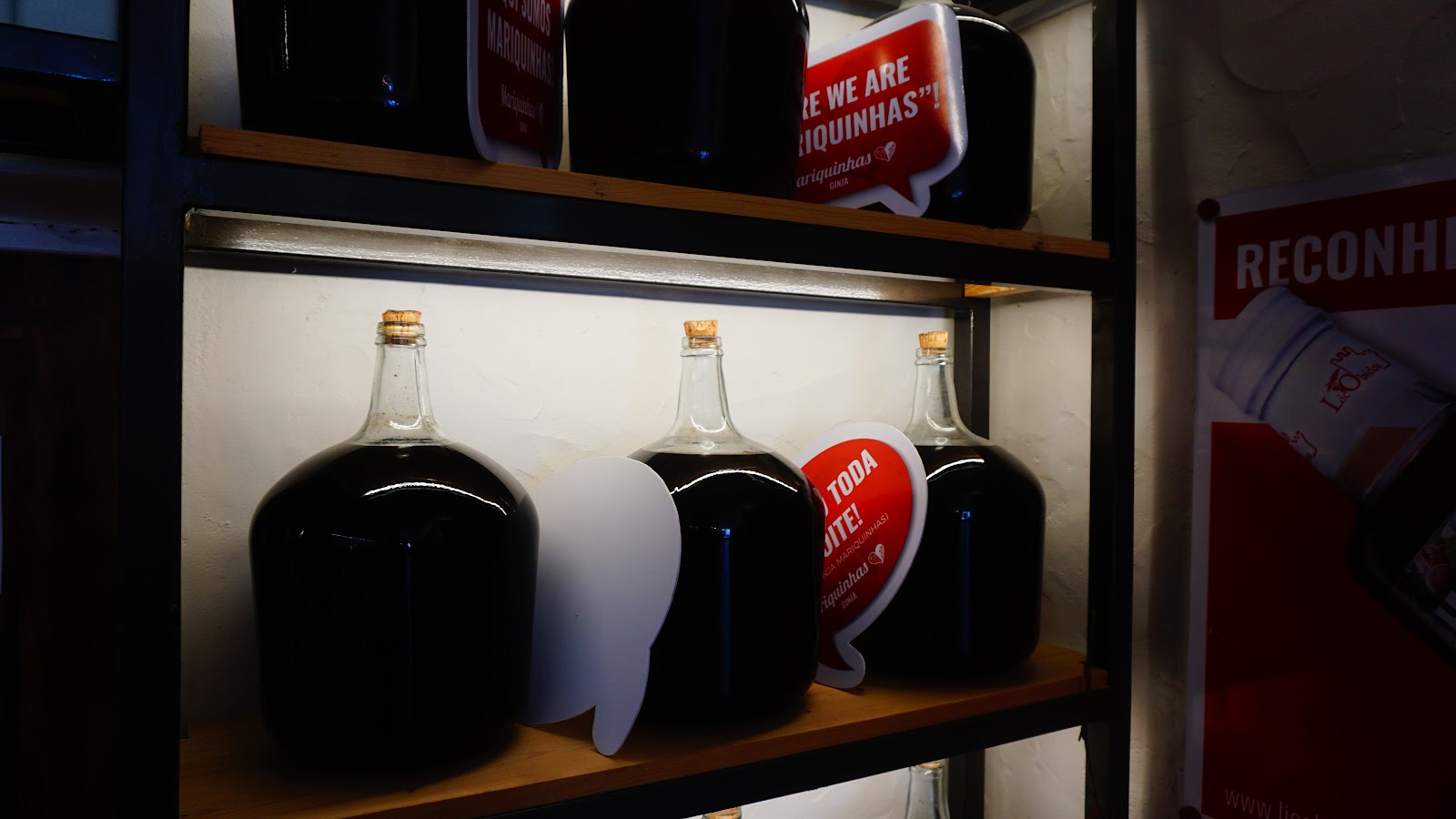
Afther that after some more side-street walking we went through the restaurant row back to Rua Deireto, where I decide to succumb to the main local ritual - consumption of ginjinha (ginja) - the locally made sour cherry liqueur from a chocolate cup. Took us a bit to find a place (in the afternoon all the stalls along the street get sorta deserted), but I am glad we persisted. Ginja wound up being somewhat different from what I expected. I expected sugar, and it was, indeed, sweet. But I also expected a lot of almond flavor, due to, well cherry pits adding their part. This was very much not the case. The drink was smooth, sweet, but with absolutely no hint of any almond flavors.  It reminded me of a homemade alcoholic drink my grandfather would make that he called "drunken cherry", which pretty much was a sour cherry liqueur. Grandfather did it for the cherries themselves - they were used in his dessert-making. Here though, it's the liquid that counts, although most large-ish bottles of ginja I saw have fruit in them.

This is how ginja is made, I guess - the photo is really dark and one cannot see, but about half the volume in each vessel is cherries.


.
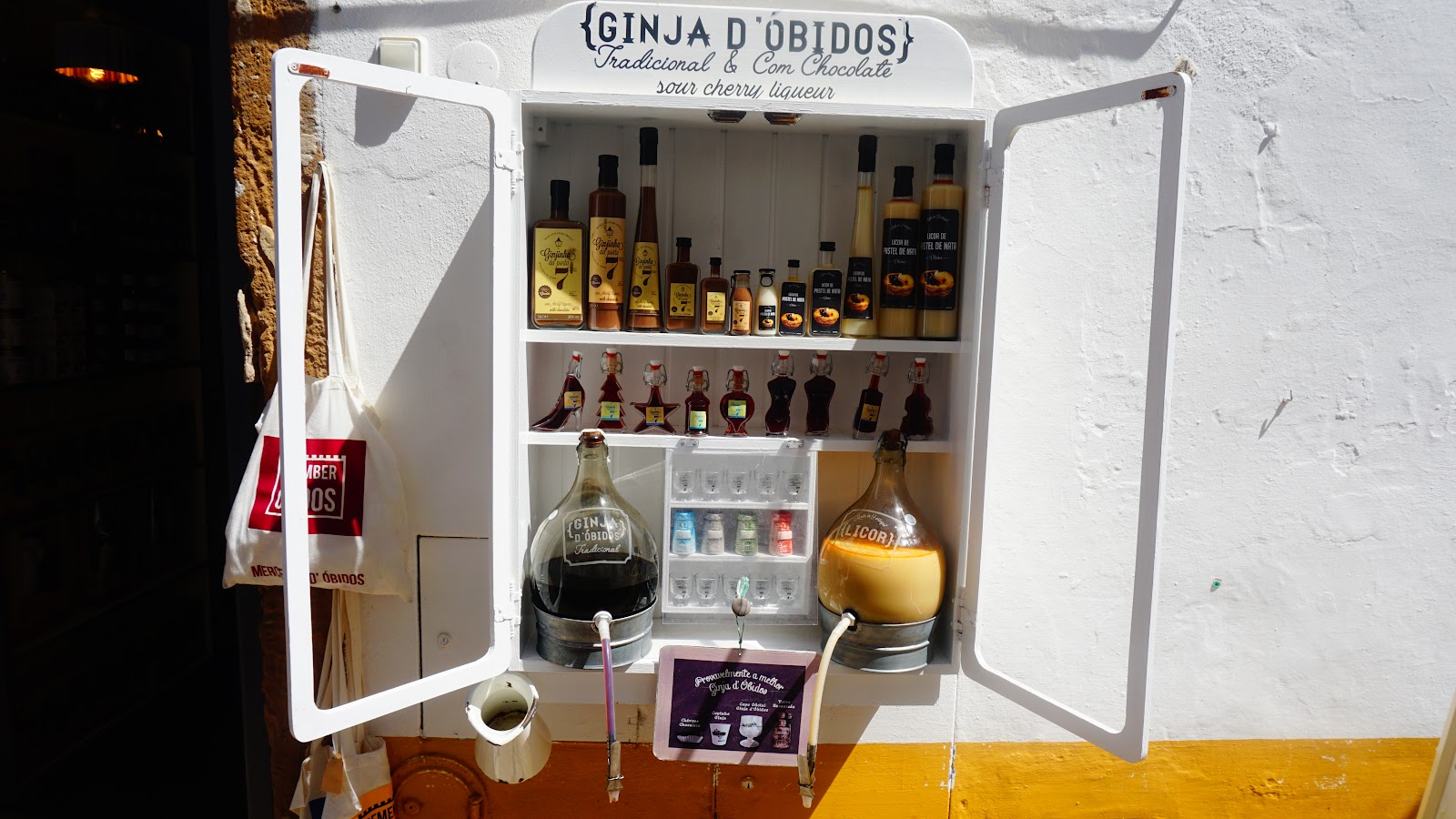
And this is how ginja is sold on in Obidos (together with some other liquers).

Following that, we bought some pasteis de nata-flavored gelato, which we both liked, and went outside the city walls to get some water from a drinking fountain. At that time we decided that we would head home (it was around 3pm, we were starting to get tired), change, and then would go see Caldas da Rainha - a larger town just up the road from Obidos, which presumably is famous for its hot springs, where a queen of Portugal built a hospital.

At home we decided that before heading out to Caldos we would visit local grocery store first, in case we are late coming back. The Continente grocery store is a 2 minute drive from our house - the only challenge was that I needed to turn our SUV around on a tiny parking lot behind the house and drive it down the world's narrowest driveway. Took me a bit (better safe then sorry), but we got down, went to the grocery store, bought some food, and went to Caldos da Rainha.  

We spent a total of 2 hours there, just walking the streets at the center of the city, mostly window-shopping (around 6pm the number of open stores started dropping). Unlike Obidos, which is very touristy, Caldos da Rainha is pretty much a solid provincial town in Portugal with close to zero observed tourists (although we heard non-Portuguese languages around, and even some Russian, almost everyone appeared to actually have been a local).  While we enjoyed our walk around non-touristy parts of Portugal, one thing we totally failed was to find a restaurant where we could have a dinner. There were some cafes open and a couple of Asian food takeouts, as well as a few burger joints, but we were looking for something with more local food selection, and quite literally, there were no restaurants on most of the streets we walked (and, looking at the map, we covered a decent chunk of the city center, from the train station to the park and to (almost) the hospital, with what remains there from the original hot springs - unfortunately, we did not make quite all the way there to see them.

Caldos da Rainha train station. Somewhat subdued.

Caldos da Rainha. What looks like main city square.


At around 7:30pm we decided to cut our losses, went back to the parking lot, got into the car and drove the the local Lidl to get some easy-to-prep food. Came home around 8:40pm, made our dinner, and ate it on the ground floor porch - a smaller table, but no need to go up the staircase with a tray of food.

Our dinner, featuring a microwavable Portuguese bean stew, some seafood croquettes, sausage, cheese, olives, bread and canned octopus.

After dinner, we called it  day.

Alcohol.  

1. Portuguese Bock Beer. Per Olga, when people ask about Portuguese beer, this is the one the internets recommend.  It is  pretty straightforward light beer - for American beer drinkers, reminiscent of the infamous Pabst Blue Ribbon (a slightly more upscale version of it), and for ex-USSR ones - the infamous Zhiguli.  Easy to drink, but not the kinds of beers I like.

2.  Lagosta Vinho Verde DOC. 

Lagosta Vinho Verde DOC
A rather budget buy, this is again surprisingly a wine on the sweeter side with some fizz added to the mix. These wines are typically called "easy drinking summer wines". Olga liked it too.


Steps. Eneded the day with around 21090 steps. Most were in Obidos, but Caldos da Rainha added about 7K steps as well I think.

Tomorrow. Well, the plan is to spend the day at the Berlingas Island - they have some interesting places to go see there.  We'll see if we have done enough to actually be able to make it there. If not, I guess we'll walk around Peniche, drive around the Peniche peninsular, and possibly, will hit the beach.  We'll try not to get too upset.


Monday, August 22, 2022

Trip to Portugal Day 1: Backroads to Obidos


Day 2 comes in two parts.

Frankfurt has an airport.

Part 1.  Still in transit. We land in Frankfurt around 10:10am local time, disembark, and spend an hour walking our way through passport controls, terminals, and security checks. The most exciting part of this stage is the total search I was subjected to by a security agent who pretty much shoved his hand down the front of my pants and then down the back.  Looks like Germany has a very different understanding of personal space.  

The plane was about 30 minutes late to leave, which gave us a chance to grab a coffee and a pretzel, because when in Germany - even if "Germany" = "Frankfurt Airport", you get a pretzel.


The Pretzel. It was decent.

Boarding the flight involved being bused to a very different part of the airport, which gave me a chance to take a picture of the terminal from the outside.

Frankfurt Airport Terminal A from outside.

Eventually we got to a place where our plane stood, and boarded it.

Our ride to Portugal

This took place in the middle of California night, so we tried with some moderate success to doze off on the ride. Still I was able to catch some nice scenery - the Alps, the Mediterranean Coastline, and a really nice approach to Lisbon.

 
The Aqueduct, as seen from the plane descending on the Humberto Delgado airport.

With this, we arrived to Lisbon, where Part 2 starts.

Part 2: Day 1 proper.   Getting off the plane was easy, no more passport control, since we are inside the EU. Spent some time waiting for luggage. Discovered that the Tile app and Tile devices we put on our bags don't work quite one would want them to work - you can find out where the Tile tag is only if another Tile user is within bluetooth reach of the tag.  At a starting point, my colleagues teaching computer security are right around now crying. Second, the one time you really need this feature is upon arrival to a new airport  in order to determine that the luggage arrived with you. Except that there are not going to be any Tile users on the landing field (except for the airplane passengers, but it looks like the luggage is stored in a way that does not allow for bluetooth signals from the main cabin to be transmitted to it. Eh, well. The bags still arrived.  

After taking a bathroom break we went outside to wait for the shuttle bus to the car rental place.


The shuttle came right around the time I started wondering. Took us to the rental place. At that point, things started to get - if not sour, then at least - dark comedy.

So, our car rental company is OKMobile. The rental itself is made through a broker.  Here are some things.
  • One week before our trip, I get an email saying "in order to speed up your reservation, please complete these forms". The forms ask for driver's license and passport information. I enter the info, receive confirmation that I am good to go
  • I also receive an email that we ABSOLUTELY MUST HAVE International Driver's Permits.  I call their office and ask "I am a resident of the US, I have a US driver's license, do I need an IDP", and I get an unequivocal "YES, YOU DO". So we go and pay $60 for two IDPs with photos. Better safe then sorry.
  • Upon arrival to the rental place, of the three people there, we get the Incompetent Newbie.  
    • This appears to be the first time he saw a US driver's license.  
    • He asked us for licenses and "IDs", and I had to ask him three times "what other type of Id would you like" before we got to "Passport, please". 
    • We NEVER had to show our IDPs. 
    • He spent 30 minutes re-entering our passport and license data THAT I ALREADY PROVIDED to their system.
    • To cap all of it, he took us to our car - a rather unexpectedly large Renault Kadjar (we asked for an automatic transmission, apparently these are the only automatics they have). We spend 10 minutes going over the scratches on the car. The car is parked in a way that makes it hard to pull it out, so we ask him to pull out the car. He gets in the car, and hits another car standing nearby.


The car he drove got some surface scratches, but the other car got a dent.  Took him another 25 minutes to change paperwork and give us another car.  All of this mildly annoying because the entire time spent at the rental place that was empty when we arrived was about an hour and forty five minutes, when it should have been no more than 30.  But also, dark comedy gold.  Most of it is just the real lack of experience, and personality traits that are not conductive of working customer service jobs, but I sincerely hope that the guy does not get fired or docked a lot of pay for denting a car on the lot.

So, we get our car (this is it below, pictured in its resting place for tonight), and start the drive to our first stopover, Obidos.  Except, after verifying that the car indeed has the Via Verde (toll road) tag that allows us to travel the toll roads and not worry about tolls, I find out that my google maps is set up California-style to "avoid tolls" setting. This becomes apparent only about 20 minutes into the drive when we leave the major highway behind and start taking backroadiest of the backroads.  


The good news: it's a nice scenic drive - much more fun that driving on a divided highways with tree cover on both sides. We get to drive through countless small villages, take cobble road detours, go up and down several hills in a somewhat see-saw fashion, and see a lot of the back country that definitely is not tourist territory.  We also pass by a Lidl and take immediate advantage of it.  Wasn't even sure where we were, but found it on the map post factum, it is the store in Arruda dos Vinhos - one of the small towns/large villages we passed through.


Eventually, as the sun drops below the horizon, we make it to A8, which apparently is free on its approach to Obidos, and take it for the last leg of  today's trip. We drive up a narrow driveway leading to our Airbnb to meet our landlady, who's been texting us since about 3pm (it is not 8:30). I roll the car up and through a vary narrow turn to reach the upper parking spot, where we rest the car as you see it above. The parking spot is adjacent to the back door to our place which leads to a nice patio, and our bedroom. There is a spiral staircase leading downstairs to the living room and kitchen.  


We thank our landlady, who left us some cheese crackers and a bottle of wine in the fridge, and unpack. After a quick shower that each of us desperately needs, we throw together a late night meal of bread, sausage, cheese, seafood and olives, and wash it with some wine.  We are officially done for the day, which has proven to be somewhat uneventful, but very long.


Today's wine. 
1.  Papa Figos Douro Branco 2021


Grabbed this one for Olga out of the fridge at Lidl. For 3 Euros, this is a great refreshing white. I expected something bone dry and instead got some sweetness to complement the bright acidity. Olga, who typically does not care for sweetness in her wines, interestingly enough quite liked it as well.

We'll give it a score of A-

2.  Paco Do Bispo Moscatel De Setubal DOC 2019


Also bought at Lidl for something like 3.99, primarily because (a) last time I brought a bottle of Moscatel and waited for a while to try it, now I want to have a bottle available for the entire trip, and (b) for the name, which includes allusions to both major AVAs in San Luis Obispo county (Paco = Paso, Bispo = Obispo).

Exactly what I expected - smooth, sweet, with little acidity, but easy to drink. Totally worth it for those who like dessert wines.  B.

Steps. 6589 according to Google Fit (watch reset before I was able to see, but had a consistent number last I remember). Mostly traversing through airports.

Tomorrow.  Walking tour of Obidos, and Obidos castle.  


Trip to Portugal Day 0: Getting off the ground...


A very short day. Got a ride to SFO, went through ticketing, passport control, security check, and boarded the plane to Frankfurt.  The only interesting bit about this part of the process was that at boarding time our Lufthansa took our pictures, but did not ask for boarding passes at all. 

Short flight overview.  We flew in a 2-story Boeing 747. Don't know what is located upstairs - did not get to see it, but this plane has by the looks of it about as many first class and business class rows as it does economy rows. We sat in economy rows in the middle isle close to the back of the plane - the cheapest seats on the plane.  

Good things:  Checked-in luggage and carry-on (our fare included them), two meals, drinks including wine and beer, nice movie catalog.

Bad things: probably the narrowest seats I've sat in on international flights over the past 10-15 years.  It's not even the leg room per se - although also nothing to write home about - it is the width of the seats.  10 seats per row will do it.

Waiting at the ticketing.


For the most part I took advantage of the movie catalog and got caught up on several Marvel movies. The full list:


* Bill and Ted Face the Music: B: nice, but could be better.

* Spiderman: Far From Home: B:  some nice moments, otherwise, just checking the box

* Eternals: B:  I have a feeling all my MCU movie reviews are going to be in the B range - professionally made movies that use the tropes that I don't necessarily care very much for.

* Spiderman: No Way Home: B+: I know that there was a lot of hype before the release of the movie, I wound up reading a lot of analysis of released trailers, and predictions. Seems like every single prediction came to be, which makes me wonder if those were not predictions at all, but rather leaks carefully pretending to be predictions. Anyways, I like Toby McGuire, and he is good in this movie.

This is pretty much it, arrival to Frankfurt marks pretty much the beginning of Day 1.


Steps: around 3000 according to my watch. Hard to know exactly, as the watch reset in the middle of the flight, but 3000 is a good estimate.

International Terminal at SFO has an outside viewing area.

Next Day:  fly from Frankfurt to Lisbon, get a car, drive to Obidos, stopping on the way at a Lidl store.


Saturday, August 20, 2022

Trip to Portugal: Day -1


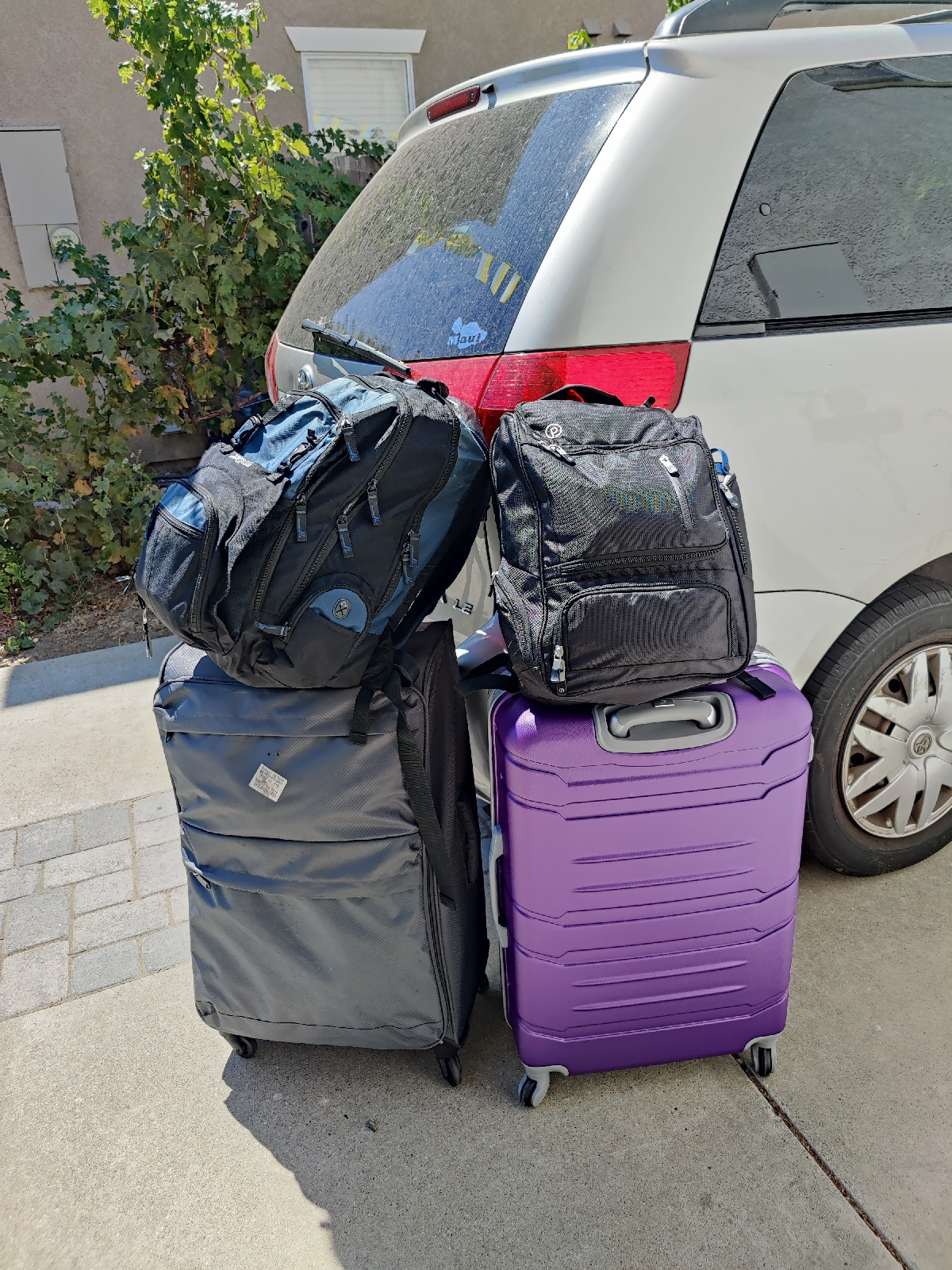
Packed the bags, loaded up the car and went to San Jose. Our flight is tomorrow. Today I managed to visit the revival meeting of Ignite: no longer Cal Poly, now Bay Area. 

Not much else to report.

Steps: 4243 according to my watch, most of them probably running around the house packing.

Tomorrow: flight to Frankfurt, then onto Lisbon, renting a car, driving to our first place in Obidos. 

Wednesday, August 17, 2022

50!

 Just a short note.


A. I turned 50 today. Yay.


B. Our first overseas trip since COVID is coming. August 22 - September 8 we are in Portugal (the photo below is from our 2017 trip).


I plan to post daily updates here - we'll see if I am successful.  First five days we stay in Obidos with the goal of seeing the central part of Portugal. Then - five days in Porto, with possible day trips to Douro and Braga. Finishing it off with four days in Lisbon to recapture our 2017 experiences.